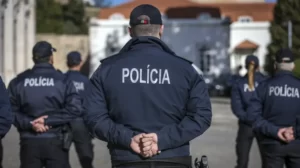
In the aftermath of a particularly tragic Easter on Portugal’s road, the ministry of interior administration is going to announce the formation of a special new unit of traffic police, which will be starting to patrol the country (see update below).
Stories circulating this morning stress Portugal’s appalling European ranking when it comes to road traffic accidents (and the percentage of deaths on the roads): we are already the country with the highest number of deaths in urban settings – and the country where two out of every three drivers involved in road accidents are found to be over the legal limit for alcohol.
With 20 deaths over the Easter period – and a number of others following shortly after – minister for interior administration, Luís Neves, stressed that now is the time for a whole new strategy to try and wrestle down numbers and make driving on the nation’s roads as safe as possible.
It is in this context that the new traffic patrol unit is to be announced, later today.
RTP brings the news, adding that the new strategy generally is to be approved by the Council of Ministers shortly. It will involve a whole new Highway Code – to be approved by the end of the year following discussions with ‘partners’, and the hearing of various proposals.
It is highly likely that a number of ‘regulations’ in the Highway Code will be altered, says the state news broadcaster.
These tweaks will be added to those already trailed: an increase in the number of radars to be sited on major roads (tracking drivers’ speeds), and increased fines and “added sanctions” for ‘frequent offenders’.
Other changes will involve the extension of time-limits on road traffic offences, and the ‘digitalisation’ of all offences, “to speed up the processing of fines and penalties”.
This is the first time that a truly ‘awful festive period of deaths’ has met with such reaction. The country has suffered many ‘awful death tolls on the roads’ over Christmases and other celebration moments in the past, but never before has a minister been seen to so instantly roll up his sleeves and try and ring changes. These changes are so overdue. This is a country already known for high numbers of accidents, high numbers of deaths in accidents, and high numbers of ‘drink-drivers’ who, up until now, have resisted entreaties to think before they get behind the wheel.
Maybe Luís Neves’ new strategy will change all this. It will take time to be adopted in full – but as far as RTP seems concerned, the new traffic unit will be mobilised very quickly.
New unit is revival of former Brigada de Trânsito – mothballed 20 years ago
Luís Neves made his annnouncement mid-morning, introducing the new unit as the former ‘Brigada de Trânsito’ (Traffic Brigade), that was taken out of service in 2007.
As the former PJ national director, turned government minister, explained: “The GNR Traffic Brigade is returning to the roads. National command, control and supervision underpin this decision (…) With the abolition of this structure in 2007 – almost 20 years ago – the very essence of continuous and specialised road enforcement was completely lost (…) It is our view that the effectiveness, uniformity and operational control of the traffic service can only be fully ensured through a specialised and unified national command.”
GNR police have said they are “profoundly satisfied” by the decision. “The National Republican Guard is profoundly satisfied with the rebuilding of the Traffic Brigade’s capacity (…) The GNR never agreed with the abolition of the Brigade level, and we believe that through the Traffic Brigade we will enhance command and control – above all, strengthening road safety prevention, promoting a culture of road safety and contributing significantly to reducing fatalities in Portugal,” Lieutenant-General Paulo Jorge Alves Silvério told RTP.
“The GNR’s traffic capacity has always been in place, but through the Traffic Brigade we will enhance command and control and make better use of our capabilities (…) Capacity will be much more effective on the ground. With the same resources, we will achieve better results; of that I have no doubt.”
Source material: RTP/ LUSA