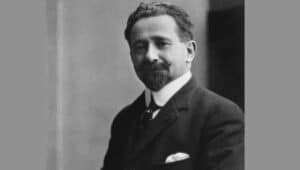
Manuel II tried to make his mark by attempting Liberal reforms, press freedom and political resolution, but he lacked authority, direction and allies. The once-strong monarchy became weak, and although it was another two years before the monarchy was overthrown during the October 1910 revolution, the assassination was undoubtedly the beginning of the end of Portuguese monarchy.
Did you know that Portugal’s kings and queens have all been given nicknames, a single descriptive word that emphasises their achievements, power or greatness, nicknames such as ‘the Conqueror’, ‘the Restorer’ and ‘the Brave’? Poor Manuel II, with his short reign (1908-1910), had no time to develop a reputation, but he was given several nicknames. The monarchists called him ‘the Patriot’ for his preoccupation with national identity, he was called ‘the Studious’ for his intellectual life, but, mostly, he is known as ‘the Unfortunate’ for losing his throne to the Republic.
Portugal stands out among European monarchies for the permanency of its royal nicknames. While medieval England had William ‘the Conqueror’, Richard ‘the Lion heart’, and ‘Bloody Mary’, France produced figures such Charles VI ‘the Mad’ and Louis VI known as ‘the Fat’. Yet these monikers faded as monarchies became more bureaucratic and less myth-driven. Spanish royalty examples include Isabella I known as ‘the Catholic’, Charles II ‘the Bewitched’ and Alfonso X ‘the Wise’ as their nicknames often had religious or moral leanings.
Many nicknames were given after a monarch’s death and reflected how a reign was ultimately judged and remembered. Nicknames could have emerged from the royal court, popular speeches, or from the clergy, who morally judged rulers. Others may have been coined by political rivals seeking to damage a reputation, by medieval writers, or shaped over time by historians writing with hindsight, myth and nostalgia.
The earliest royal nickname was for Portugal’s first king Afonso Henriques (1139-1185), known as ‘the Conqueror’ and given posthumously, probably by monastic writers praising his victories in reflection of his reign which was defined by military expansion against Muslim territories and independence from León.
It was also early chroniclers like Fernão Lopes that played a decisive role in the names given to monarchs due to his vivid interpretations and accounts of their lives. He gave a voice to commoners, soldiers and townspeople and later generations took his work and condensed his portraits into single descriptive nicknames.
Fernão Lopes was not a nobleman or a monk, but he rose through Lisbon’s bureaucracy to become the royal archivist in 1418. He was the chief chronicler of the kingdom under King Duarte writing the official stories of three kings, Pedro I, Fernando I, and João I whose reigns covered one of the most dramatic periods in Portuguese history. His chronicles fixed and popularised the nicknames of several kings. For example, in his chronicle of João I, Fernão portrays the king as a defender of the people elevating him to ‘the Great’.
Rather than objective assessments, nicknames captured what people wanted to remember, acting as moral verdicts long after the fact. My favourite history story is that of Pedro I, nicknamed ‘the Just’ but also ‘the Cruel’ because he had his lover Inês’ killers brutally executed and then allegedly crowned her exhumed corpse as queen. His nickname was not because he was kind but because he punished enemies without mercy as depicted in Fernão’s graphic descriptions.
Fernando I’s nickname ‘the Handsome’ was coined from Fernão’s writing due to the king’s appearance, despite his failure as a ruler.
Once given, and repeated in sermons, schools and textbooks, the nicknames stuck and became part of history.
Queens were also given nicknames, but in comparison to their male counterparts, these were less likely to be a name referring to their achievements or power but rather referred to their being remembered for a scandal, for their mental state or virtue. Examples are Leonor Teles who was ‘the Treacherous’, after Fernão’s devastating portrayal where she was depicted as manipulative, illegitimate and dangerous. Portugal’s first undisputed queen Maria I was ‘the Pious’ or ‘the Mad’ due to her mental illness after suffering personal tragedies.
When given during the monarch’s lifetime, a nickname could guide how their future actions were interpreted. For instance, a decision made by ‘the Cruel’ is assumed to be a cruel one, so it could be argued that nicknames have the power to not only summarize history but also to influence it.
No royal nickname shaped Portugal more profoundly than that of Sebastian I, remembered as ‘the Desired’. Born after a prolonged absence of a strong heir, he was widely believed to be chosen by God to restore Christian glory. In 1578, aged just 24 years, he led a catastrophic crusade into Morocco that ended in the destruction of the army and his own disappearance.
His body was never conclusively identified, and Portugal soon lost its independence to Spain, entering a period of decline and national humiliation. The Portuguese people were desperate, believing the King was just “sleeping” and that he would return one foggy morning to reclaim the throne and restore greatness. This led to Sebastianism, which lasted for centuries, as writers, priests and the people fuelled the myth of his return.
Other monarchs’ nickname examples include Afonso II, alias ‘the Fat’, who was physically obese and the first king to clash with the Church; Dinis I ‘the Farmer King’ founded Portugal’s first university and promoted agriculture, forestry, and rural law; João VI was ‘the Clement’ known for pardons and moderation.
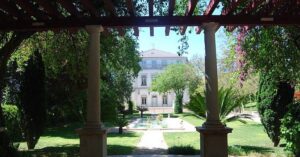
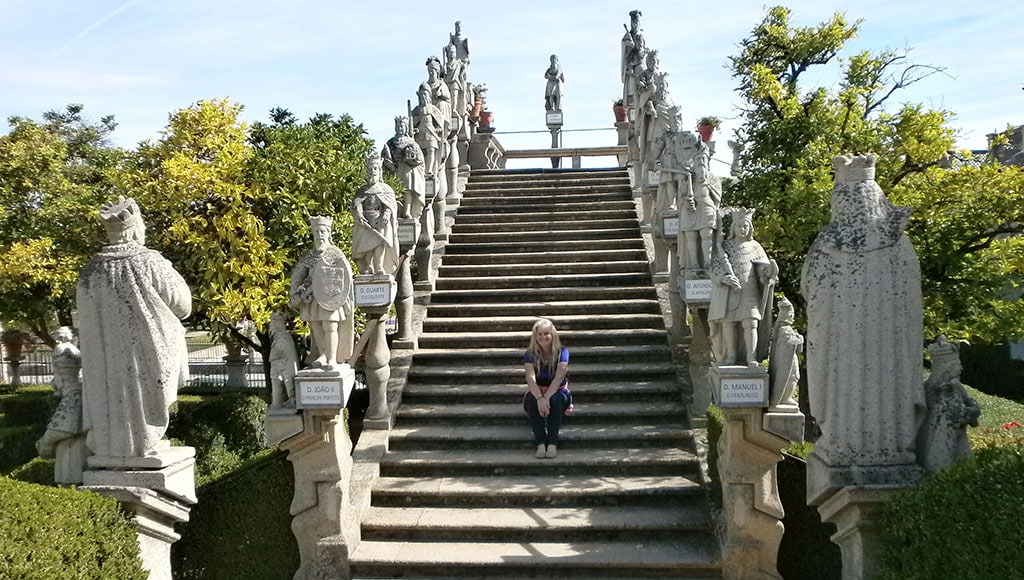
Monarchs were given symbolic and honourable nicknames. Victorious ones were given bold flattering names while those who were lacking were given uncomplimentary ones. A king who expanded the kingdom becomes ‘the Great’, whereas the one who lost it became ‘the Unfortunate’. All can be seen in the gardens of Jardim do Paço in Castelo Branco.
Nowadays, the monarchs are not given nicknames or glorified in the same way probably because today’s Kings and Queens are part of an institution where power has shifted from an individual ruler to the state. They do not fight wars and do not have achievements that resume their reign into a single defining trait. I do, however, wonder what nicknames we would give today’s monarchy!
So now you know!
Read more from Isobel Costas’s about Portugal’s History: Did you know…Infante Dom Henrique – Henry the Navigator