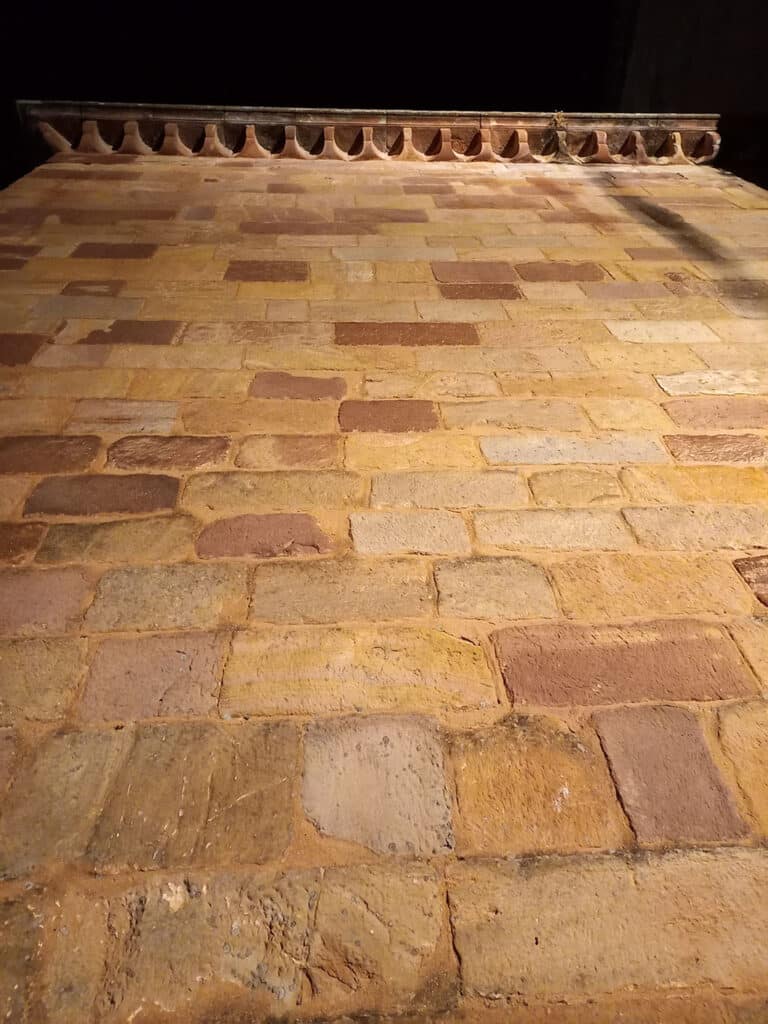
Imagine my surprise when I suddenly noticed that each stone block had a little carved symbol on it. Looking closer, I saw various different ones and I realised that these were the stonemasons’ marks, traces left by the craftsmen who built the cathedral centuries ago. How exciting is that?
There does not seem to be much online about the stonemasons of Silves, and I would love to know more about the individual men who worked on this building. It is incredible that their marks are still visible today, most likely due to the harder Algarve stone, as on many medieval buildings elsewhere in Europe, erosion has worn them away. Visitors who spot these will see many different ones, a gallery of personal signatures preserved in stone.
As I stood there in awe, I tried to imagine what it must have been like in the 13th and 14th centuries when the cathedral was being built. The hilltop site would have been a hive of activity with skilled craftsmen chiselling sandstone, labourers hauling blocks, carpenters assembling scaffolding, apprentices fetching tools and carrying water from the River Arade.
All of this under the hot, dusty Algarve sun, while townsfolk bustled about the medieval streets living their busy lives. A visit to Silves’ yearly medieval fair gives me a glimpse of life back then!
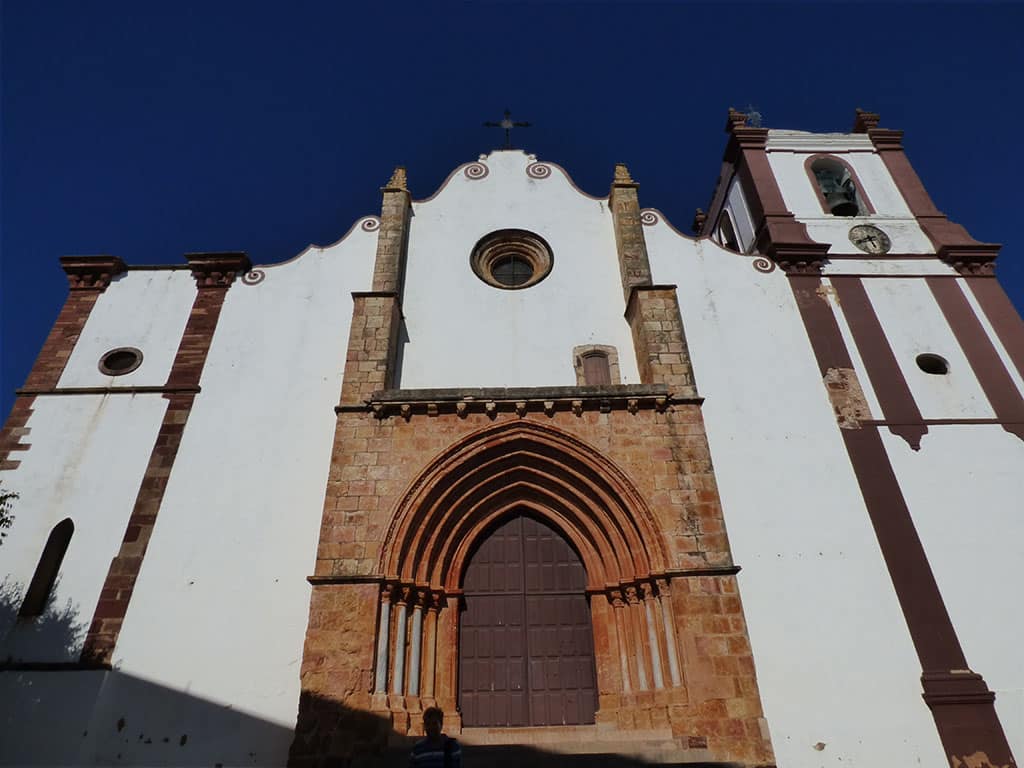
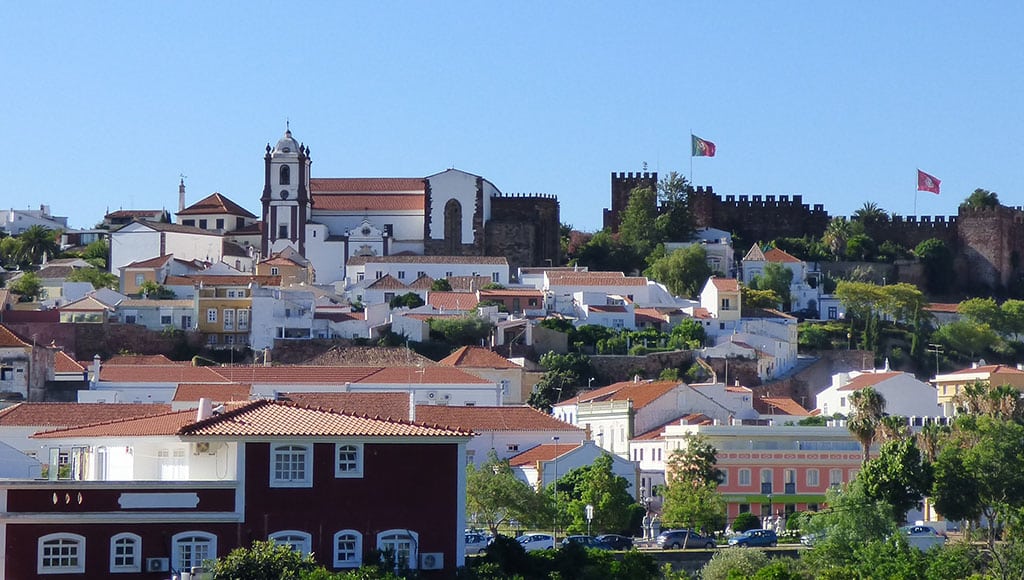
Building a cathedral was an extraordinary act of vision. King Afonso III initiated the construction after Silves was re-conquered from the Moors in 1249, and it was King Afonso V in the 1470s that pushed the works forward, although the cathedral was not fully completed until the early 16th century. Imagine building something you knew you would never live to see finished. I find that quite sad really.
The cathedral has survived earthquakes, repairs, and reconstructions. After the devastating earthquake of 1755, its nave was restored, and a new bell tower and south portal were added. Since 1922, the cathedral has been officially recognised as a national monument, and it is one of the Algarve’s most important Gothic buildings.
Medieval master masons were extraordinary figures. They combined the role of builder, designer, engineer, and architect, using only ropes, compasses, and set squares to plan the incredible buildings that still inspire awe today. Beneath them worked dozens of stonecutters, who actually carved and set the blocks. It was these men, not the masters, who signed the stones with their personal marks.
Did you know that these marks were important and practical as the masons were paid by the number of blocks they produced? Their mark not only identified their work, but it also acted as a form of quality control so that master masons would know whose work was the best or worst!
Marks might also have been used to indicate which side of the block faced outwards or it might have been a symbolic mark for protection or religious reasons. Over centuries, these marks became a coded language known only to those within the craft.
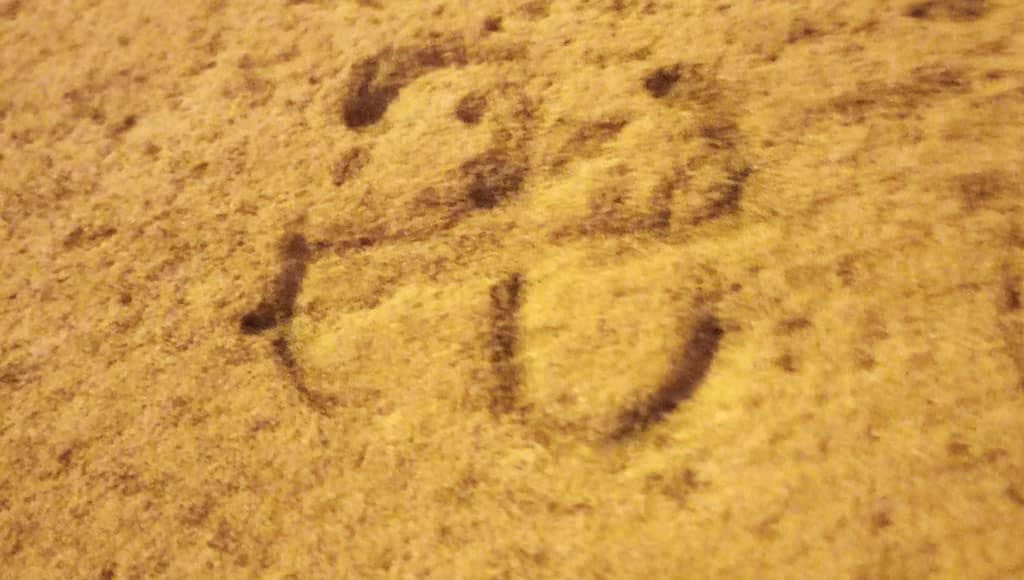
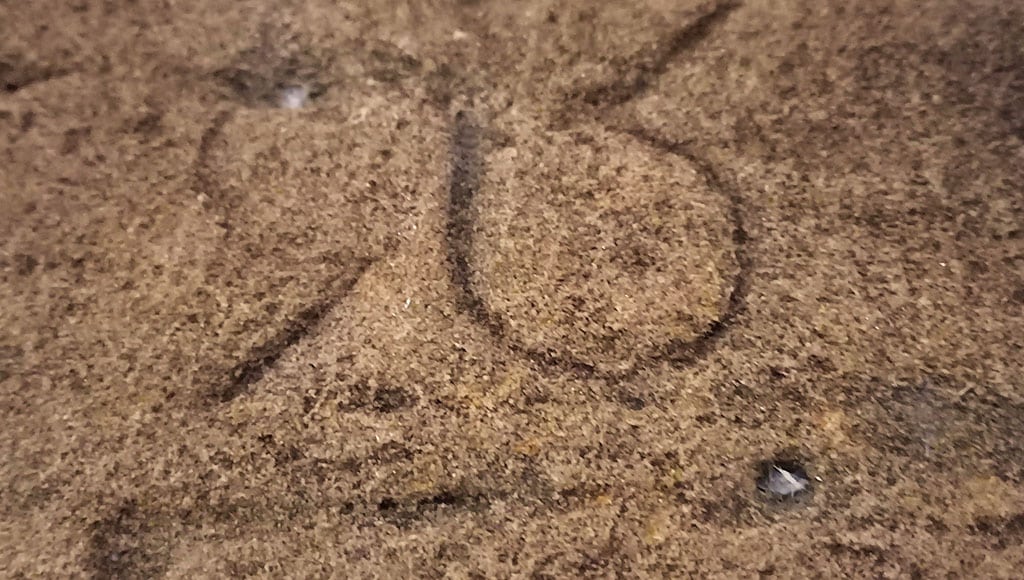
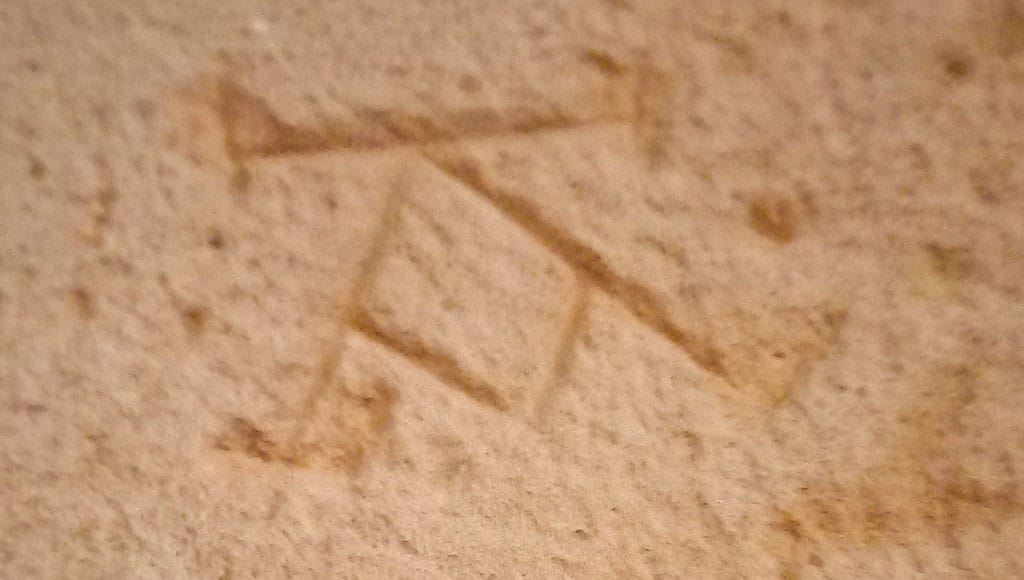
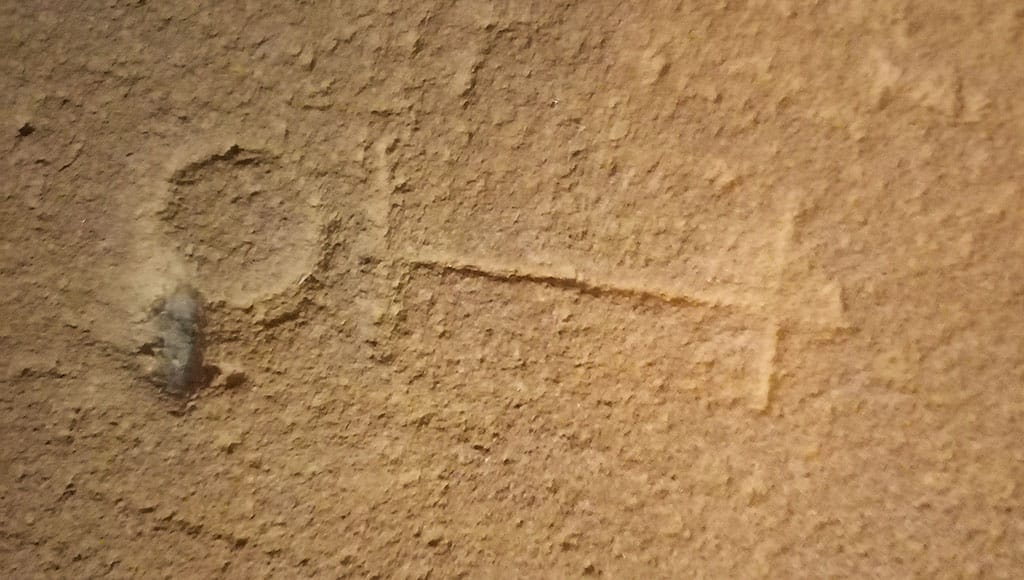
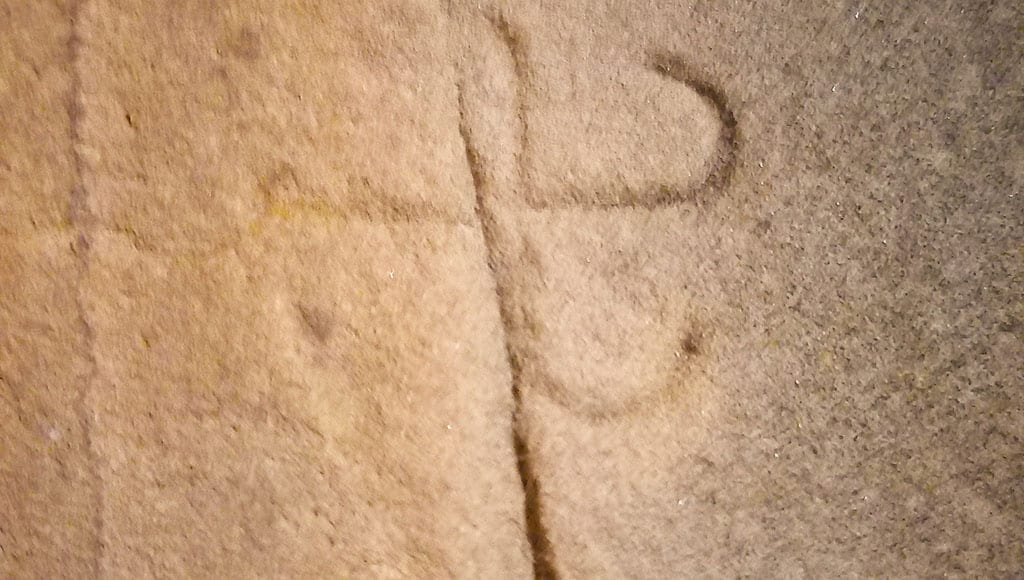
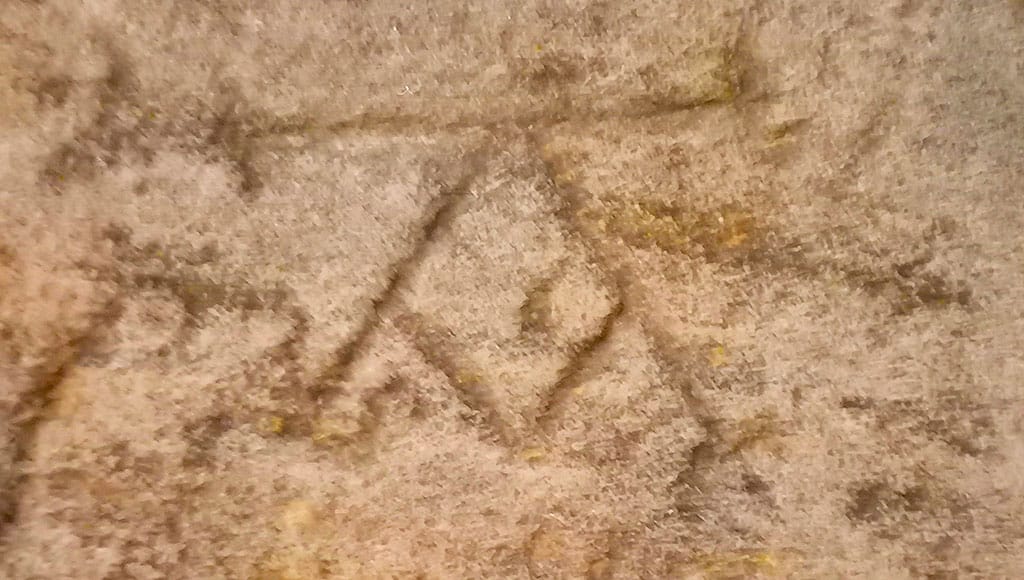
Stonemasons were often nomadic, moving from project to project. Masons who had worked in Lisbon, Évora, or even abroad might arrive in Silves, and researchers have long debated whether their marks can be traced across regions to follow the movements of individual craftsmen.
In some English cathedrals, for example, identical marks have been linked with masons known to have worked at more than one site. Modern cataloguing projects in Scotland, Germany and the UK are now photographing and recording thousands of marks, with the hope of mapping how families of masons might have travelled.
Often a son would adapt his father’s mark with a small variation, creating a kind of family ‘signature’ passed down through generations. While simple shapes can appear by coincidence, clusters of distinctive marks combined with similar carving styles give us tantalising glimpses into the journeys of these medieval builders.
For casual visitors, these symbols might look like scratches or graffiti, but for historians, they are invaluable. They reveal the organisation of labour, the skills of medieval craftsmen, and the personal presence of men whose names are otherwise lost but who left their calling cards for us to see.
They are also a direct link to a worldwide brotherhood, which grew from the humble masons working on these iconic buildings which have resisted natural disasters, wars and erosion for hundreds of years.
Most masons were members of guilds or confraternities. In Lisbon, for example, the Confraria de São José dos Carpinteiros e Pedreiros (founded 1533) regulated training, standards, and mutual support. Oral traditions speak of a ‘verbo de segredos’, a secret jargon used among masons and, of course, their marks themselves formed a kind of hidden language.
You might note that some of these marks resemble runes or early Masonic symbols, which is not surprising for it is from these workers that the renowned Freemason’s Order developed. Masons who worked on cathedrals were often ‘free’ as they were not bound to a single lord but free to travel for work. On site, they gathered in simple wooden huts, or ‘lodges’, where they stored tools, shared meals, and discussed designs.
By the 16th and 17th centuries, as cathedral building slowed, some lodges began admitting honorary members such as scholars and noblemen who admired the masons’ traditions of secrecy, symbols, and moral codes, even if they were not actual masons themselves.
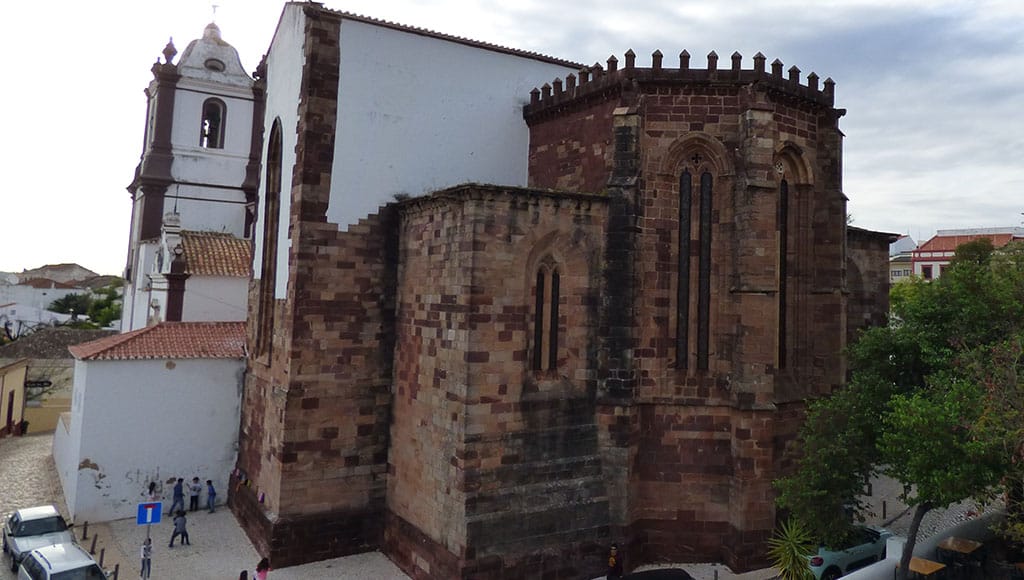
From these lodges, modern Freemasonry eventually developed. The square, compass, and level, the mason’s practical tools, became symbols of moral lessons. In 1717, the Grand Lodge of England was established, spreading the Masonic movement worldwide and it is remarkable to think that its roots lie in places like Silves, where ordinary craftsmen left their marks on stone.
Looking up at the vast wall with its perfectly aligned blocks, I could only admire the enormous skill and organisation behind medieval architecture and I thought that as I love tracing people’s history, how fascinating it would be to me to collect a record of these marks from each building I visit and perhaps I will be able to find out where the mason would have travelled and worked!
So, next time you pass Silves Cathedral, look for these little marks and think about the nameless men that made them over 700 years ago … their presence will not be forgotten.
So now you know!