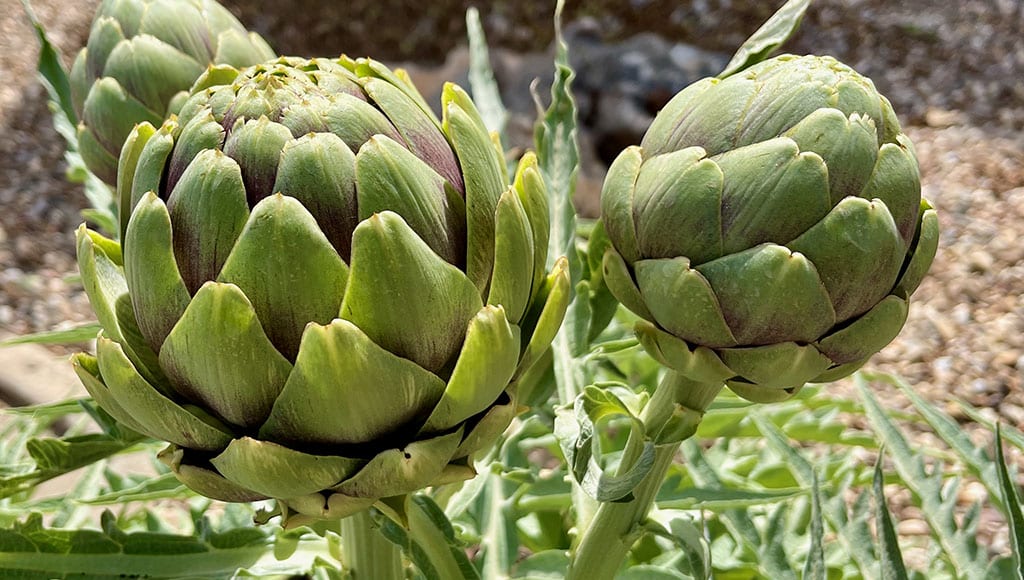
Artichokes (Cynara scolymus) are ancient; probably first cultivated in the Middle East and then disseminated by the Romans. The word for this plant had an interesting linguistic journey, beginning as al-kharshüf, meaning ‘scale’ in Arabic. Jumping from North Africa to Iberia, the word in Spanish became alcachofa, and alcachofra in Portuguese. In Italian articiocco — and in English, artichoke.
Artichokes are a thistle, as one can see if the plant is let go to seed — a brilliant, violet flower appears as the bud matures and opens up.
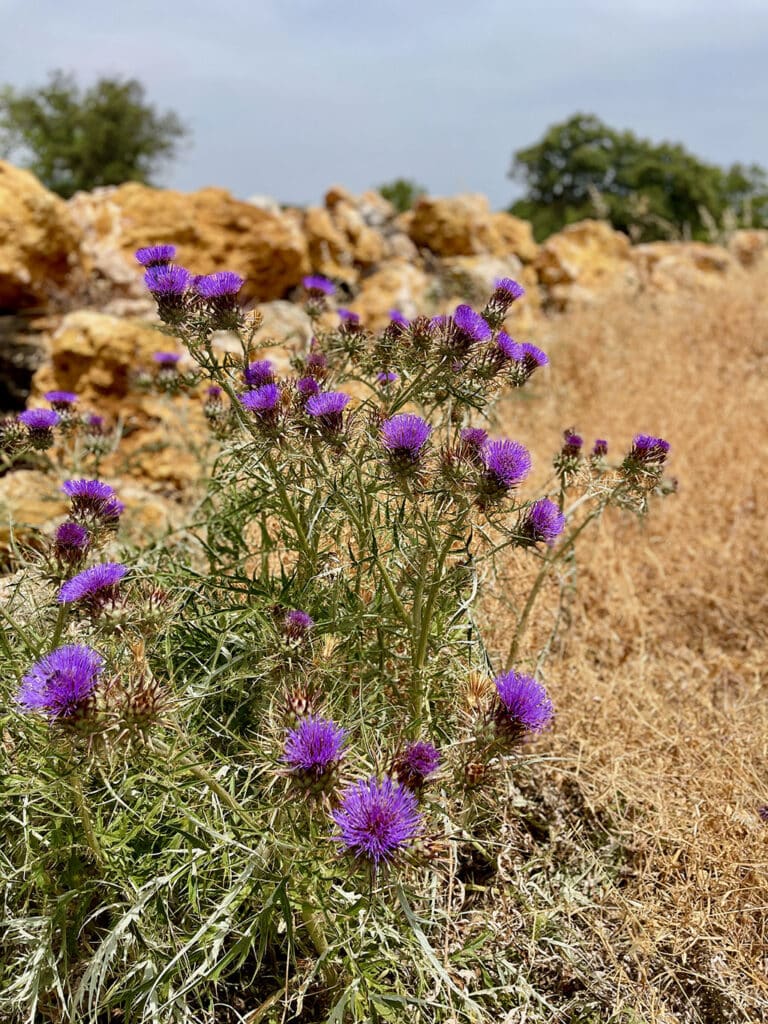
Moving up from the roadside weed known as thistle is cardoon, which is related to artichokes and considered native to the Mediterranean region. It is a tall plant with a violet flower, and the stems are edible. In Portugal and Spain, the pistils of the cardoon flower are used as a substitute for rennet in making cheese.
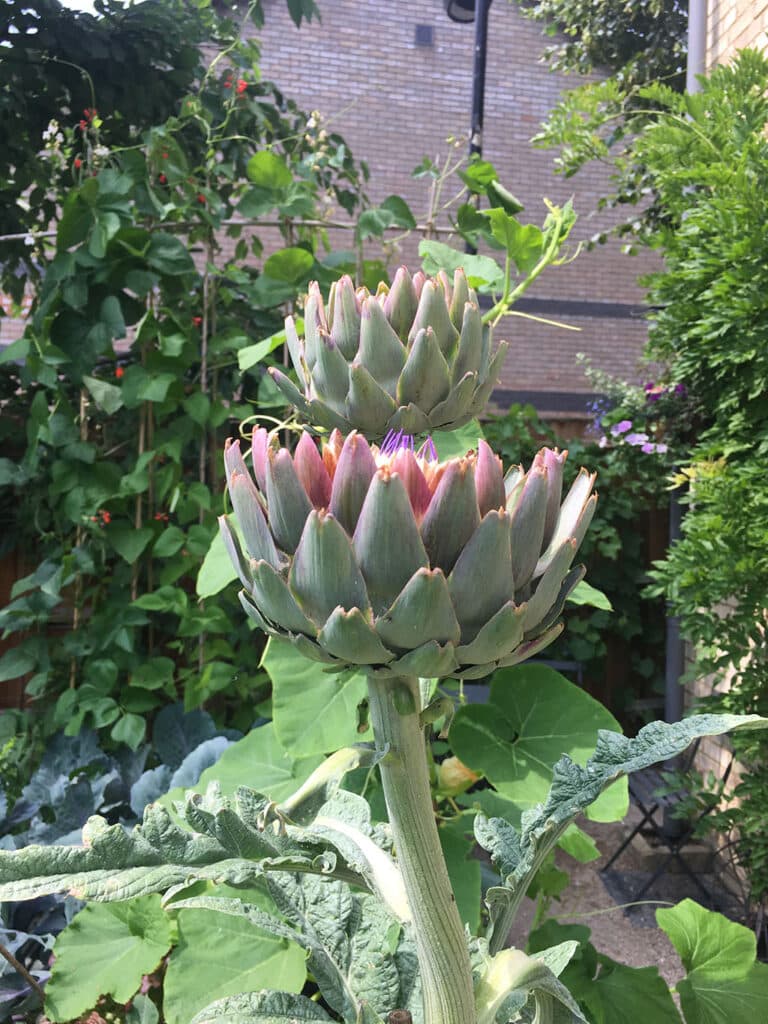
Artichokes are a perennial plant, meaning they come back every year, and artichokes will produce for several years in ideal conditions. They love our mediterranean climate!
I’ve never seen an artichoke plant sold in a nursery, though these may exist somewhere. When we moved here to Portugal, I was thrilled to return to my mediterranean climate roots, and since our property has plenty of space for them, I was determined to grow artichokes. So I had to begin from seed. My first plant was the typical, standard variety: Green Globe.
I ended up putting it in an empty planter and it did fine. In the Sahara heat of the Algarvian summer, it went to flower and the rest of the plant dried up. I thought it was dead and gone.
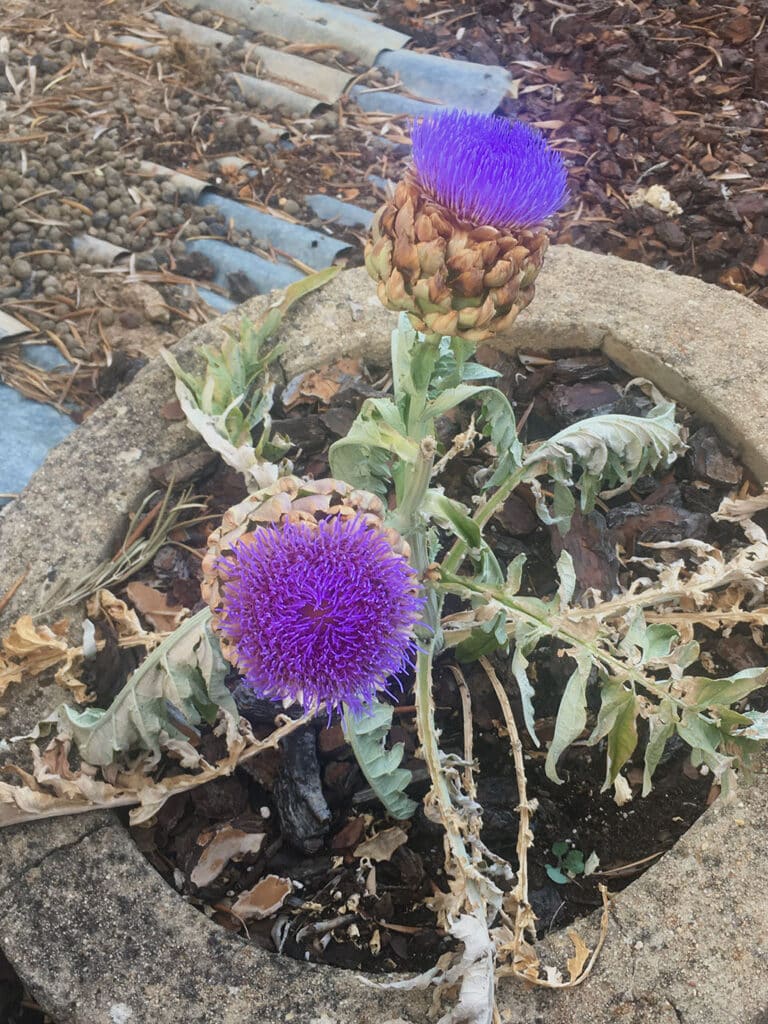
The rains came in October, and the thing sprang back to life!
So, it turns out that the plant goes dormant in the heat and seems to disappear. When I had success with my first attempt, I decided to experiment with different varieties. I then proceeded to pull one of my favorite gardening tricks: losing track of which plant starts were from which seeds. I always think I’ll remember, and of course I never do.
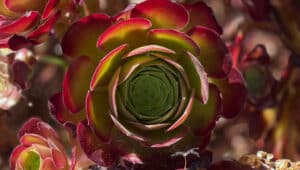
When I was doing maintenance around the plants in early spring, one bit me big-time, and it turned out to be covered with really vicious thorns, even on the leaves. Much worse than the other varieties. This is a Darth Vader kind of artichoke — dark purply-brown with wild spikes at the ends of the leaves.
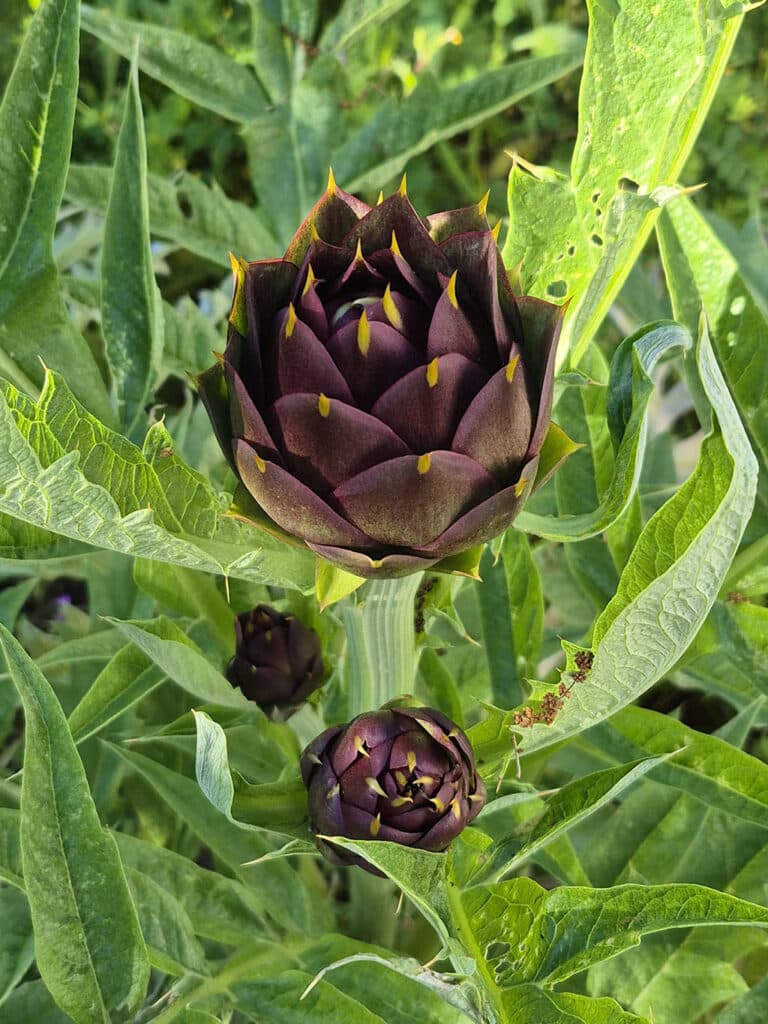
And now for the fun part: how to eat them. It’s important to pick them while the leaves are tightly closed, like a rosebud. Wash thoroughly under cool running water, from the top of the artichoke down.
I like to steam or boil them, and I add a smashed garlic clove, a few whole cloves and some lemon juice to the water.
Boil or steam until a leaf comes loose easily, indicating it’s ready to eat. Sit down with the artichoke on a plate and a big bowl to throw the leaves in after you eat them. Pick off a leaf and put the base between your teeth and pull.
My heirloom varieties are so good I eat them without a sauce, but various dipping sauces are usually served. Favorites are lemon or garlic in melted butter, but middle-class Californians like mayonnaise, I hate to admit. My mom used to suggest I really liked mayonnaise, and the artichoke leaves were just an excuse.
Once you have eaten all the leaves, pull off the thin remaining leaves to reveal the choke, the thistly part. People usually cut it out with a knife, but that is wasteful to me as you inevitably cut off some of the good stuff. I learned to pinch pieces of the choke and pull them off. Then you have the amazingly tasty artichoke heart.
Artichokes have always been such a treat to me that I was amazed to discover they are considered a super food. They are supposed to be good for lowering cholesterol, probably because they are high in fiber. They are also touted as a hangover cure — don’t ask me why!
Artichokes are high in potassium and Vitamin K. Another key ingredient is cynarin, which is said to prevent the accumulation of fats in the arteries — a good thing if you’re scooping up mayonnaise or melted butter with your artichoke leaves!
Read more articles from Justine Strand de Oliveira on gardening: The smell of water… and other observations on my mediterranean garden in Portugal