By CHRIS GRAEME chris.graeme@theresidentgroup.com
Both State and Catholic institutions show the most discrimination against homosexual and transgender individuals in Portugal, according to new in-depth studies by a group of academics.
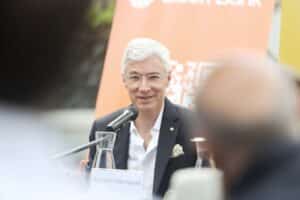
On the day in which President Cavaco Silva ratified a law granting same-sex couples the right to a Civil Partnership – the so-called ‘Gay Marriage’ – the University of Minho study, led by Psychologist Dr João Oliveira, revealed that heterosexual men in Portugal had the most problems dealing with non-heterosexual relationships and statuses and were therefore most likely to be homophobic.
The results of the study, which were presented by and before a panel of experts and Gay Rights activists in Lisbon on Monday, coincided with a conference Against Homophobia and Transgenderphobia and also fell on the International Day for the Struggle against Homophobia.
President Cavaco Silva announced on Monday evening that he would ratify the Same-Sex Civil Partnership Law which had been passed by the Portuguese Parliament in April and which had been one of the main social and civil policy planks of José Sócrates’ PS government.
The law in Portugal, a predominantly conservative and Catholic country, has courted considerable controversy and opposition both from right-wing parties such as the CDS and PSD in Parliament, pro-family groups and Christian and evangelical groups who believe that allowing Gay Marriage is the thin end of the social wedge, and undermines the family unit and traditional Christian family morals and values.
Human rights and gay activist supporters such as Amnesty International and ILGA Portugal have been campaigning for equal rights before the law for LGBT (Lesbian, Gay, Bisexual and Transgender) groups for years with support from left wing and centre left parties in Parliament including the PS, Bloco Esquerda, the Greens (Verdes) and PCP (Portuguese Communist Party).
It is widely believed that the fact that President Cavaco Silva waited until virtually the last minute to promulgate the law was out of deference to Pope Benedict XVI’s recent State visit which ended on Friday last week and his own personal opposition on the grounds that “Portugal currently has more pressing economic and social problems” than the needs of a minority group.
Calling it a sensitive issue, he said on Monday that “given the serious crisis and complex challenges” that the Portuguese society was facing, he felt it was “important to promote union among the Portuguese and not divide them” and therefore had chosen to adopt a “strategy of compromise rather than rupture.”
On Wednesday last week, Pope Benedict XVI, who accepted the “sin within the Church” over long-standing child abuse issues, spoke out in a sermon at Fátima against abortion and Same Sex Civil Partnerships even though these partnerships are recognised as secular and not religious commitments.