Archaeologists have uncovered new clues which are still being analysed but are “very positive and promising”
A quiet corner of the Algarve has become a key site in an international archaeological project exploring how and why the first large stone monuments were built in Neolithic Europe.
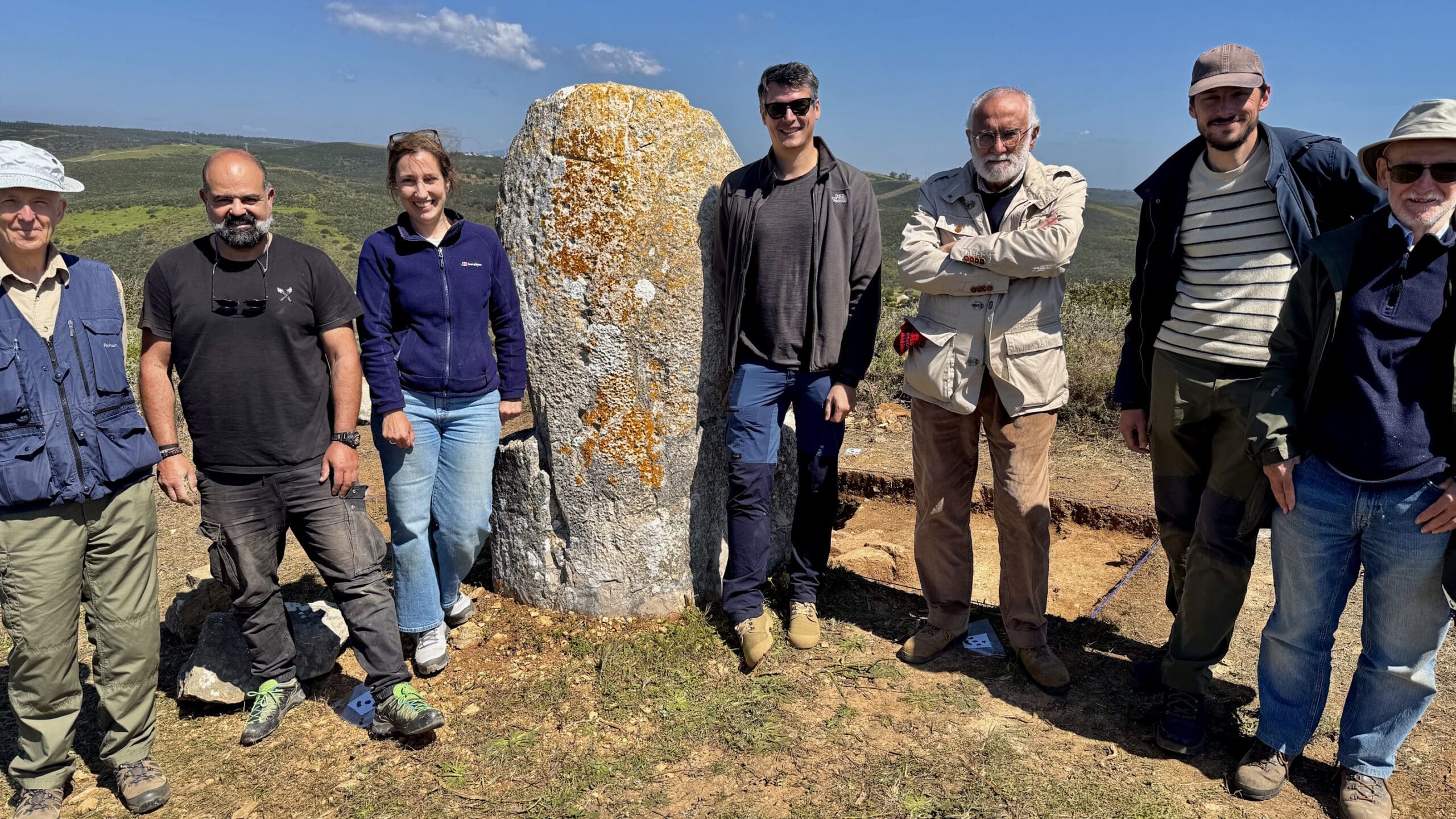
From June 23 to July 1, the Aspradantas Menhir, located in the parish of Raposeira in Vila do Bispo, was once again at the centre of intensive fieldwork as part of the ongoing “Megalithic Origins: the emergence of monumentality in Neolithic Western Europe” project, which spans from 2024 to 2026 and involves sites across Western Europe.
This second phase of excavation followed an initial campaign held earlier this year in March and April. Researchers returned to the site to refine their understanding of the monument’s original structure, its placement in the landscape, and the circumstances surrounding the partial destruction of the stone – a cut whose timing and motivation remain unclear.
One of the primary objectives was to collect further sediment samples from both the base where the menhir once stood upright and from the section that had been toppled, possibly during an act of intentional damage, the municipal council of Vila do Bispo says in a statement. These samples are now being analysed at Durham University in the UK using OSL (Optically Stimulated Luminescence) dating techniques, in hopes of determining not only when the menhir was erected, but also when it may have been symbolically or physically altered.
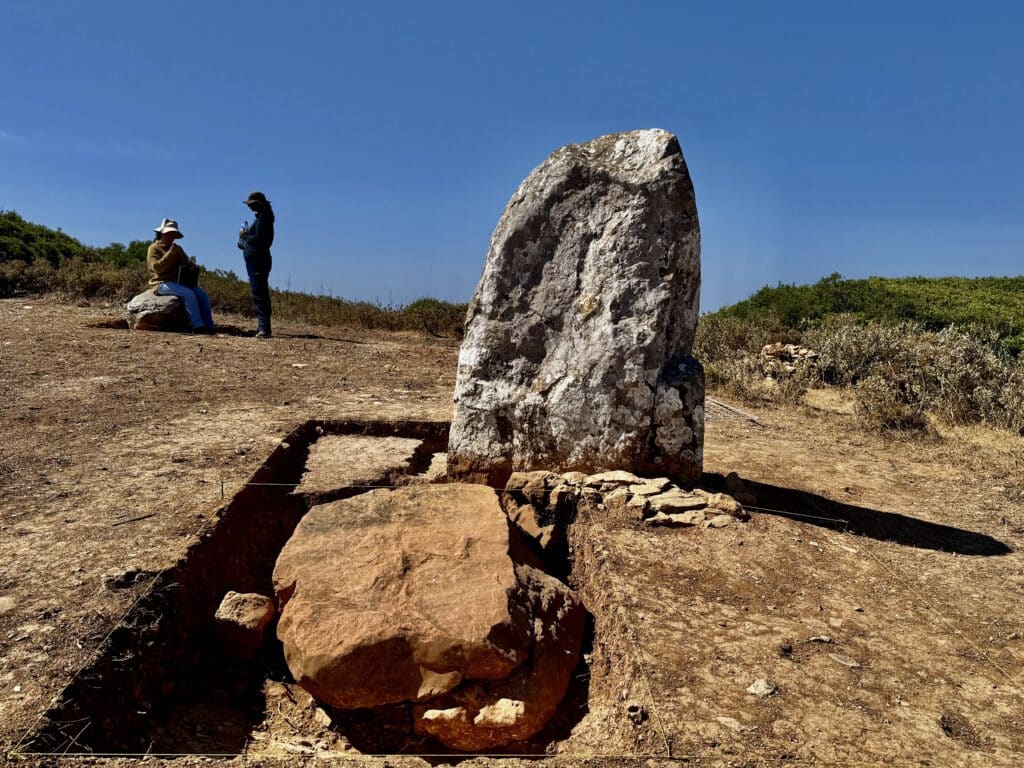
In addition to the work on the main menhir, archaeologists also carried out test excavations on two fallen stone fragments located a short distance uphill. Preliminary results suggest these once formed a second, now fractured and displaced menhir, possibly linked to the Aspradantas monument.
While the final results of this season’s work are still pending, early findings are described as “very positive and promising”. The discoveries are expected to contribute significantly to our understanding of early megalithic traditions in Europe, and may even point to the Vila do Bispo region as one of the earliest landscapes where such monumental expressions took root.
The project is led by Marta Diaz-Guardamino and includes a team of specialists from Durham University, such as Chris Scarre and Florian Cousseau (experts in prehistory and megalithism), along with geoarchaeologists Ian Bailiff and Eric Andrieux. On the Portuguese side, the investigation is directed by Mário Varela Gomes, retired professor from NOVA University Lisbon, supported by Ricardo Soares and Ramiro Santos, archaeologists from the Museu de Vila do Bispo – Celeiro da História.