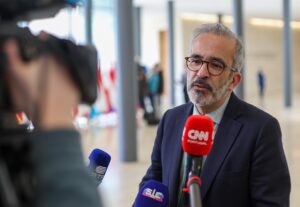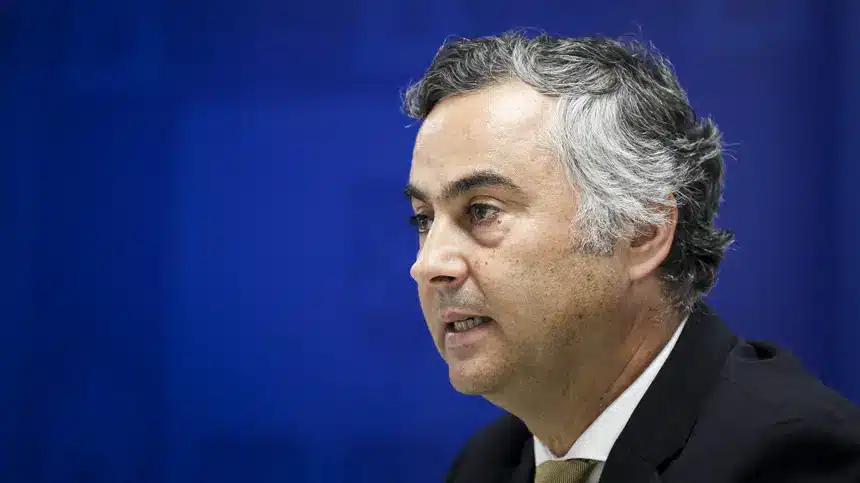
In an extraordinary interview with Rádio Observador, education minister Fernando Alexandre has likened the Aljezur International School – compulsorily closed for ‘not complying with the rules’ just over a week ago – to an “unlicensed pharmacy selling medication that isn’t certified”.
The fact that the school follows the British Cambridge curriculum (which is accepted by the Ministry of Education, Science and Innovation) and educates its pupils to IGCSE level – providing tutorial support to AS and even A levels – appears to have been completely overlooked by Mr Alexandre who returned again and again to the fact that that school was “disobeying the determinations of the state”.
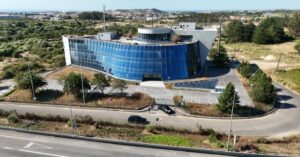
Pressed as to the contours of this disobedience, Mr Alexandre’s first example was “in the building” – suggesting the actual premises are part of the problem.
Indeed, he emphasised that education cannot take place in ‘any school’, because Portugal “is not in the third world”.
This was an interview that went out on a national radio station, without the school itself having any input.
The Resident has since spoken with co-director Karen Whitten who stressed that education ministry representatives “inspected the building on April 15, 2014 and then gave us our permanent licence with the six-digit code”.
Thus Mr Alexandre’s persistence in accusing the school of having ‘deceived parents’ about its state of legality seems a tad harsh.
Rádio Observador’s interviewer was knowledgeable enough of this saga to remind Mr Alexandre that parents were aware of the licensing anomalies due to a closure notice emitted in 2022 – dodged thanks to the deliberations of a judge.
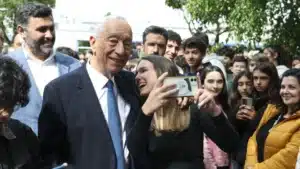
The nub of the issue is that parents have been acutely aware of the licensing difficulties with the school, but they still chose it over alternatives available, because of its uniqueness; its results, and the overall wellbeing of its pupils. Indeed, as CNN Portugal pointed out when it broke the news of the closure last week, this is a school that has educated the grand-children of one of Portugal’s prime ministers. Judges, film directors – even a Nobel chemist – have chosen Aljezur International School for the education of their offspring.
Outgoing mayor of Aljezur, José Gonçalves, has also told reporters that the school has been the reason for a number of foreigners choosing the municipality as a place to put down roots/ buy a home/ invest.
Thus, beyond ‘the installations’ that the education minister has criticised, and the ‘curriculum’- which is one of the most respected in the world – the full reasons for this hiatus are still unclear.
The interview served also to highlight another potential cloud on the horizon of international education in Portugal: the minister suggested Aljezur may not be the only school to be hit with a compulsory closure order.
He said that there are 48 schools “authorised to give the international curriculum – and “there are 11 at this time that are still in the process of evaluation”.
By coincidence, this news, which has been a bombshell for 85 families whose children attend Aljezur International School, comes just as Expresso reports that large education groups are “investing millions in new campuses” in Portugal. These groups include businesses that have up to 120 colleges “throughout the world”. They are, in short, ‘big business in field of education’, charging fees of around €20,000 per pupils per annum.
Aljezur International School prides itself not just on its ‘consistently high IGSE exam results’ but on the fact that it can manage its results and still be ‘the most affordable international education in the Algarve’.
Could this be the problem?
With so little in the way of answers, the school is not giving up; neither are its parents. It has lodged a ‘providência cautelar’ with Loulé Administrative and Fiscal Court (as it did in 2022), and hopes this will at least buy time for the children to complete their year, and for parents to re-think and come up with a strategy. Almost all are adamant: they want the freedom to choose how to educate their children.
source material: Observador