In a recent impulsive crafting moment, I decided I needed some dried flowers. I had read that you could speed-dry them in the microwave in just 20 seconds, rather than the old-fashioned method of pressing them in tissue paper between pages of a heavy book. Impatient and curious, off I went to collect flowers and grasses from around our farm.
However, as I picked and sorted, I found myself looking more closely than usual, examining not just the colour or size of each stem, but its structure. Would it survive the microwave? Was it too delicate? It was then that I began to notice the intricate patterns within each plant, the spirals of seed heads, the symmetry of petals, the repeated forms in leaves and stems.
Up until then I had only been seeing the ‘whole’ plant. Some of the patterns were obvious, like the radial symmetry of a daisy, whilst others were only apparent upon closer attention. The more I looked, the more I saw patterns revealing themselves to me almost everywhere!
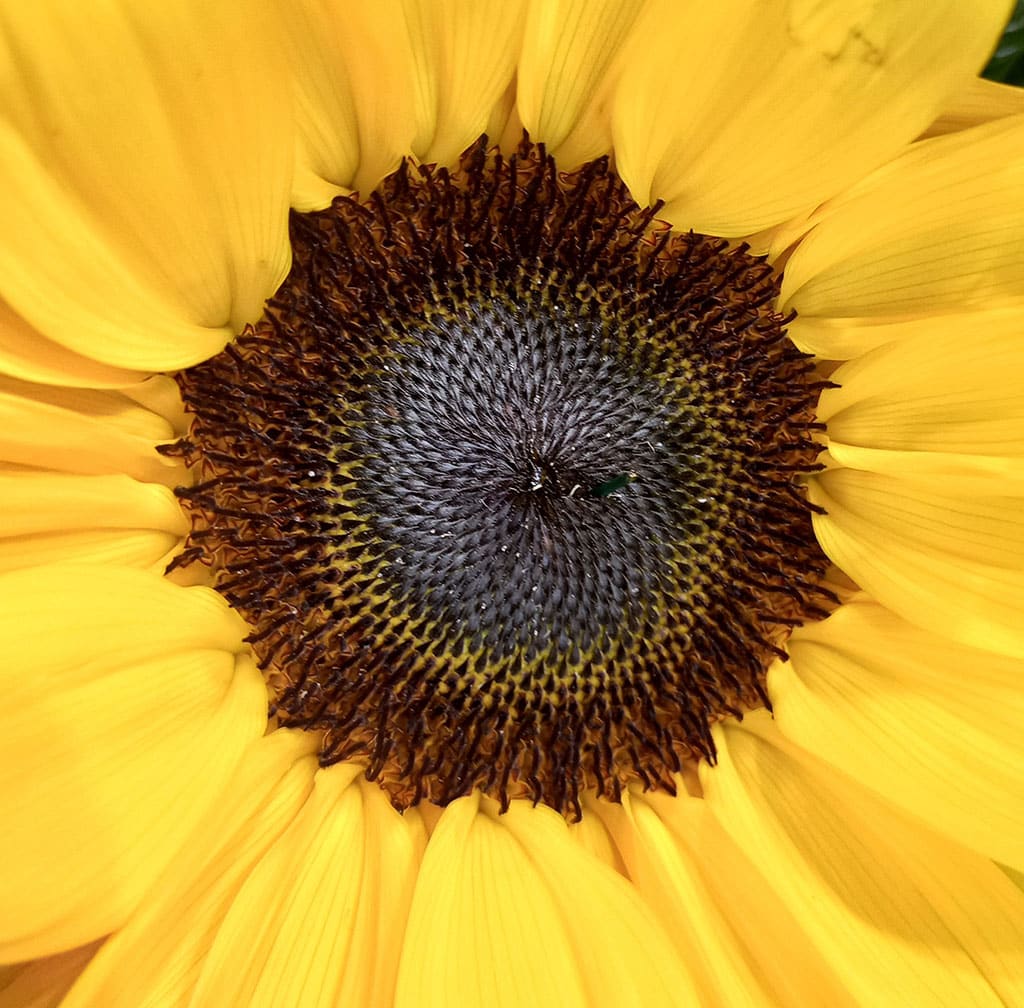
In researching this article, I learnt that many of these patterns follow mathematical principles. One of the most famous is the Fibonacci sequence which is a series of numbers where each number is the sum of the two before it (0, 1, 1, 2, 3, 5, 8, 13…). This can be seen in sunflower seeds, pinecones, and even pineapples as they all grow in spirals that align with this sequence. These patterns help plants pack seeds efficiently, capture light, and grow in balanced, energy-saving ways.
The Fibonacci sequence was introduced to Europe by Italian mathematician Leonardo of Pisa, known as Fibonacci, in his 1202 book Liber Abaci. While investigating the breeding of rabbits, Fibonacci presented the sequence as a mathematical curiosity. However, the sequence itself had been described centuries earlier in Indian mathematics, notably in the study of Sanskrit poetic patterns.
Fibonacci’s true legacy was to popularize the Hindu-Arabic numeral system in Europe, changing from the established Roman numerals, to transform Western mathematics as well as trade and the creation of the modern financial banking system. Over time, the sequence gained fame for its surprising appearances in nature, art, and architecture, and today it remains a key concept across mathematics and science.
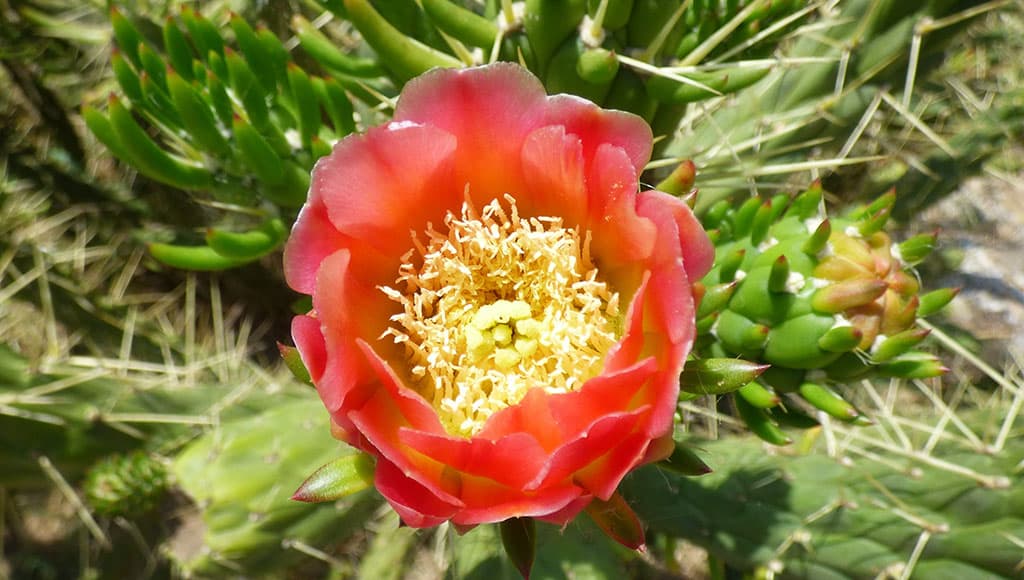
Radial symmetry, seen in flowers like daisies, helps attract pollinators by offering a clear path to the nectar. Spider webs are also masterpieces of radial symmetry and even though different spiders make different webs, they all follow the same rules.
There is also bilateral symmetry, as found in butterflies and many birds’ wings, which aids their flight and movement. Animals, too, are often patterned. Zebras, leopards, tigers, and reptiles’ scales all show regular, geometric designs that serve different purposes. The peacock’s amazing tail feathers show repeating “eyes” designed to attract.
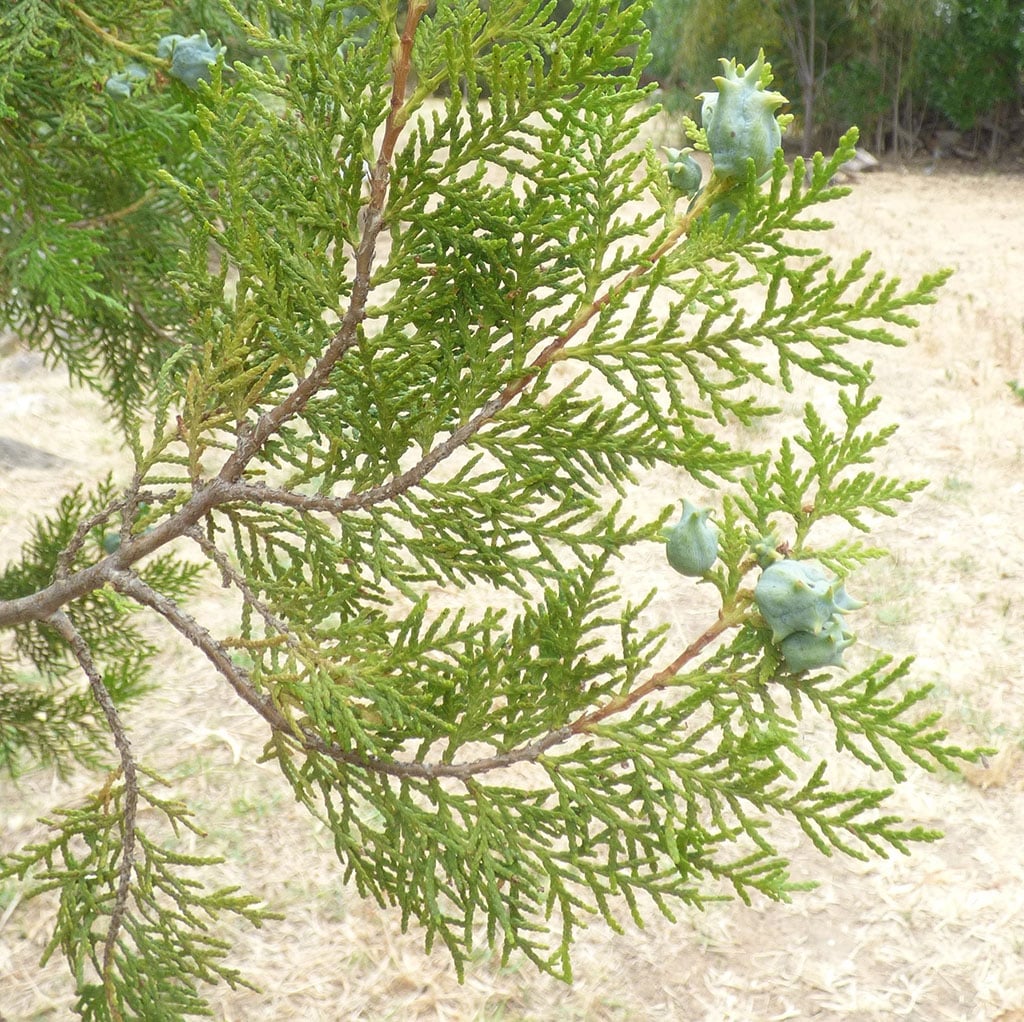
Then there are fractal patterns, seen in ferns, tree branches, and even cauliflower and especially in the beautiful romanesco broccoli, where the same shape repeats at smaller and smaller scales. These allow plants to maximise their surface area for light, air, or water.
Humans have patterns too! Did you know that fingerprints share the same spiral, arch, and whorl structures as tree rings and snail shells? And, of course, we are also symmetrical!
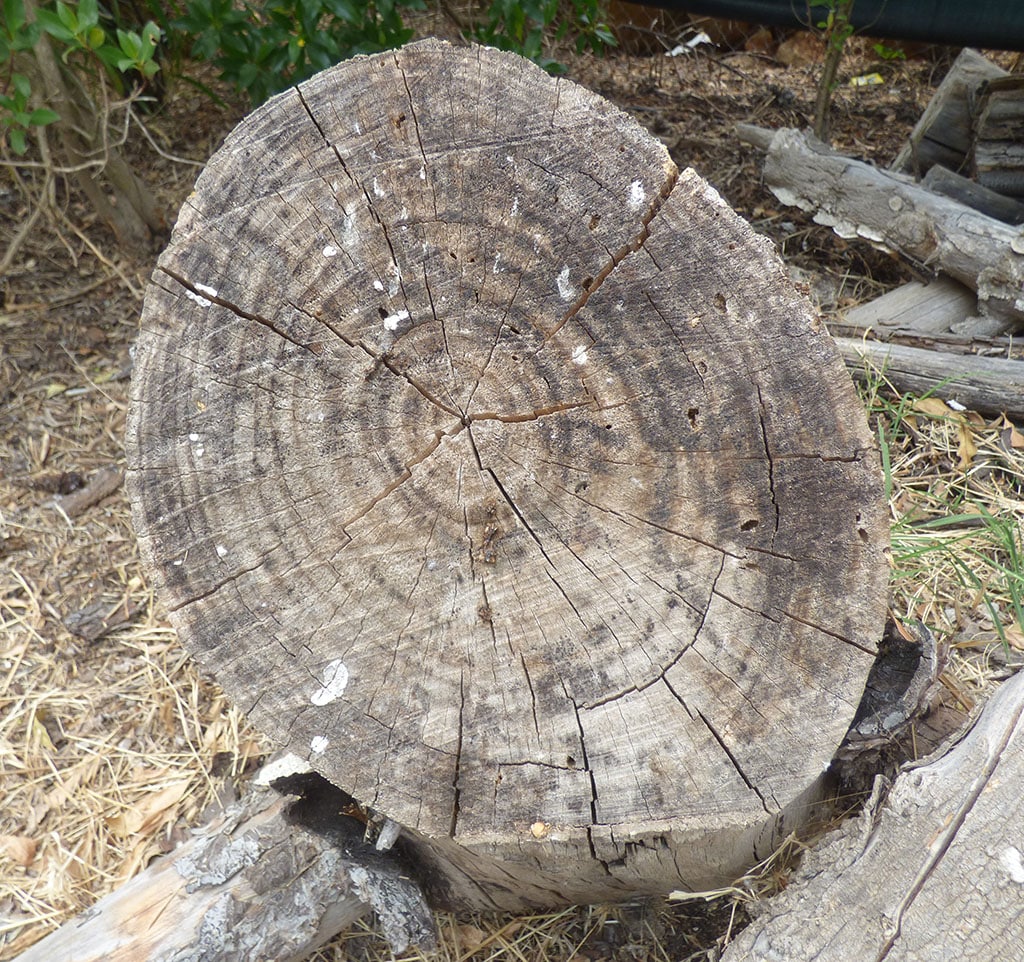
Once you start seeing these forms, they are everywhere. When our lake dries up in the summer months, the dried mud reveals repeating fracture lines which I have always found so fascinating. Have you ever looked closely at the pattern of ripples left on a sandy beach from the movement of the waves, or stood under a tree and looked up through the branches at the sky? Have you noticed how the branches fork in repeating patterns?
However, nature’s patterns are not just to look pretty for they are functional and developed for camouflage, attraction, and survival.
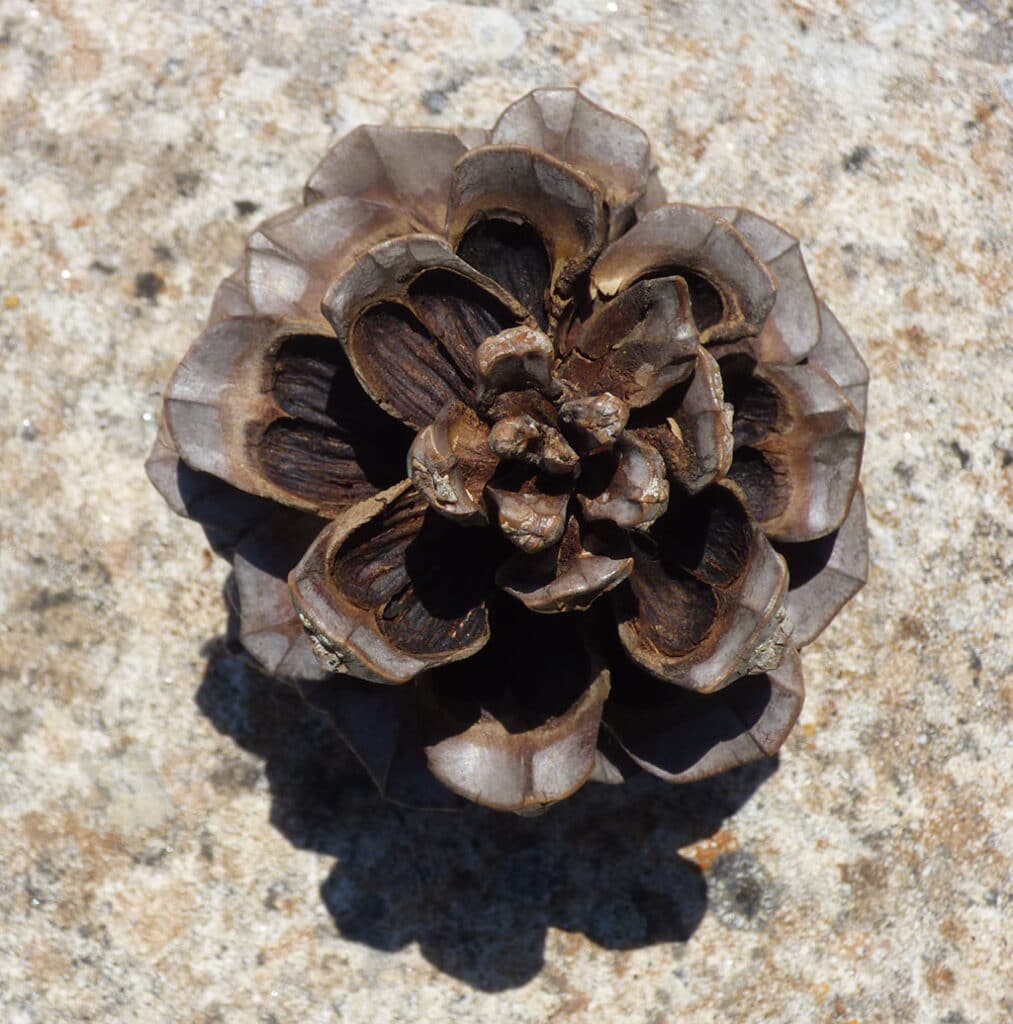
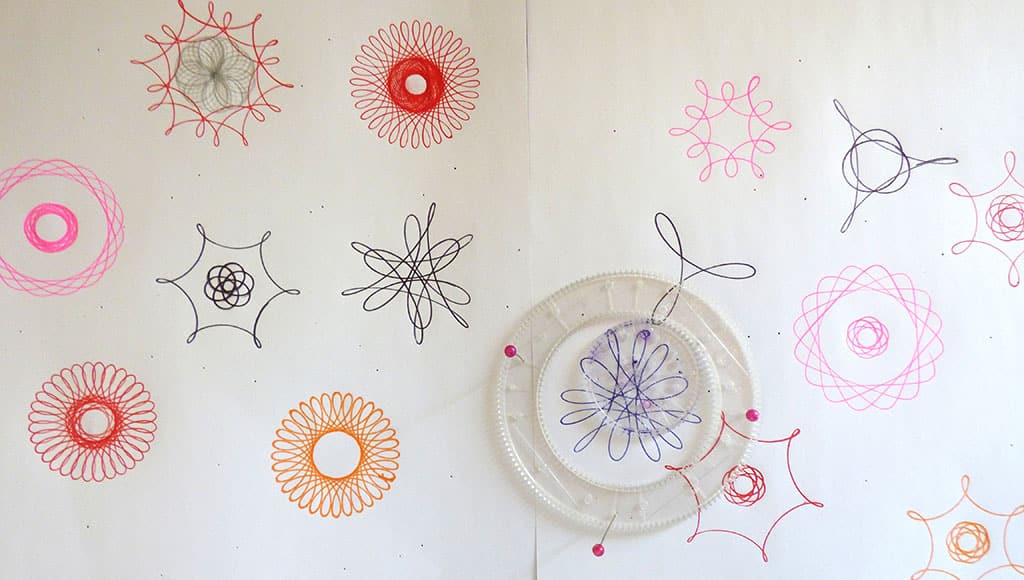
Returning home with my plants, their patterns reminded me of my children’s Spirograph kit, a geometric drawing toy invented in the 1960s by engineer Denys Fisher that allows us to create intricate looping patterns, technically called hypotrochoids and epitrochoids.
You use the set of plastic gears, rings and pens to draw precise symmetrical patterns by inserting the pen in a hole on a smaller gear and moving it around a fixed larger ring to create beautiful flower-like patterns.
Several attempts at making dried flowers resulted in my overcooking and thus shrivelling up the plants, which indicated I needed to refine the microwave dry flower method! And so, bored, I put the rest in a vase on the table, and I dug out the Spirograph instead.
I spent an hour tracing loops and curves, mimicking nature’s patterns as found in flowers, shells and even galaxies. It required patience and concentration to perform the even movements, but it was very relaxing and hypnotic watching the patterns emerge.
Artists have long been inspired by natural patterns, using them in art, architecture, and fashion. You just have to look closely for some of them to become obvious.
So, with the summer holidays approaching, why not plan to go for a ‘pattern discovery walk’ as this can be a wonderful activity for the whole family to do. There are so many beautiful wildflowers, and other plants that merit a closer investigation.
Children can be encouraged to observe nature closely, draw or take photographs, and share the beauty that is so often missed. My children’s grandparents were experts at this, taking my children on nature walks, closely examining each beautiful or interesting plant they saw. Joan was an expert on flowers and Peter was a bird watcher, so between them, my children were taught all about the beauty in nature that surrounds us. Even weeds are beautiful!
The next time you go for a walk, slow down and look more closely. Count the petals on a flower. Examine a pinecone or the lines on a leaf, the cracks in a dry path. Look at things from different angles and you might find hidden designs.
I like to take photographs from above a flower to see deeply into its centre. Look for the patterns, symmetry and sequences that are everywhere. They connect maths, biology, art and science, and you may find that your walks will never be the same again.
So now you know!