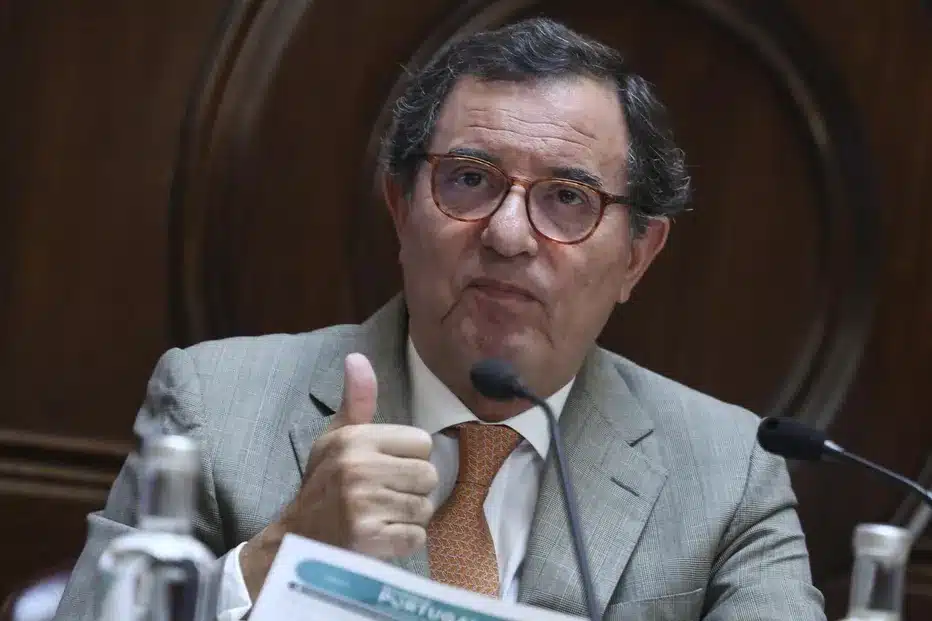
Minister for the economy and territorial cohesion, Manuel Castro Almeida, has given a frank interview today, confirming that Portugal has outdone itself in terms of other countries economically this year – but continues to be a country with enormous inequalities.
These were comments that were very much needed as the country hurtles towards a general strike that some unions are trying to eke out for two days (over Thursday and Friday).
Manuel Castro Almeida showed himself to be a politician who is not just in the game for headlines. People cannot eat economic growth, after all. And, as such, none of the indicators evaluated by The Economist to come to its choice of Portugal as the ‘best performing economy of the year’ assessed the trickle-down effect on people’s lives (which Castro Almedia admits has not yet happened).
“This government takes office with Portugal at 81% of the European Union’s GDP per capita. So we were starting from far behind. We make a big leap forward in 2025, congratulations to the Portuguese people, but we are still a long way off (…) We have gone from being very poor to a little less poor, we have made the biggest leap of all, but we remain a country with great inequalities,” he told SIC.
Last year, Portugal was the OECD country where the average salary grew the most, he added – suggesting growth has not only been down to tourism and the arrival of wealthy foreigners.
“Wealthy tourists do not come to Portugal to work. They come to enjoy themselves, to spend their pensions, not to work. The employment indicator is very good. In fact, it is one of the factors that most contributes to Portugal’s high average score,” he said.
Timing of general strike “incomprehensible”
But on the subject of the general strike, Castro Almeida showed that he fully supports the arguments of his prime minister over timing. “It’s incomprehensible…” he told SIC. Having a strike is legitimate and should be respected, the minister stressed. But with “employment at record highs, public accounts controlled, inflation controlled and the highest increase in average salaries in the OECD in 2024, “the timing really is a little strange”.
In fact, Castro Almeida ventured that “many Portuguese don’t even know why a strike has been called” – and here again he alluded to the inequalities in the country. People don’t understand the reasons because a) the government hasn’t actually been very good at communication, and b) because there is “still a lot of poverty” in Portugal – meaning people don’t have the luxury of following the news intently.
SIC then quizzed Castro Almeida over whether there might be a ‘civil requisition’ to force a sector to work (when it is intent on striking). He said decisions like this fall to the Minister of Labour and Social Solidarity.
But he stressed that the labour reforms that have so incensed the unions will be going forwards, come what may.
“The government’s goal is to modernise the economy and make every company more competitive. It is the only way to increase wages. We have to work every day towards this goal and change laws that are necessary to make companies more competitive, so that work produces more results and companies can earn more. It is the only way to achieve better distribution, better wages and more economic growth. We will not abandon this goal,” he stressed, suggesting the way forwards (after the noise of the general strike) is in ongoing negotiations and a possible agreement with ‘social partners’ (employers and union bosses) before taking the measures to parliament.
Bottom line: even if the unions don’t like it, reforms are the only way.
Source: SIC Notícias