The hotly-contested Foreigners Law has been approved for the second time in parliament – again by parties of the right, with votes against by political groupings of the left.
This time the feeling is that the new measures will ‘satisfy’ reservations voiced by President Marcelo the first time, and upheld by the majority of judges of the Constitutional Court.
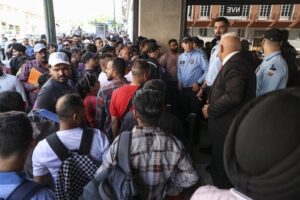
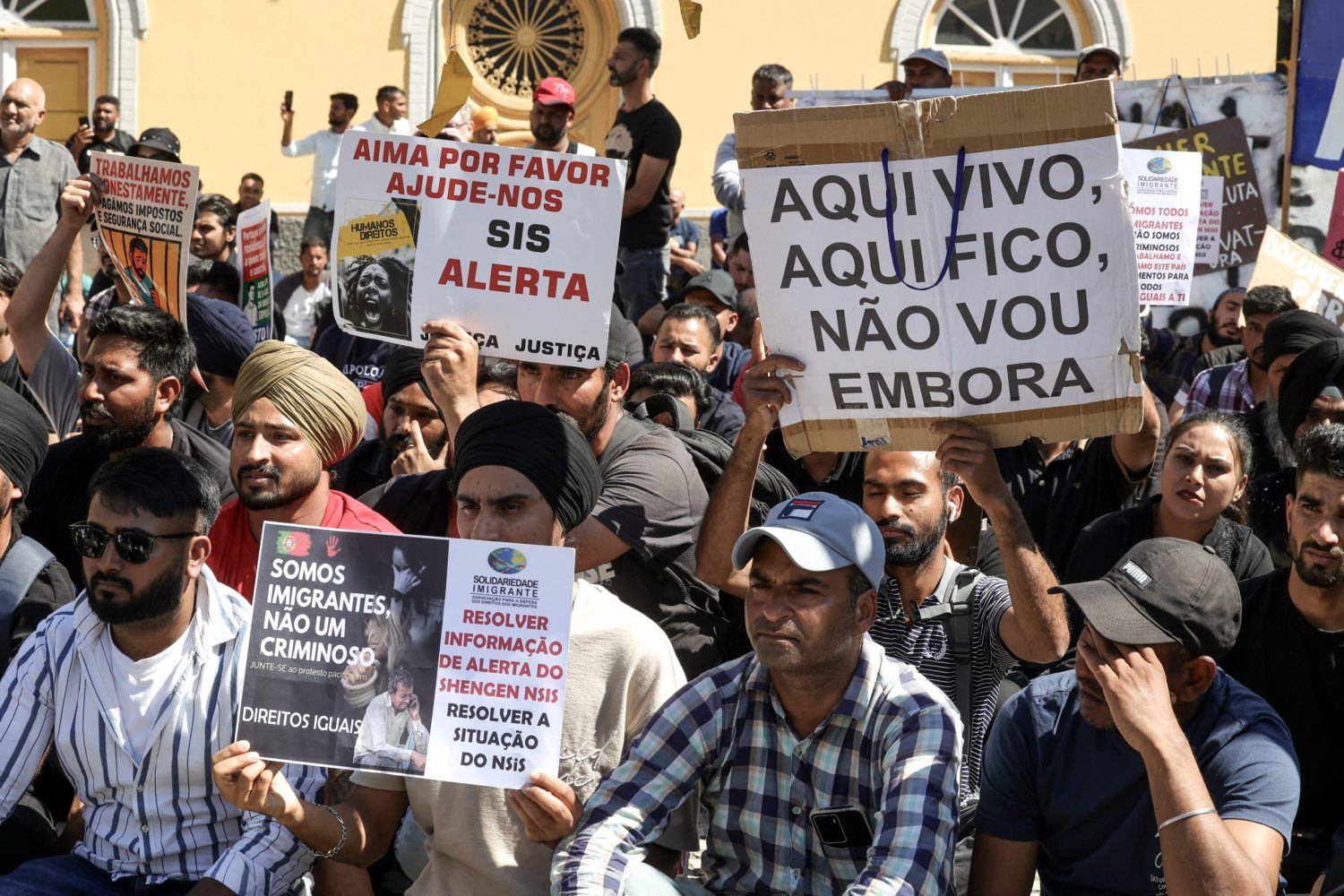
For immigrants still queuing in large numbers for all kinds of documentation outside AIMA (the agency for integration, migrations and asylum), this new law will stand as another impediment to sorting out their lives in the way they had been led to believe would be possible in Portugal.
This was the starting point of this legislation: the lack of controls over immigration, and the truly startling numbers of people who have been arriving from all corners of the less affluent world, and refusing to leave (even when they have no work).
This new ‘watered down’ version of the original diploma reduces time scales for family reunification – but insists on certain provisos: the immigrant living legally in Portugal and requesting that his family join him must be able to prove that he lived as a couple with the woman he says is his wife for a full year “immediately before entry into Portuguese national territory”. If he can do this, the family reunification can take place within under two years. And if the immigrant can prove that his female partner is looking after a disabled child, the family reunification can take place ‘immediately’: there is no need for any delay.
The diploma also requires that any marriage claimed by an immigrant is ‘legal and unforced’. There can be no marriages with minors, or polygamy, says the document.
Immigrants living legally in Portugal and applying for family reunification will have to prove that they have suitable accommodation guaranteed, and “means of subsistence sufficient to keep all members of the family group without resorting to social benefits”.
Regarding social benefits, CHEGA had insisted that it would only vote in favour of the law if immigrants were prevented from claiming benefits for five years (post-legalisation). This has not been written into the law, but the government has agreed to present a separate law in due course focused on the access of immigrants to social benefits.
Discussing the approval at a lunch meeting in Lisbon, prime minister Luís Montenegro said his executive had spoken with all parties ahead of today’s vote, and included a number of suggestions by both main parties in opposition, CHEGA and PS Socialists – proposals that, the PM acknowledged, “are positive”. It now remains to be seen if and when President Marcelo formally ‘promulgates’ the new diploma.
Source: LUSA/ SIC