Now, if causing offence was my game, I could mention that pastel de nata pizza that has recently emerged in London, but believe me, it isn’t. So, I won’t dwell on that parmesan-covered controversy, knowing that today’s primer in Portuguese music could be trouble enough.
In my defence, my impudence is based on my assertion that learning about Portugal’s surprisingly huge array of music, covering just about every genre, is an excellent way to not only pick up extra vocabulary and linguistic dexterity. Melody, rhyme and repetition help it all sink in, allowing also the bonus of fascinating insight into the national psyche and culture.
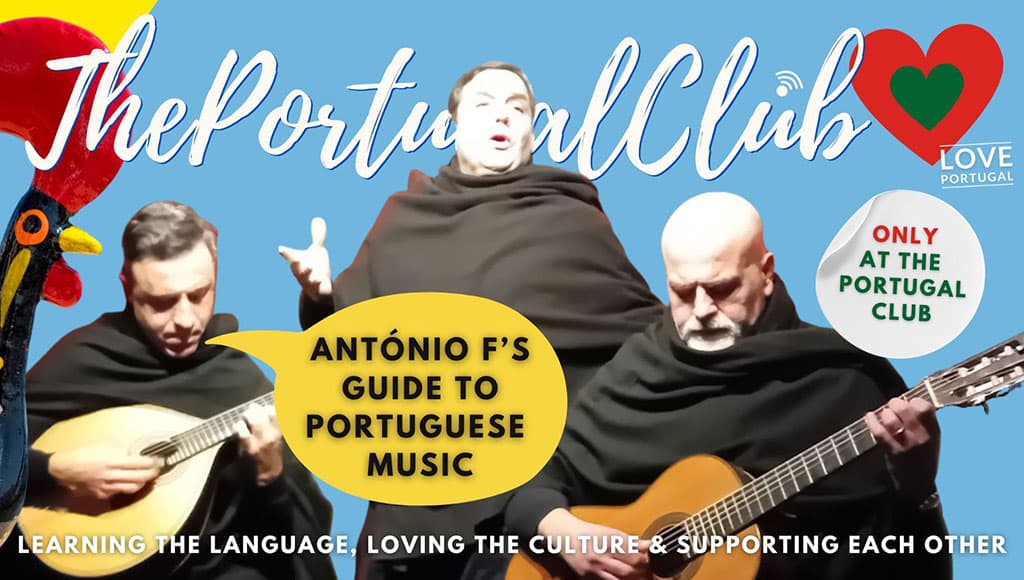
On that basis, and aided and abetted by my online Portuguese neighbour, who I think agrees with me, I am now programming some of the biggest and best names from Portugal’s musical Hall of Fame into my daily breakfast show. Ably and enthusiastically assisted by António, we are also co-creating a massive online guide, which already has over a hundred samplers, reflecting an incredible diversity, in what is shaping up as ‘António F’s Guide to Portuguese Music’.
Now I fully realise that noses will be put out of joint (or should that be ears?) as I share ‘six of the best Portuguese artists’ today, but notice I do not say these are the six best, recognising how personal taste in music can be, where one man’s musical meat is another’s poisonous pimba.
Think of this then as a taster session, or an appetiser, which I sincerely hope will get you hooked, thereafter seeking out on your own main course, side dishes and sobremesa – your very own Portugal playlist of life-enhancing listening.
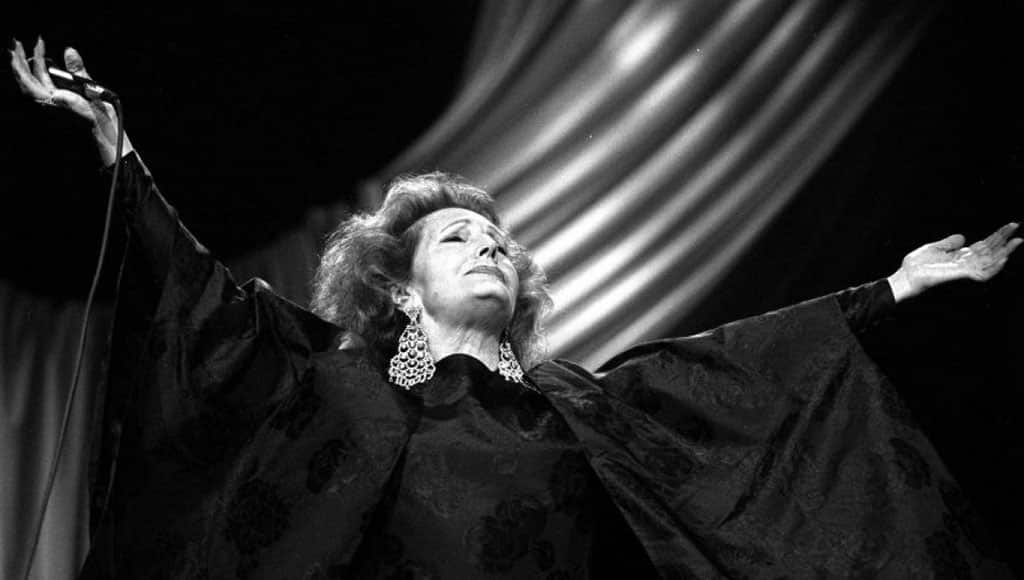
Let’s start then, as we must, and even if it is very predictable, with the Queen of Fado (Portugal’s saudade-soaked blues), Amália Rodrigues. Born in 1920, and as much a historical and cultural icon as a singer, she took the uniquely Portuguese genre and made it, and herself, a global sensation. Singing through the dark days of the Salazar regime, giving Portugal a voice when words could get you in a lot of trouble, Amália is heart-warming and heart-breaking in equal measure. Try ‘Uma Casa Portuguesa’ for the former and prepare yourself for the latter, by following up with ‘Fado Português’, the single from a remarkable album of the same name.
Next up is folk hero and rhythmic revolutionary Zeca Afonso, whose music is synonymous with the Carnation Revolution of ‘74. Born 45 years before that pivotal moment in Portuguese history, Zeca, a teacher, singer, and ultimately all-around legend, gave the Estado Novo regime a two-fingered salute with his song ‘Grândola, Vila Morena’. Played on the radio as a signal to the revolutionary forces to initiate their daring coup, the song – sung proudly in the Alentejo acapella style, with the gravel-crunching sound-effect of marching as its intro’ – turned the formerly disgraced teacher, with anti-establishment values, into a full-on folk hero.
The most challenging inclusion here must be Carmen Miranda. Yes, the ‘Brazilian Bombshell’ or ‘Fruit-Hat Firecracker’, who makes my cut because she was born in Portugal, before her family emigrated to Brazil, with her as a babe-in-arms. It was her 1930 hit ‘Taí (Pra Você Gostar de Mim)’ that made her a star, paving the way for her to become the highest-paid woman in America by the 1940s, eventually starring in magnificent films like Copacabana. Perhaps Portugal’s ultimate girl-power expat success story, please try her ‘Chica Chica Boom Chic’, if the saudade ever gets the better of you, especially the video version, with her signature and fully-fruity production values.
Bringing things up to date is Ana Moura, one of Fado’s modern-day superstars with her smoky, soulful, and downright addictive sound, that brought her to the attention of Mick Jagger, recently spotted enjoying himself in Portugal, and Prince (yes, that Prince). Ana fast-forwards fado, mixing it up with pop and jazz, which is ideal for people who think they don’t like Portugal’s traditional sound, or ‘feel it too deeply’, as some do. Jump into ‘Dia de Folga’, for a joyous immersion into her infectious sound and style, and enjoy some great Portuguese guitar playing.
Lisbon-born contemporary crooner Salvador Sobral makes our VIP list. He who stole the show and hearts of Eurovision back in 2017, with ‘Amar Pelos Dois’, an unusually down-tempo and un-showy number for that typically camp competition. It was Portugal’s first ever win in 53 years, and some say Salvador has a ‘just rolled out of bed’ charm, where the voice does all the work. With a delightfully sensitive and soulful voice like his, the man needs no gimmicks, and despite self-declared complex health issues, he still takes the trouble to be a humanitarian campaigner as well as entertainer.
Last, but certainly by no means least (and realising we need a part two, if not a part 102), I share with you the dapper gent Carlos do Carmo AKA “The Gentleman of Fado”, who is credited with bringing fado into the modern era. Born into a fado family, Carlos combined tradition with innovation on his ‘Um Homem No País’ that was a love letter to Portugal. I have a weakness for the era in which he made his name, where men with smooth voices and sharp suits ruled live and TV stages, evoking a sense of wholesome romance and hope that our cynical and turbulent age can lack. Try ‘Lisboa Menina e Moça’for a taste of those ‘happier times’.
As ever, and as can be seen – I hope, in conclusion – with this awkward but awesome selection, Portugal punches way above its weight, AGAIN, this time with its musical contribution to the world, seeding samba, sharing and evolving Fado, and freeing the people with folk. Through the music, I promise you will understand the mind, and feel the heart of our hosts, so come and join us in the mornings as we explore Portugal’s musical heritage and current generation on the Good Morning Portugal! breakfast show.