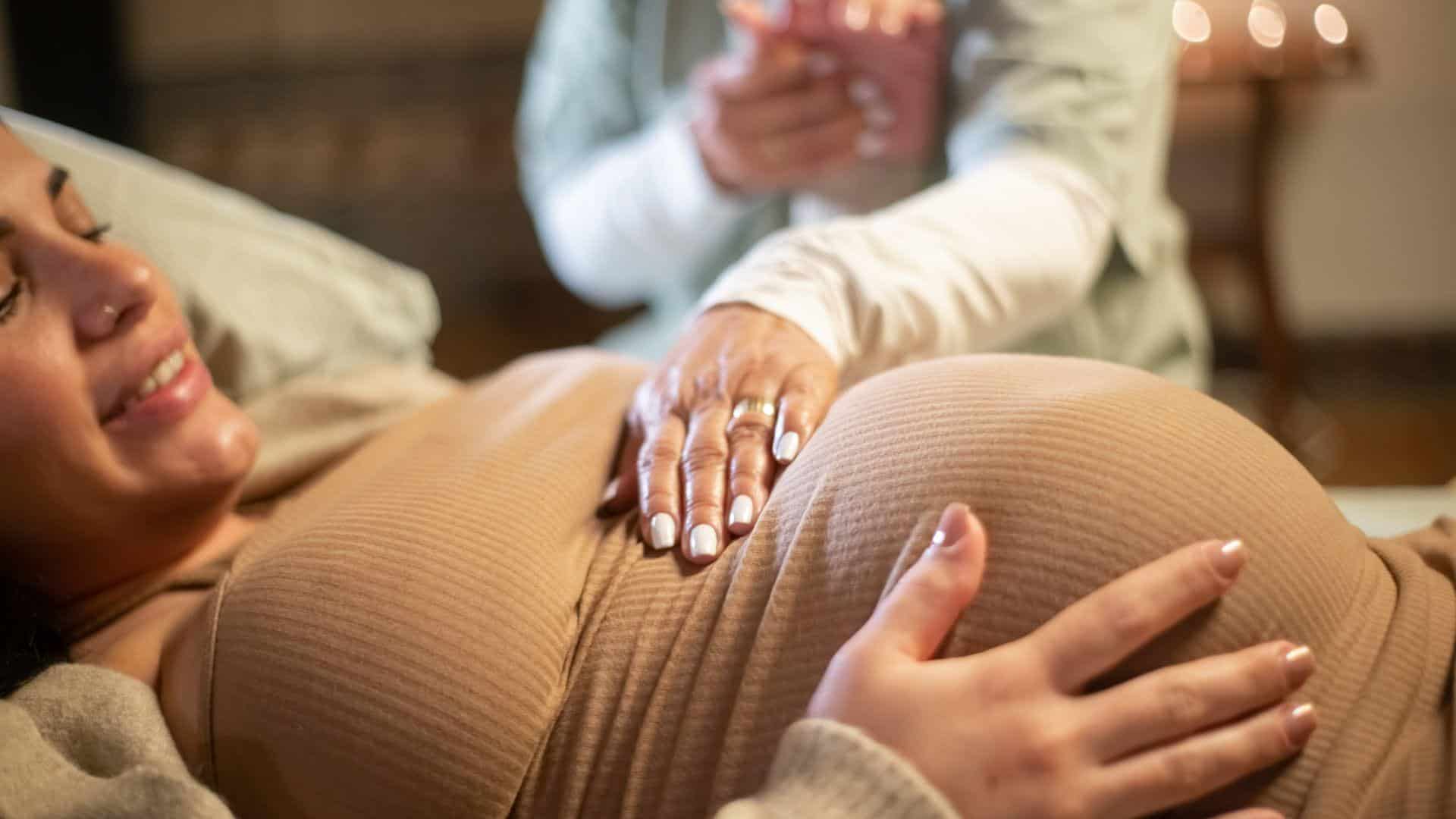
In a statement that will have many expectant mothers snorting in derision, if not outrage, Portugal’s health minister Ana Paula Martins has told a parliamentary health committee that albeit ‘home births are on the increase in Portugal’ – in the face of highly unreliable opening hours of maternity services – they are not safe.
Citing 150 births outside hospitals this year, Ms Martins added that “it must be said that some fortunately have not had fatal outcomes because INEM (emergency medical services) arrives in time, the SIV (life support ambulance) is called and the birth takes place in the ambulance. Otherwise, we would have had fatal outcomes.”
The minister did not give any numbers on these near fatal outcomes, and there was no references to the babies that have not been so lucky, the mothers of whom were all trying to reach a public hospital in time.
She stressed that she “does not have objective data”, but that INEM reports show that ‘home births’ are on the rise.
This is actually a phenomenon that has been in clear evidence in Portugal for most of the last decade. Young women are attracted to the unhurried, natural approach to childbirth – and many of these may not even be flagged by INEM as the births go well, and the decision whether or not to have the foot-prick test within the first days of life (the habitual method of measuring the birthrate in this country) is not always taken up.
Thus, for Ms Martins to say that “home births are never safe” is a sweeping overstatement, discarding the professionalism of trained midwives and doulas who work legally in this country, pay taxes and present the requisite paperwork to prove their credentials.
All that being said, it is unlikely that the statements of a government minister would deter women who do not want to submit themselves to a ‘hospital birth’.
Ana Paula Martins was being heard yesterday over multiple perceived failings in the Portuguese state health service, not just the inability of obstetric, maternity and pediatric services to work with any kind of well-oiled regularity.
She ‘revealed’ (in the words of Lusa) “that there has been an increase in the number of pregnant women who seek care from the national health service and were not monitored during their pregnancy”. This again is a veiled reference to the complaints that foreigners arrive in this country pregnant, in order to have their babies registered as Portuguese. Indeed, it was once given as a reason for the death of a young pregnant woman when the hospital she went into, seeking help, refused to admit her.
At yesterday’s hearing, Ana Paula Martins drew attention to the need for ratios of obstetricians and nurses specialising in Maternal and Obstetric Health Nursing (ESMO) that are more appropriate to the current reality, revealing: “For every 100 births, 80 are performed by ESMO”.
She also pointed out the need to review, with the Order of Physicians, vacancies for medical internships:”‘I cannot have a service prepared for five interns and put 15, but I also cannot have a service prepared for 15 interns and only have five”, she said
Regarding seven unfilled vacancies at the Garcia de Orta Hospital in Almada, the minister explained that three specialists chose to go to other institutions with better salary conditions and two are still considering their options.
Source material: LUSA