Okay, okay – how hot is it?
It is so hot that when I went for a walk recently, my Crocs melted.
I know what you’re thinking – who wears Crocs anymore? To be honest, the ugly but comfortable and somewhat popular rubber footwear were never “in style” exactly and were often associated with more elderly types, who didn’t seem to care what their feet looked like as long as they weren’t barefoot.
For most of my adult life, I was a boat-shoe kinda guy, especially in the summer months. These informal leather moccasins, also known as deck shoes or “topsiders,” had rubber siped soles for better grip in case you ever were on the wet deck of an actual boat. They also had thin leather laces tied in a bow that held the shoes on usually bare feet. This made them pretty good precursors to Crocs, though I’ve found Crocs to be right darn slippery on cobblestones here in Portugal.
My lovely wife and I began wearing Crocs when we were first retired and living in Panama. So yes, we were typical “matures” even though my lovely wife often received compliments for her snazzy, bright yellow ones. At one point, I had four pairs, including one leather pair for “party casual” and a black leather pair for “dress causal” that I actually wore to a couple of weddings.
The main point, however, was that rubber shoes with lots of air holes were ideal in a country that had something called a rainy season. People in Panama City weren’t particularly conscientious about trash disposal and sometimes got rid of their garbage by dumping it down the sewers, which inevitably backed up causing vast puddles across most streets. Since it rained most days for eight months, one eventually stepped in a puddle up to her or his ankle after the daily thunderstorm. I sometimes saw fashionable ladies walking around the city in high heels and I don’t know how they did it. Maybe they never crossed a street.
Donald Trump, who has been reelected President of the United States and is in the news everywhere and all the time, seems to be determined to have an affect on as many walks of life (get it?) as possible. Executives at Crocs corporation, for example, have reported that the tariffs that Trump is imposing will cost the company as much as $40 million (that’s nearly €35 million. That’s right, Trump has also caused the dollar to drop to new lows when converted.), and cause prices to rise for those still buying the practical but silly-looking shoes. (He’s also reeking havoc on Portuguese wine prices, but that’s another story.)
However, as time passes, styles change with a 30% drop in Croc sales and many Boomers have moved on to trainers or sneakers that are easy to slip on. The main brand is Sketchers and you don’t even have to bend over to slide your feet in with some styles even looking okay with slacks.
I still wear Crocs as slippers around the house or in the garden, but when I venture out, I’m in sporty looking slip-ins that you don’t have to be an athlete to get on.
Boy, oh boy, it is hot. You know what I mean – hot. Really, really hot.
Yeah, all right, how hot is it?
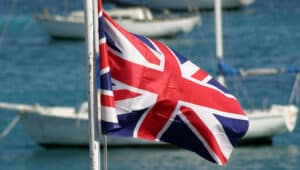
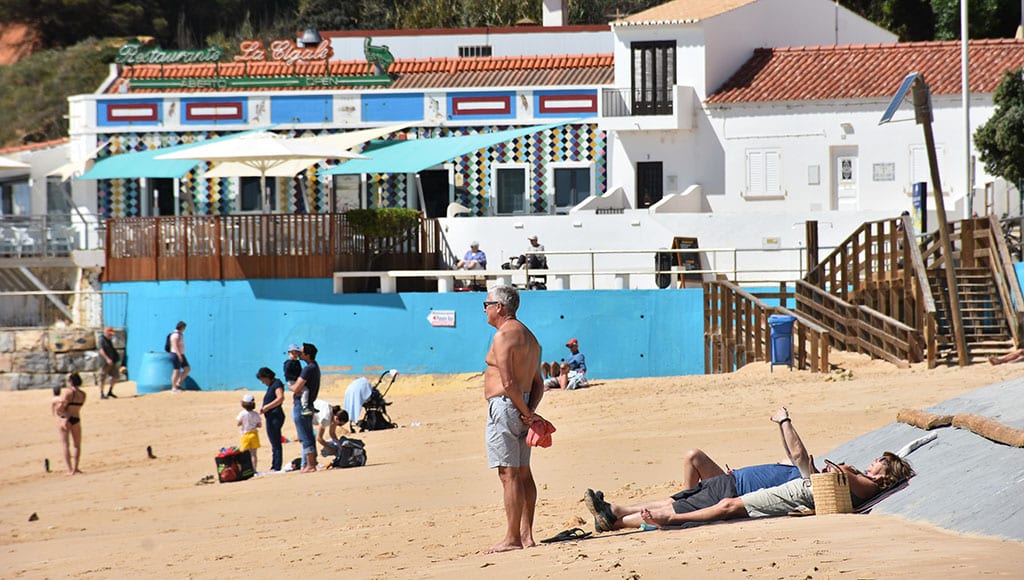
It is so hot that the only people out on the beach after 11am are British tourists.
You can rank sunbathers who are visiting from Great Britain the same way you rate cooked beef, going from medium rare to well done. For some, sunburn doesn’t seem to be a problem but rather a goal. There are no stats, but I believe that many of the bar fights every night in Albufeira are caused by drunks bumping into the arms of other revelers who are red to the third degree.
I have some friends who work beach concessions, who have actually stopped by a lounge chair occupied by a glowing pink person and suggested that he or she might want to go inside or at least cover up.
More often than not, such a sun-baked individual will say something to the effect “No, I’m okay. I tan rather than burn.” Rather than making a snide remark like “too late,” the concerned citizen just moves on and hopes for a passing cloud in a place that has sunshine 300 days a year.
So, why am I stereotyping Brits? The French, Germans and Americans get sunburned too, don’t they? Of course they do, but folks from England, Scotland, Wales and, yes, even Ireland make up the majority of the blistered, partly because they’re mostly fair-skinned and there’s simply more of them.
It’s no secret that the Algarve is a top destination for British sun-seekers. To be quite honest, it rains a lot in England. I watch some British news on the telly, and I’ve come to enjoy the weather reports the most because it seems that the weather person feels obligated to work the word “sunshine” into the report whenever possible. One of my favorite passages is the phrase “scattered patches of sunshine,” which sounds kind of optimistic until you picture what is surrounding these sunspots.
It’s sort of ironic that the time of year when I tell friends and family not to come for a visit is July and August, when it is just too blasted hot and also the most crowded.
The crowds of Brits want guaranteed sunshine and the Algarve has that for sure. So, they flock here and fully book hotels, blanket the beaches with umbrellas and make reservations at all the better restaurants; actually all the restaurants.
We were with friends recently from Tavira (a busy place this time of year) and we decided to show them Faro Beach since they had never been. We drove across the new bridge and kept our eyes out for a parking place. We crawled in traffic from one end of the island to the other and never saw a hint of a place to stop. Several other cars that were in our line followed us back across the bridge, while some continued the rather hopeless quest. There was no available parking on the island.
The English generally use Celsius as their official temperature measurement, though the use of Fahrenheit still appears in conversation and some media, like tabloids, for emphasis on hot weather or for an older demographic like ol’Pat for example.
The UK Met Service switched to Celsius in the 1970s as part of its metrication process, and, unlike the USA, Celsius is now the dominant unit for at least weather reports if not daily life.
I prefer Fahrenheit, especially in the summer if for no other reason than 96 sounds a hell of a lot hotter than 36.6 and you don’t have to use decimal points – it’s an even 100 degrees not 37.7. It does make more sense for freezing to be zero (0) degrees than an arbitrary 32, but I guess it’s what you’ve grown up with and learned to accept. Personally, I can deal with either or both and I don’t need to do the math to understand that 40 is too darn hot.
Sometimes it gets so hot (you know 104) that my lovely wife and I simply do not go out. We’ve had experience not leaving the house for days during the Covid lockdown and so we’re used to total isolation. There are exceptions though.
During a heat wave, when we have to go to the grocery store or the post office, we often wait for the hottest part of the day at around 2pm, right after lunch, to do our errands. Since we’re not Englishmen, we call ourselves “mad dogs” and get waited on without delay.
Yup, it is hot. Wow, it’s hot. Very, very hot.
Fine. So, how hot is it?
It is so hot that parts of Portugal are on fire and that’s no joke.
For some people, the wildfires don’t seem to be much of a problem, but for others, the fires can be life-threatening and tragic. Just because some fires occur every year because of where we are situated geographically and because of a very dry climate doesn’t mean that people can’t do anything about it.
I realized I was rather blasé recently when my brother back in the States (who had seen televised reports about Portugal, Spain and Turkey) emailed me and asked about the fire situation. I responded that it wasn’t a problem because there were no fires burning near where I lived.
True for the time being, but we’re all actually under the threat. I’m not going to get into the specific politics of it all, but it is obvious that local governments need to be better prepared and the national government needs to have a more effective and comprehensive plan.
Meanwhile, I think we need to take personal responsibility more seriously. I remember the first time I was grilling some burgers over charcoal when a few sparks blew away in a light breeze. I threw away the charcoal grill the next morning as an obvious fire hazard. Gas isn’t as tasty but way safer.
Many cars these days don’t have ashtrays to discourage smoking, but that doesn’t mean, if you do smoke, that you can throw the butt out the window. I don’t smoke anymore but, when I did, I bought a plastic ash tray from a Chinese store that fit in the cup holder because I didn’t want to be a criminal, which is what you are if you flick your filter tip out the window.
There obviously needs to be more forest management with more and better fire breaks and the planting of eucalyptus trees needs to be discouraged and much better controlled.
I also believe that arsonists need to be punished at a much more severe level than they are currently. In 2022, 28% of fires were caused by arsonists, but penalties for the crime of arson varied greatly, with a maximum 25-year sentence for an arsonist who causes death. How about a minimum sentence of 25 years? I believe that all cases of arson should be treated as attempted murder, which they are in potential if not fact.
There was an article in the Resident recently about attempts to rehabilitate people guilty of arson, and it was mentioned that there was rather substantial recidivism among these dangerous criminals. I suggest counseling only after they’ve served enough time to deter even thinking about causing something as devastating as a wildfire.