Join the Kew
Kew Gardens is in South West London and proudly boasts that it is the largest UNESCO World Heritage Site in the UK capital. Out of interest, the others are the Palace of Westminster and Westminster Abbey, the Tower of London and Maritime Greenwich.
The gardens at Kew were founded in 1759 and opened by the mother of King George III, Princess Augusta. The collection of interesting flora from around the world has grown over the centuries and today boasts some 27,000 living specimen plants with a further 8.5 million preserved plant and fungal cultures. There is also an extensive botanical library with some 750,000 volumes and in excess of 175,000 prints and other drawings of plants.
There are 1,100 members of staff and it is run as a non-departmental public body, sponsored by the Department for Environment, Food and Rural Affairs. Covering an area of 330 acres (132 hectares), the entire property is listed Grade 1 by the Department of the Environment and even has its own police force – the Kew Constabulary, which has been in operation since 1845.
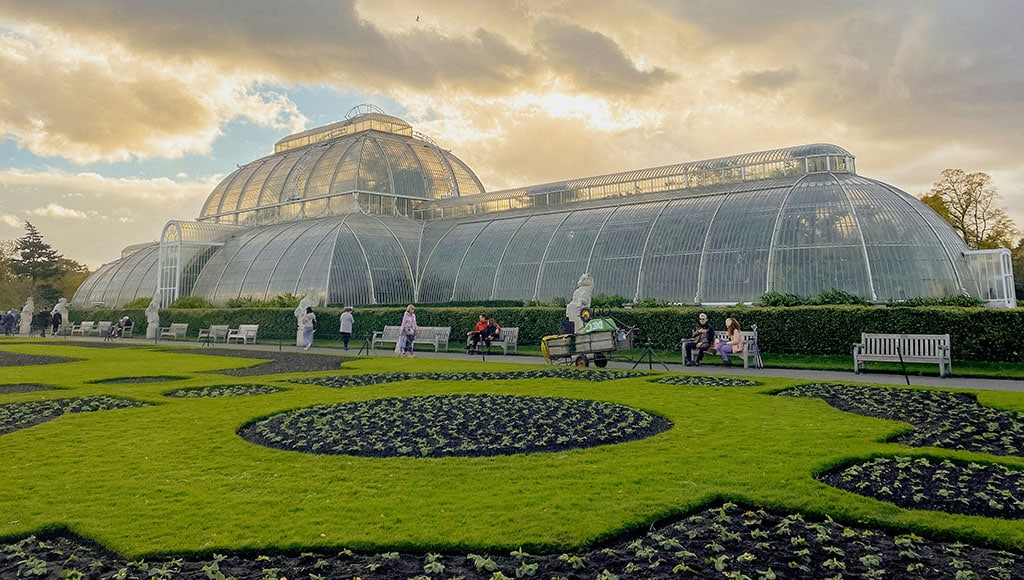
Londoners were, therefore, a little shocked to hear last month that the famous centrepiece, the Palm House, will close for five years from 2027 whilst this famous landmark undergoes a substantial renovation project. The numbers are breathtaking: it will involve moving some 1,300 plants, replacing 16,000 panes of glass and will cost an estimated £50 million (€57.3 million).
There are real concerns for some of the plants, particularly one of its most famous specimens, Encephalartos altensteinii. This is a type of cycad and, at around 250 years old, pre-dates the Palm House itself!
Thomas Pickering, head of glasshouses, said: “This is probably the plant that I worry about moving the most. It’s the sheer size of it. It has a huge weight in that root ball, but also this incredibly long stem, which is very old because they’re incredibly slow-growing plants.”
The Palm House was completed in 1848, but the iron work is rusting badly in places. It will all be extensively renovated over the coming years with as much original material as possible stripped, renovated and retained.
There is also an ambitious plan to make the entire site carbon neutral. This may seem straightforward, but the sheer size of the Palm House and the need to maintain a constant 21ºC temperature creates a significant challenge.
Rachel Purdon from Kew Gardens said: “The really important aspect of this is to try and ensure the structure can last as long as possible before we have to do another refurbishment.” The last significant renovation work took place nearly 50 years ago, but the sheer scale of the current proposals put this in a different league.
So, the advice has to be, get along to see this famous botanical landmark by the end of next year or face a long wait until it reopens.
Football came home … finally!
We have heard all the songs and fans have trailed around the globe to support England’s footballers in their quest to bring home a major international trophy. But after decades of disappointment with the men, it was once again the ladies of England who were able to parade in triumph through the UK capital in front of Buckingham Palace.
Astonishingly, it wasn’t until 1971 that women were even allowed to play football on Football Association-affiliated pitches in England! But goodness, they have caught up quickly and put their male counterparts to shame by winning the 2025 Euro – for a second time in a row!
Some 65,000 people watched the spectacle of the Lionesses showing off their trophy from an open-top bus as it proceeded along the Mall, famous for its Royal and Military processions.
There were tears of sheer joy and emotion and a staged ceremony took place at the Queen Victoria Memorial, right in front of the palace. Chloe Kelly was perhaps the biggest hero of all for her penalty conversion and thanked her fans for ‘not writing her off’. Watch and learn men, watch and learn!
The best fish and chips in London?
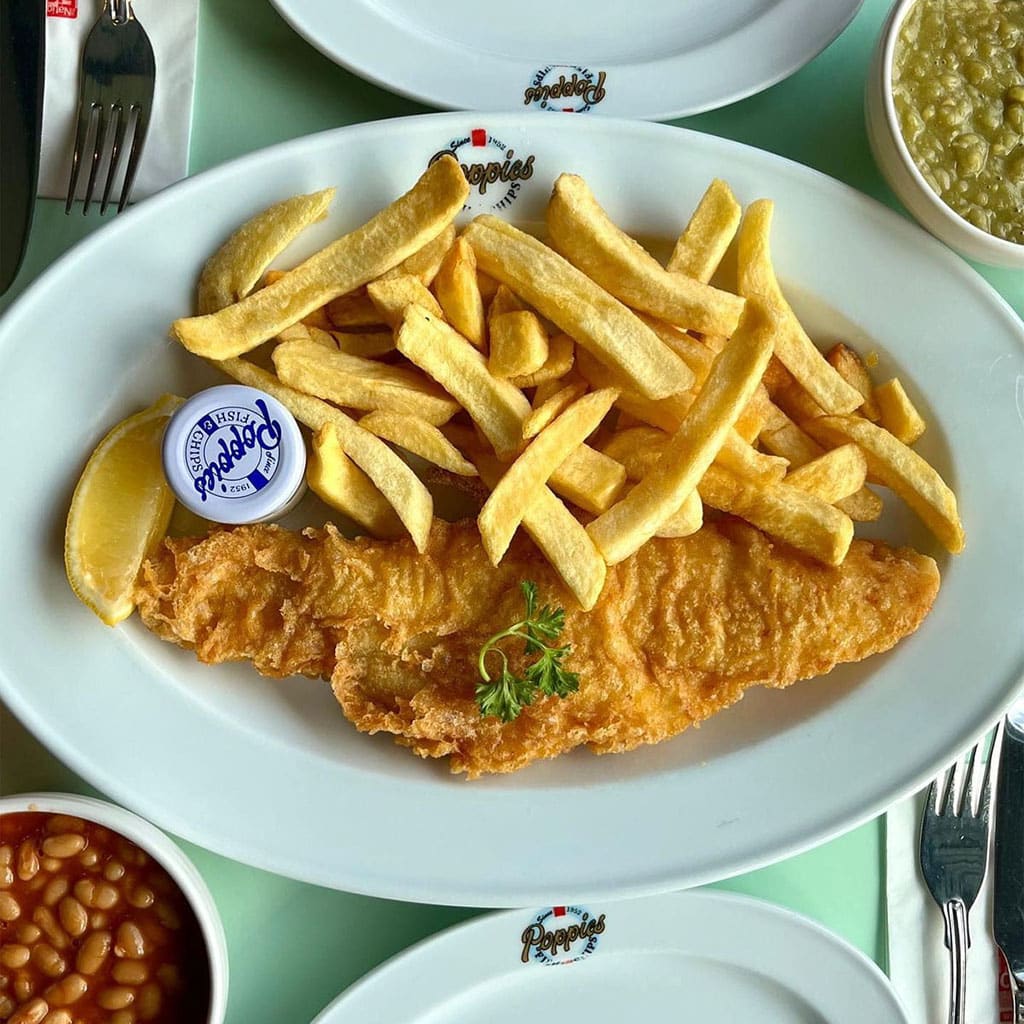
Ask most people for a definition of the nation’s favourite food and they will usually refer to the deep-fat fried piece of white fish and accompanying fat cut chips.
London is, of course, a little way from the sea but has the UK’s largest and most famous inland fish market, Billingsgate, within the city so there is always a ready supply of the vital ingredients.
But which fish and chip shop is the best? Well, this is of course very subjective with most people swearing by their local purveyor of the delicacy.
Your columnist has a particular favourite – Poppies in Old Compton Street, Soho. The batter on the fish enhances the flavour and the chips are cooked to perfection. The only downside is that it is a little far from home, necessitating eating out of the paper in a nearby churchyard. Aficionados would, of course, claim this is the way to do it!
It is estimated that there are several thousand fish and chip shops in the UK capital, so the quest for the best continues!
Meanwhile, an interactive art exhibition based on the National Dish has opened in Mayfair. Artist Lucy Sparrow has created ‘The Bourdon Street Chippy’ as a nostalgic insight into the nation’s ongoing fascination with the food.
There are 65,000 hand-crafted, felt pieces including hand-stitched fish and chips, salt pots, bottles of vinegar and mayonnaise, all in what looks, at first glance, like a normal, fully fledged fish and chip shop. This meticulously created exhibition even includes 15 distinct individual chip shapes in five different colours!
Artist Lucy has created life-sized versions of everyday spaces all over the world for many years. These include corner shops, supermarkets and pharmacies, where every item is created in felt and available to purchase.
This nostalgic, highly unusual but very healthy exploration of something that is certainly familiar to us all runs until September 14 and is well worth a visit. Probably best to eat first!