Bigger is better
The West End has a huge number of top-quality venues, many dating from the Victorian and Edwardian eras, concentrated mainly around Shaftesbury Avenue and Soho. More-or-less anything goes, from dynamic, avant-garde new productions to other traditional favourites such as ‘The Mousetrap’, which astonishingly has now been running for more than 70 years!
Well, there’s a new kid on the block. Troubadour Theatres are planning on opening London’s largest theatre on the Greenwich Peninsula in South East London.
There will be two 1,500-seater auditoriums, which puts it way ahead of the current holder of the largest theatre crown, the Coliseum, in the West End, which opened in 1904 and has mere capacity for 2,359 people!
Oliver Royds and Tristan Baker, joint founders and CEOs of the theatre company Troubadour, said: “Securing planning permission for the new Troubadour Greenwich Peninsula Theatre marks a major milestone for us, and an exciting new chapter in our commitment to bold, large-scale live performance.”
Planning permission has unusually been granted for a temporary period of 10 years, with the intention then to build residential tower blocks in accordance with the Greenwich Peninsula Master Plan.
The Greenwich Millennium Village Residents’ Association support the new theatre plans. Sylvia Williams said it would be a ‘welcome addition’ to the cultural life of the peninsula.
Better by rail?
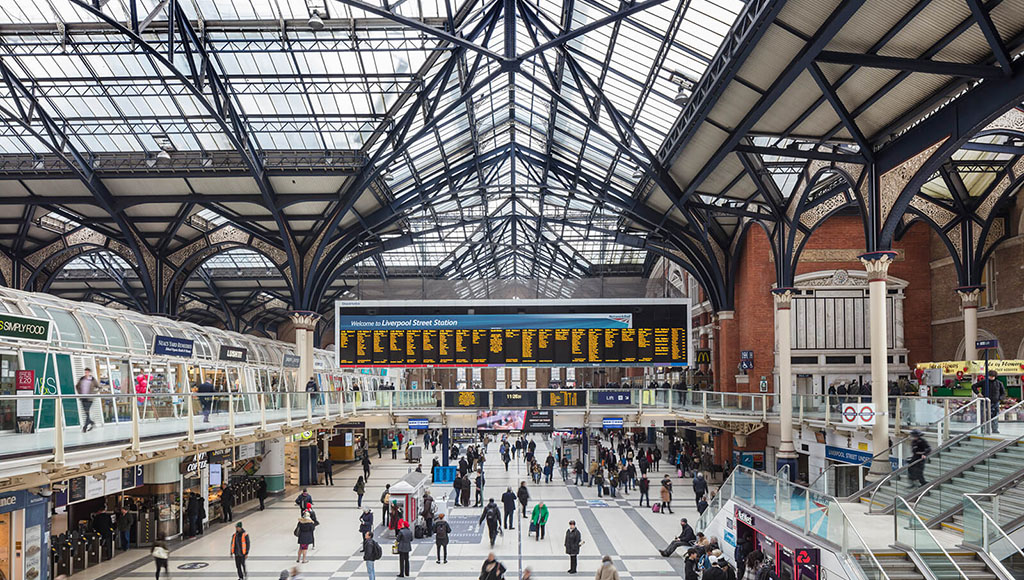
The 10 busiest stations in the United Kingdom are all in London. Top of the list comes Liverpool Street Station which serves Eastern England with an astonishing 98 million passenger entries and exits last year. Second is Waterloo with 70.4 million and in bronze position is Paddington with 69.9 million.
With Liverpool Street being such a busy station (and very familiar to your columnist!), there has been some serious trepidation to ambitious plans to redevelop the complex, but these plans have now received the necessary approval.
The site has a Grade II listing which will, of course, protect much of the original Victorian structure that remains in place, but the new proposals are certainly ambitious. The £1.2 billion (€1.38 billion) project includes a mixed-use, 97-metre tower block over the concourse, but Network Rail have promised to respect the station’s ‘unique heritage’.
Actor Griff Rhys Jones, who has family links with the area served by Liverpool Street, is also president of the Victorian Society and the Liverpool Street Station Campaign (Lissca) and said that the approval was a “sad day for the City of London”.
Additionally, he commented: “A disfiguring billion-pound office block on top of a major heritage asset is not essential to the City’s development plans. It is doubtful whether it will easily provide the profit to ‘improve’ the concourse and can only realise a small amount of extra space for the passenger. Its focus is retail opportunities, which the commuter doesn’t need. It will destroy an existing conservation area. It demolishes listed buildings. It is harmful to the surrounding historic fabric.”
Lissca claims thousands of supporters in their opposition and say they will now await the final decisions of the Mayor of London and Secretary of State for housing, communities and local government.
Ellie Burrows, managing director of Network Rail’s Eastern region, said: “This decision represents a key step towards the transformation of Britain’s busiest station and marks the beginning of an exciting new chapter for Liverpool Street. Our plans focus on improving the everyday experience for our passengers while respecting the station’s unique heritage.”
With current economic trends and changing working patterns in the UK capital, it is difficult to see that the huge upheaval at one of the key travel hubs will be welcome to commuters or that takers for commercial, residential and office space will actually be forthcoming in big numbers. Watch this space!
It’s brutal out there!
London probably rightly has the claim to being the most architecturally diverse city in the world. With roots in Roman times and evidence of this in abundance, there are centuries of history where fires, floods, plagues, wars, religion, foreign cultures and so many other influences have played their part in the way the capital looks today.
The Second World War saw the city targeted and many of the capital’s most beautiful buildings were lost. People have said though that post-war planners did far more damage to London than German bombers ever did and this remains a matter of fierce debate.
Certainly, some of the post-war building practices were questionable and people today still live with the consequences of decisions made long ago.
Brutalism was a post-war phenomenon in architecture and there are many examples in London which people seem to love and hate in equal measure.
The Barbican, just north of the City’s financial district, is perhaps the most famous with its striking towers overlooking formal but of the time futuristic gardens, waterways and common areas, all built on this heavily bomb-damaged part of the capital.
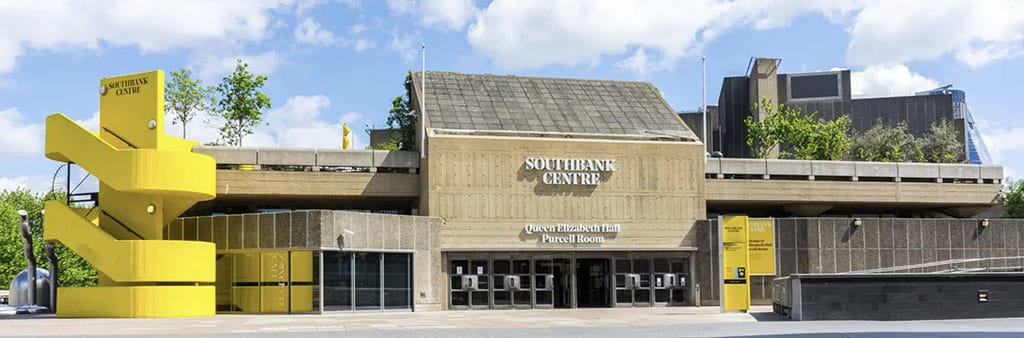
On the Southbank of the Thames, there are other famous landmarks from this era and one building, which has previously been described as ‘Britain’s ugliest’, has just achieved Grade II listed status after a 35-year campaign.
The Southbank Centre certainly looks like a futuristic concrete jungle and was designed by architect Norman Engleback. It famously hosts visual arts, theatre, dance and contemporary work from artists, songwriters, authors and poets.
Catherine Croft, director of the campaign group Twentieth Century Society, said: “We’re absolutely thrilled that this internationally recognised concrete masterpiece of post-war architecture has finally been accepted as part of our national heritage, some 35 years after the Twentieth Century Society first campaigned for the Southbank Centre to be protected. It has been our longest-running campaign ever, so it is fantastic to have it recognised as the really important building that it is.”
Alongside this successful campaign, the Southbank Centre is also asking the government for support to the tune of some £30 million (€34.4 million) to support improvements to its infrastructure in its 75th anniversary year.
Read Richard Lamberth’s last month’s article: London Calling – December 2025