Christmas is coming!
London is one of the most iconic cities in the world at Christmas time. Something that has become increasingly popular over the last few years have been trails featuring sculptures of interesting fictional or real-life creatures and objects dotted around the capital. Not only restricted to Christmas, these are very popular with children and adults alike and are usually accompanied by some sort of quiz or competition.
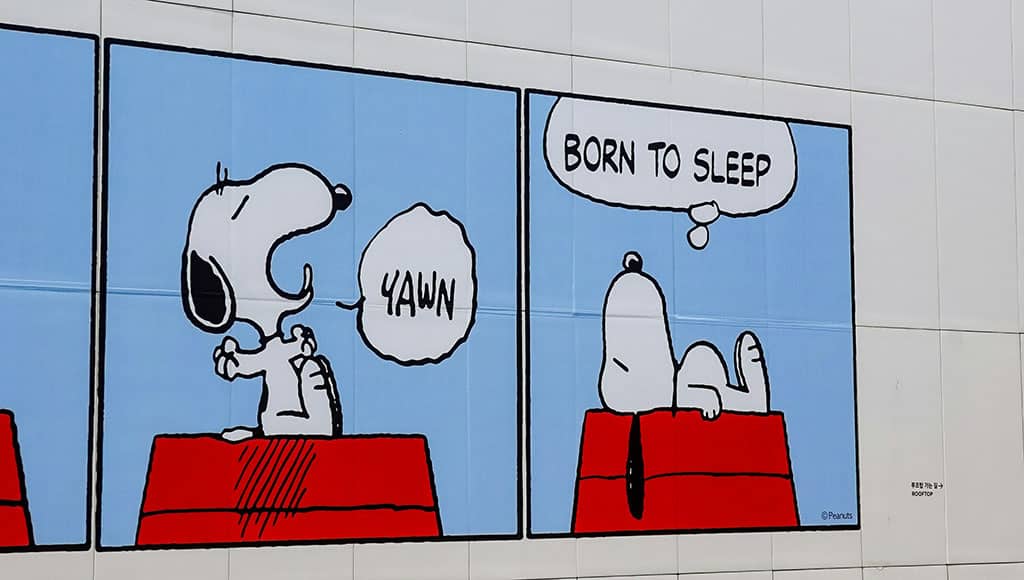
There have previously been elephants, bears, turtles and gorillas and it looks as though Christmas in the UK capital will not disappoint this year with a trail of uniquely designed statues of the cartoon character Snoopy. There will be 12 beautifully designed sculptures of the cartoon dog who first appeared 75 years ago, around the Fleet Street area, which, of course, was once so famous for newspaper printing, journalism and cartoon creation itself.
This trail has been curated by Wild in Artwho have a long history of involvement in events of this nature. Each piece has been uniquely designed by a different artist with their own interpretation of the famous pooch. There is an accompanying soundtrack and, in each case, Snoopy will be atop his famous red kennel!
The social media sensation, Becky Smith, and famous children’s author, Fran Preston-Gannon, are among the artists taking part.
Opening of the art trail will coincide with the switch-on of the capital’s famous Christmas lights on November 19 and will continue right through until January 16, 2026.
Lady Lucy French, CEO of Fleet Street Quarter BID, said: “We’re delighted to welcome Snoopy to the area, to help celebrate the landmark anniversary. It’s a privilege to be the host location for these new sculptures. The trail is such a joyful way to celebrate this much-loved character through the vision of 12 talented artistic interpretations, inviting readers and fans to explore the Quarter’s hidden corners and see our streets in a new light.”
Turn again, Whittington
The office of Mayor of the City of London dates back to 1189 and, as such, is one of the longest-running public offices in world history. The Mayor has always been elected by the City and not appointed by the Sovereign.
From around 1354, the title ‘Lord Mayor’ has been used and continues to this day. Lord Mayors only serve for one year, but there is no official limitation on terms of office (unlike a limitation currently causing issues across the Atlantic!). Probably the most famous Lord Mayor of all was Sir Richard (Dick) Whittington who, in fact, served four terms between 1397 and 1419.
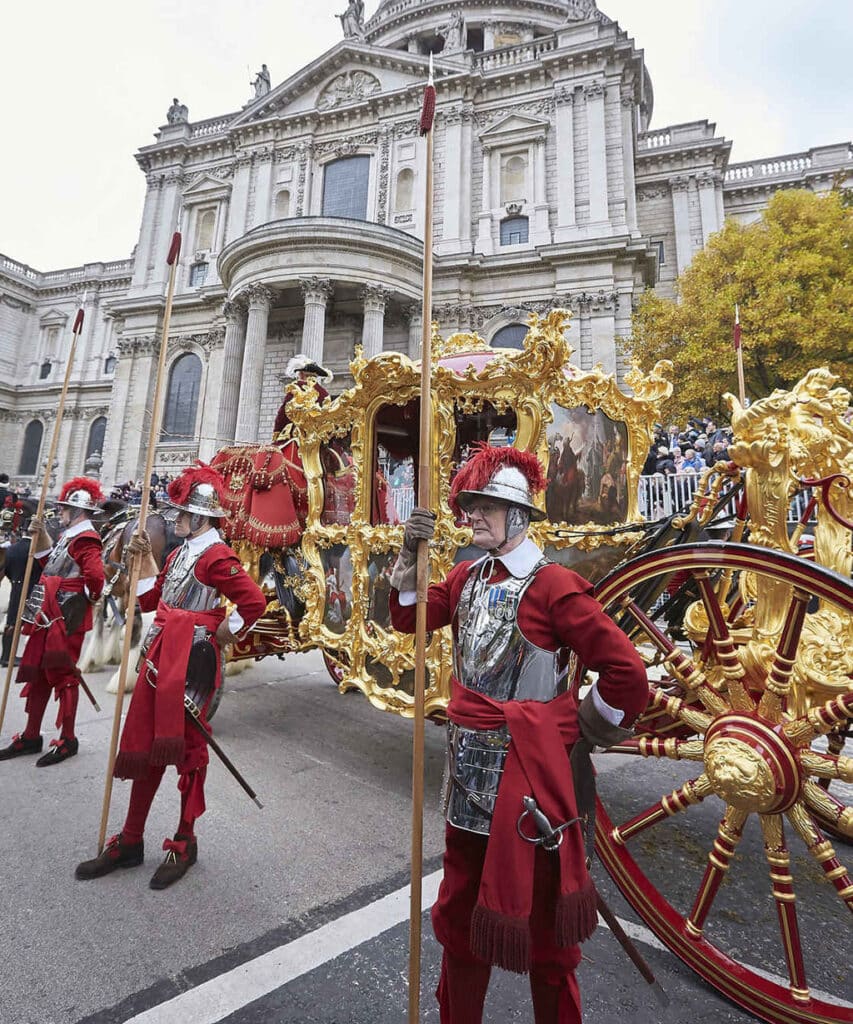
The day after being sworn into office, the Lord Mayor swears allegiance to the Crown at the Royal Courts of Justice in Westminster and then traditionally parades eastwards back to the City. From more traditional origins, this parade has turned into something of a carnival but still with good old British pageantry, of course.
This year, things changed a little as, for only the third time in more than 800 years, there is a woman in the starring role! Dame Susan Langley is the first ever to be titled ‘Lady Mayor of London’.
The three-mile-long procession seeks to provide a snapshot of London’s business area – known colloquially as ‘the City’ or ‘the square mile’. This ranges from military bands and livery companies displaying their history and heritage to cutting-edge businesses advertising their wares. There is also significant participation from community and charity groups with overseas organisations also taking part.
This year, the parade had some 7,000 participants, 200 horses and more than 50 decorated floats passing The Mansion House, the official residence of the Lady Mayor. The diversity, culture and history of London were very much on display for all to see.
But why have this carnival in November? The show was originally held on the Feast of St Simon and St Jude on October 28. Great Britain then adopted the Gregorian calendar in 1751, and the date moved to November 9. Since then, to maximise inclusion to as many as possible, in 1959, it was switched to the second Sunday in November. Simple really!
Burying the dead
Regular readers of this column will detect a slightly odd interest that the writer has in graveyards!
London was, for many centuries, the most important city in the world and there is so much evidence of this in the palaces, the streets, the buildings, the parks and the waterways.
So many people who shaped not only British but also world history lived and died here, and where better to investigate than in the many graveyards that proliferate around the capital?
In South West London, Putney Vale cemetery has amongst its ‘tenants’ Bruce Ismay, Chairman of White Star Line, who survived the sinking of the Titanic, and Howard Carter who discovered the most famous tomb in the world – that of Tutankhamun. Carter’s grave is notable for its extreme modesty – and also for the small Egyptian amulets that are regularly left by visitors.
Nearby, in Mortlake cemetery though, is the complete opposite of modesty in the final resting place of another famous explorer.
Sir Richard Burton (1821-1890) was a Victorian explorer who took part in the search for the source of the River Nile, was the first European to see Lake Tanganyika and translated The Arabian Nights and Kama Sutra into English. He wrote numerous books and articles of his own about his travelling and became a prolific and erudite author. His numerous books on subjects including human behaviour, travel, falconry, fencing, sexual practices and ethnography were greeted with fascination and some element of scandal. Burton also served as British Consul in many countries and was certainly a colourful character who converted to Islam.
In what is possibly the most flamboyant grave in London, Burton’s writer, explorer and adventurer wife, Isabel (later, Lady) Burton, lies beside him.
The huge structure resembles a Bedouin tent and is Grade 2* listed. The coffins of Sir Richard and Lady Burton can be seen through a glass panel at the rear of the ‘tent’ in a style of mausoleum seen more commonly in Europe and further afield than in England. An inscription on the tomb includes a commemorative sonnet from a well-known local poet, Justin Huntly McCarthy from Putney.
Necro-tourism is alive and kicking in London!
Read Richard Lamberth’s last month’s article: London Calling – October 2025