Camden’s legendary pubs still whisper their secrets
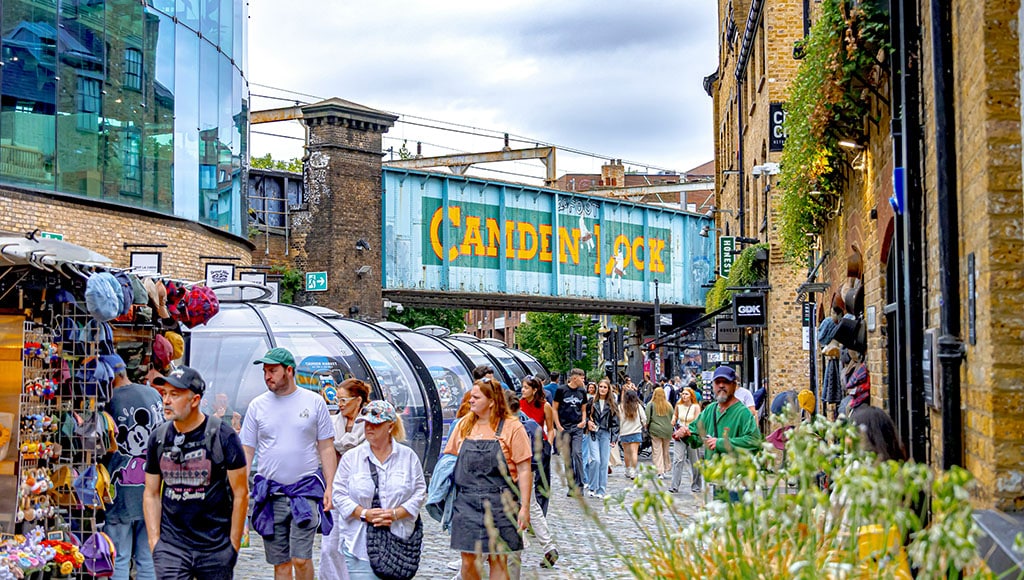
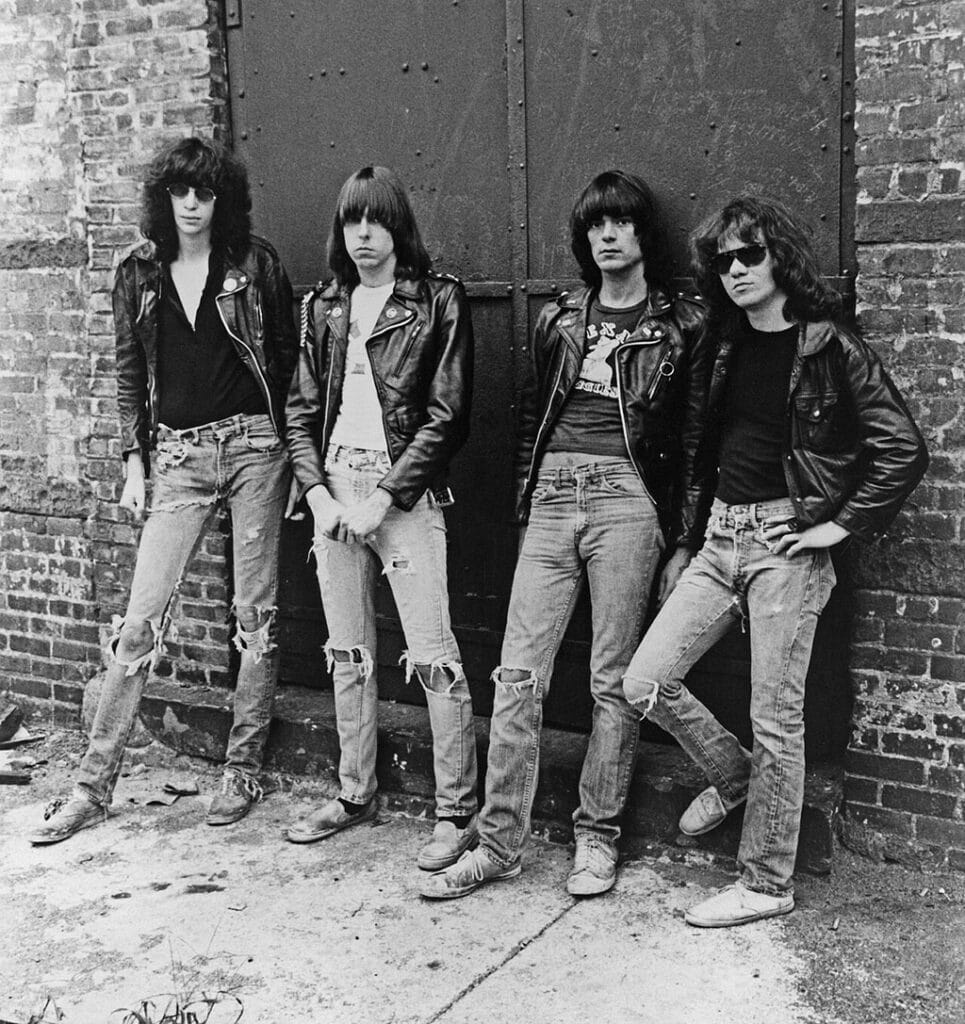
I recently had the pleasure of taking a stroll around Camden Town, located in the London Borough of Camden. Famous for its vibrant and pioneering music scene that started in the 1960s and ‘70s. The Clash, Sex Pistols, David Bowie and the Ramones are just a few of the bands that played at iconic venues such as Dingwalls, The Electric Ballroom and The Roundhouse.
The ‘80s saw the best of British synthesizer bands such as Soft Cell, Human League, New Order, Yazoo, Depeche Mode and Orchestral Manoeuvres In The Dark.
Music is still a very big part of Camden Town’s identity. There are many venues hosting a wide variety of bands. Even if you drop into a pub on a Saturday afternoon, you won’t be disappointed with the music choice, especially if you enjoy heavy rock, punk, new wave or jazz.
Camden is also famous, of course, for its market, now bigger than ever and actually comprising of several markets grouped together. Just about anything can be bought here, from vintage clothing, unusual gifts, handmade jewellery and world cuisine from over 1,000 independent retailers.
Many tourists, however, are satisfied walking no further than Camden High Street, itself with its souvenir and gift shops selling delightfully kitsch, some would say, tacky merchandise.
However, if you take just a short walk away to some of the many pubs, you will find that they have a story to tell.
Death of a Military Man
First on our list is The Colonel Fawcett. A large mirror on the wall informs us that he died here in 1843 and his ghost still haunts the pub to this day.
So, how did the Colonel meet his demise? A couple of days before his death and a short distance away, outside the Breakneck Tavern, two carriages had pulled up. Out of one emerged Lieutenant Colonel Fawcett; out of the other Lieutenant Alexander Munro.
The two were brothers-in-law and, on the night before, they had a fierce argument resulting in Fawcett throwing Munro out of his house. Fawcett had recently returned from military service in China and left Munro to manage his affairs (something he accused him of mishandling).
Honour had to be upheld, and a duel was arranged for 5am the following day, despite the act of dueling being effectively outlawed in 1819. However, they were military men, and the practice still occasionally took place in the army. A constable in the area heard a shot ring out and found Fawcett on the ground claiming “there had been an accident”.
The injured Colonel was carried back to the Breakneck Tavern, but they refused to let him in. So, he was taken to the nearby Camden Arms where he was given a bed. A surgeon was called, observed the steel ball in his lower intestine and pronounced the wound fatal.
And so it was that Lieutenant Colonel Fawcett died two days later. The Camden Arms was eventually renamed The Colonel Fawcett.
Tapping the Admiral
Our next pub, a short distance away, is Tapping the Admiral. A curious name that has its origins in Britain’s maritime past. The phrase has become slang for a sneaky or secret drink. In the 19th century, it was used by sailors to mean ‘getting a free drink from a commanding officer’.
The story for the origin of the phrase goes like this. After Admiral Lord Horatio Nelson was shot and killed by a French sniper on HMS Victory at the Battle of Trafalgar, they needed a way of preserving his body for the long voyage back to England. It was decided to put him in a cask of brandy or rum.
When the ship docked back at Portsmouth, the cask was opened to reveal the spirit had all but gone. Apparently, sailors had been drilling holes and putting straws in to have a crafty drink. The admiral had been ‘tapped’.
There are other naval phrases that mean the same thing, such as ‘sucking the monkey’ and ‘blowing the monkey’; the origins of which are for another story.
The pub Tapping the Admiral was built in the 1850s and was originally called The Trafalgar to commemorate the fact that Nelson’s uncle, William Suckling, used to frequent an earlier pub on the same site called The Castle Tavern and would often bring the young Horatio with him.
Old Mother Redcap
The next hostelry we are going to visit is The World’s End, although the pub has only had this name since 1985, when the owner bought the whole ‘island site’ and extended it from a capacity of 200 to 1,000, with a further capacity of 500 beneath the pub called ‘underworld’. If you enter the pub by the original doors, it appears unchanged; however, it opens up to a modern extension.
The pub’s previous name was The Old Mother Redcap and has a somewhat more ominous origin.
Mother Redcap’s real name was Jenny (or Jinny) Bingham and was born in Camden sometime during the reign of James I (1603-1625). She was also known as the ‘Crone of Camden’, ‘The Shrew of Kentish Town’ and ‘Mother Damnable’. She is said to have collected strange herbs at night, been the owner of several black cats and to have had a hagged and unnerving appearance. Not surprisingly for the time, she was labelled a witch.
She lived in a cottage (built by her father who was married to a Scottish peddler who was also considered to be a witch) on the site now occupied by The World’s End.
Even from a young age she was associated with death. People close to her would go missing, die or would be executed at Tyburn for committing crimes.
Eventually, both her parents were arrested and hanged for witchcraft. This only confirmed people’s suspicions that she too was a witch. She became an outcast in the area, and her cottage was often pelted with stones. A local boy who had taken great pleasure throwing rocks at her door was found several days later in his parents’ oven burned to death.
Historical records describe her appearance as “awfully ugly”, with a “hideous head, writhed and sallow, shaggy of brow, sunken and bleared of eye, hook of nose and sullen of look”. She started to wear a red scarf or cap, hence her name.
The famous witchfinder general, Matthew Hopkins, was even engaged to ‘bring her to justice’. However, by 1647, he had officially retired and refused to take the case for the amount of money being offered.
She is said to have died in mysterious circumstances in 1676 and, after her death, her cottage became something of a tourist attraction. Someone eventually realised there was money to be made and set up a stall selling refreshments, red caps and etchings of her likeness.
The cottage was demolished sometime during the early 1800s and a pub built on the site. This too was demolished around 1850, and the current pub was built in 1870.
Bailly’s Barrel
Our final pub on this trip is The Hawley Arms, famous in modern times for being Amy Winehouse’s favourite pub. The original pub was built in 1851 and was popular with sailors from around the world who had docked in London.
In the 1980s and ‘90s, it was known as a bikers’ pub and was rather run down. It was also reported by anti-racist magazine Searchlight that the bar telephone was being used by the Neo-Nazi group Combat 18.
Following a change in ownership in 2004, a refurbishment took place and a previously unknown wooden barrel was found in the basement. Upon opening it, the new owners were shocked to find it contained a human skull on a bed of sawdust.
After a police investigation and a bit of research, the skull was found to have probably belonged to a Spanish seaman called Julio Baillo.
Old newspaper archives revealed that he had been run over by a horse after fleeing the pub without paying his bill. The landlord at the time had apparently retrieved his head and kept it in a barrel in the pub until his tab was paid. Over the years, patrons would touch the skull as it was rumoured that this would make you wealthy. It was known as Baillo’s (later Bailly’s) barrel.
In 2004, The Hawley Arms was bought by Greene King and the skull was supposedly kept behind the bar. Whether this is true or not is hard to say as the pub burned down in 2008, after a fire spread from Camden Market.
The pub now standing on the site was rebuilt after a campaign and fundraising by a host of celebrities.
Read Richard Lamberth’s last month’s article: London Calling – December 2025