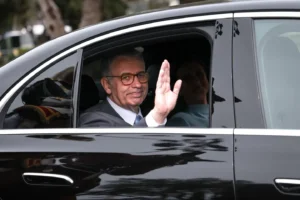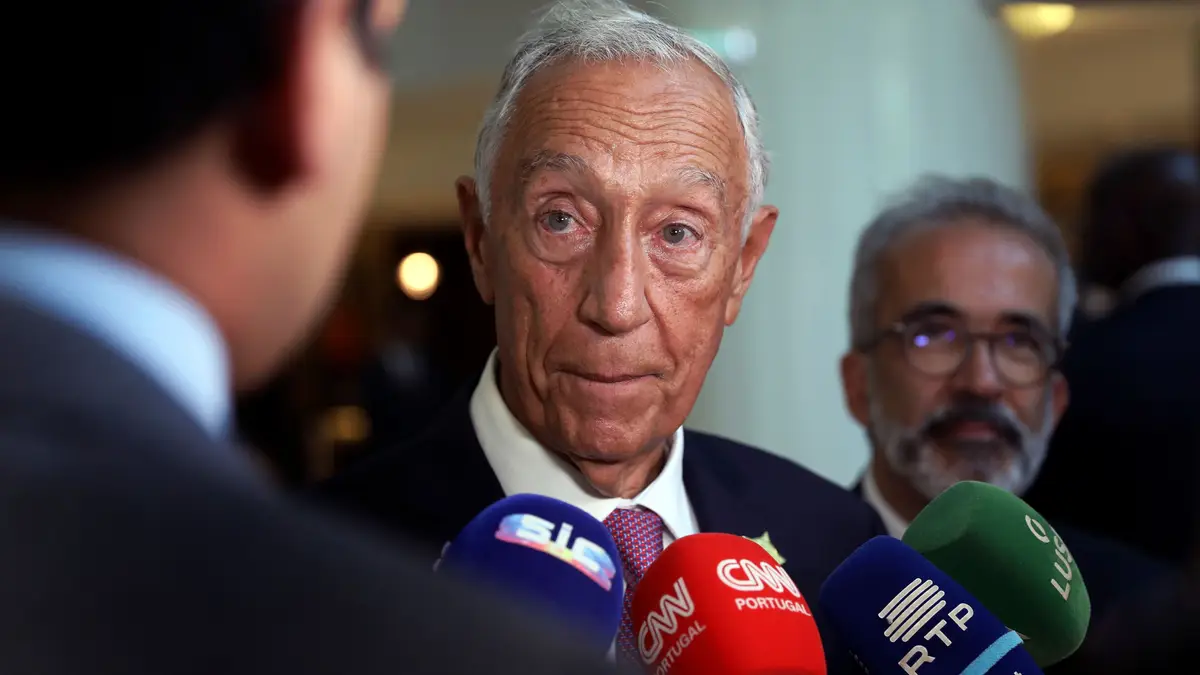
Marcelo Rebelo de Sousa will deliver his final New Year’s message today as President of the Republic, which he has promised will be ‘shorter than the others’ he has made over the last 10 years, due to the proximity of the presidential elections in 17 days time.
The head of state is expected to address the nation at 8pm from Lisbon’s Belém Palace.
On Christmas Eve, in Barreiro, Marcelo told journalists that he ‘hesitated about whether or not to deliver a New Year’s message’ in the fervid pre-election context, stating that “there were presidents who did and there was one president who didn’t.
“I thought that New Year is New Year, and therefore I’m making a very short message, obviously, as you’ll expect, of absolute neutrality,” he promised.
A year ago, Marcelo Rebelo de Sousa highlighted the importance of maintaining “institutional solidarity and even strategic cooperation between sovereign bodies, namely the President of the Republic and the Prime Minister”.
It was a moment of political uncertainty (again), and shortly before the rejection of a vote of confidence in the government that led to yet another dissolution of parliament, and new elections.
Marcelo’s tenure has been marked by political ups and downs – but throughout he has valiantly hung on to the mantra of ‘the importance of stability’.
Political stability has been bandied about a great deal but, in truth, there has not been a great deal of it. Even now, and in spite of the PM’s clear confidence in the future, storm clouds are building on the horizon, and parties of the opposition are bristling.
Marcelo’s many New Year speeches since he took office in 2016 have referred to the need to ‘reinvent trust’, exercise ‘common sense’, turn back from ‘intolerable arrogance, impossible promises, unrealistic appeals, and reckless radicalism’. He has appealed repeatedly for ‘strong, effective’ governments that are prepared to dialogue – and in 2022, he even referred to the need for the country to operate with ‘transparency, rigor, competence and efficiency, combating corruption and illicit favoritism’.
What kind of balance will be made of his decade ‘at the helm’ will come over the next few weeks, while the country itself is poised for presidential elections that are expected to go to ‘a second round’ due to the number of candidates, and perceived lack of any ‘absolute favourite’.
source: LUSA