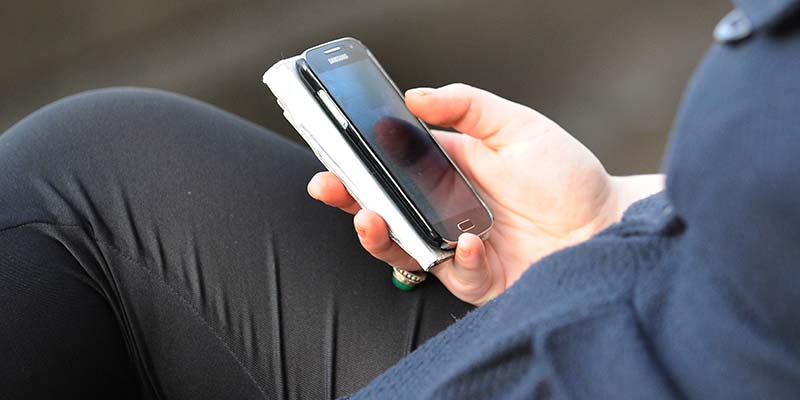
Text messages to be sent out from Tuesday until end of July
More than a million people will start being notified, via SMS (text messages) from Tuesday, to complete missing data in the National User Register (RNU) – a mandatory condition for continuing to be registered in Portuguese primary healthcare.
“This initiative aims to notify SNS national health service users with mandatory data missing from the RNU by sending SMS, alerting them to the need to go to the respective health units and complete the missing information,’ ACSS, the Central Administration of the Health System explains.
In a statement, ACSS says that, in conjunction with the Ministry of Health’s Shared Services, 1.1 million users will be contacted between Tuesday and the end of the month over information missing from the national database that aggregates and identifies citizens who access the SNS.
“After this date – and after 90 days – for users who still have missing information, there will be a new contact operation,” says ACSS, adding that from January 2026 and after these attempts to update the data have been exhausted, “conditions associated with each type of registration will automatically come into force”.
An order issued in January of this year determined that enrolment in a primary health care unit presupposes an up-to-date registration, through the full completion of the user’s biographical data (such as name, age, gender, country of birth and nationality), presentation of tax identification number, civil identification documentation and national residence registration.
In the case of foreign citizens, it is also necessary to present a valid residence permit (except for minors), when applicable, says ACSS, considering that this process of updating the RNU has been carried out gradually by Ministry of Health entities “with great rigour, including preventive measures for contacting users, so as not to jeopardise their access to the SNS”.
This initiative is not to be confused with any text messages received asking for people to update their data via text message/ computer. These messages are invariably ‘phishing’ scams. They may contain links (which could compromise people’s devices). Short advice: ignore. If in any doubt, check with your local health centre.
Source material: LUSA