“IoT” they call it in Silicon Valley … and it’s basically when devices of whatever kind are connected to the internet and send data back about what they are seeing or doing.
For years, we’ve been promised smart fridges that know when we are running low on supplies and order milk, orange juice or whatever it thinks we’re lacking.
And while I love knocking on our neighbour’s smart fridge door to make it light up, it’s a small reward for all the time it took getting the thing online so it would agree to start making ice.
Apart from (presumably) listening in to our conversations and reporting back which adverts need to be sent our way, the Intelligent Fridge isn’t terribly clever.
And the Smart TV I bought for one of our guest rooms is even more stupid than our basic TV – it battles to stay online, has decided we shouldn’t watch Netflix and resists all efforts to talk to other devices.
But living off the grid has given me a problem that’s looking for a solution: how to monitor everything to make sure our batteries aren’t running low, to keep the water systems running for our guests and to stop any potential problems before a shut down.
My power monitoring system is from the US, but for water I was introduced to “LPWAN” in Portugal – what one of the technology’s most vocal champions calls “the fourth pillar of wireless data communications.”
The acronym stands for Low-Power Wide-Area Network, but that doesn’t reveal much.
LPWAN is basically WiFi over a very long distance, but with tiny amounts of data – enough to send the occasional meter reading, number, or a location, and to switch something on or off.
Extremely helpful for some things, but don’t expect to stream any movies on it.
John Archer first used the technology as an oil and gas industry geophysicist – using sensors as trackers in forest areas outside mobile phone range in Papua New Guinea, to map and protect workers as drones dropped seismic sensors from the air.
That turned into Remex Technologies, a company which installs low power, long distance WiFi routers for all sorts of things … such as our water system.
“We measure the amount of information we send in bytes – 30 to 50 bytes – it’s really nothing, you couldn’t even send a photo with it, it’s that low,” John Archer explained.
“But it’s perfect for things like sensors. Things that send information not particularly frequently but are battery-powered and may be kilometres away: very, very low power but long distance.”
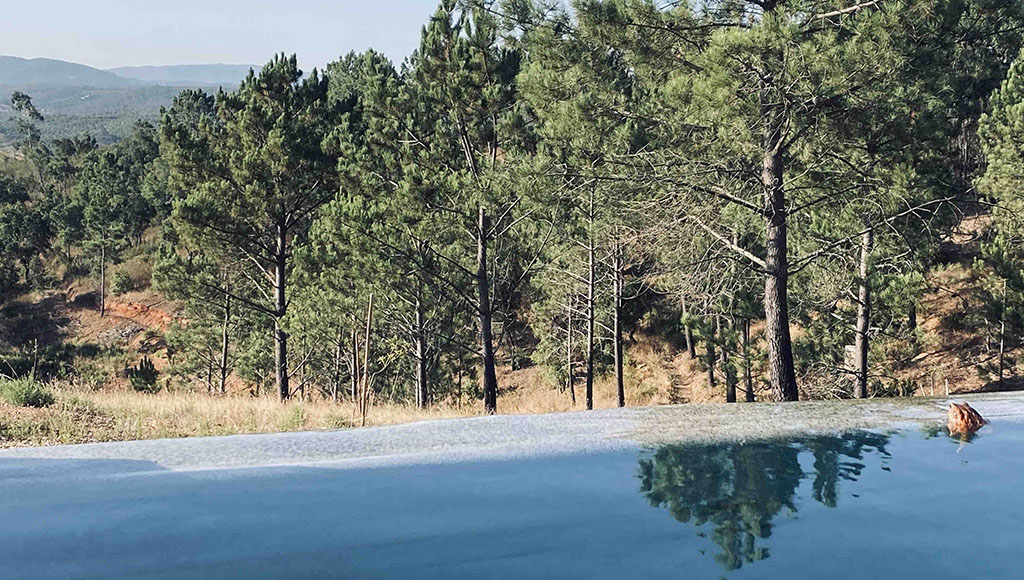
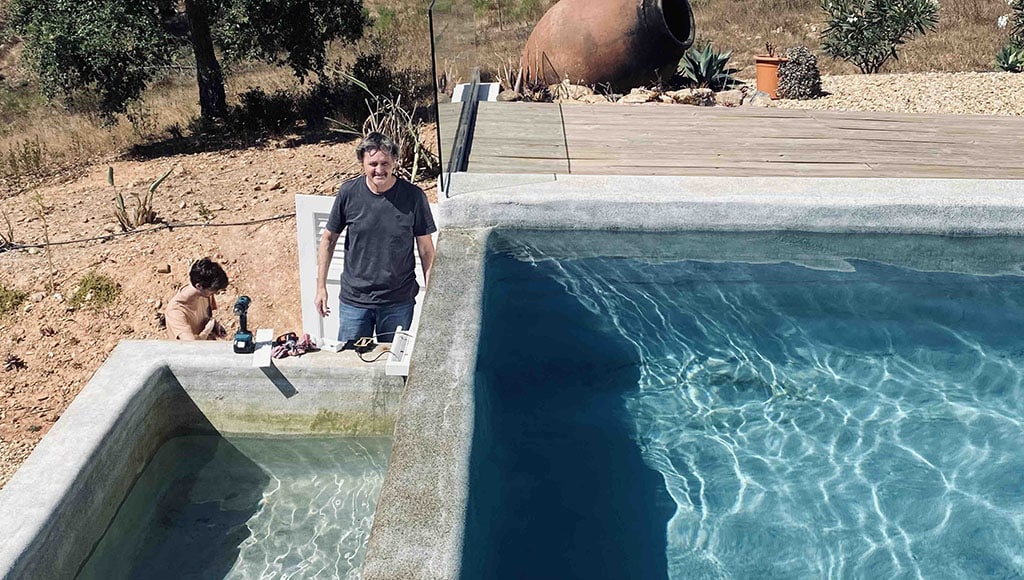
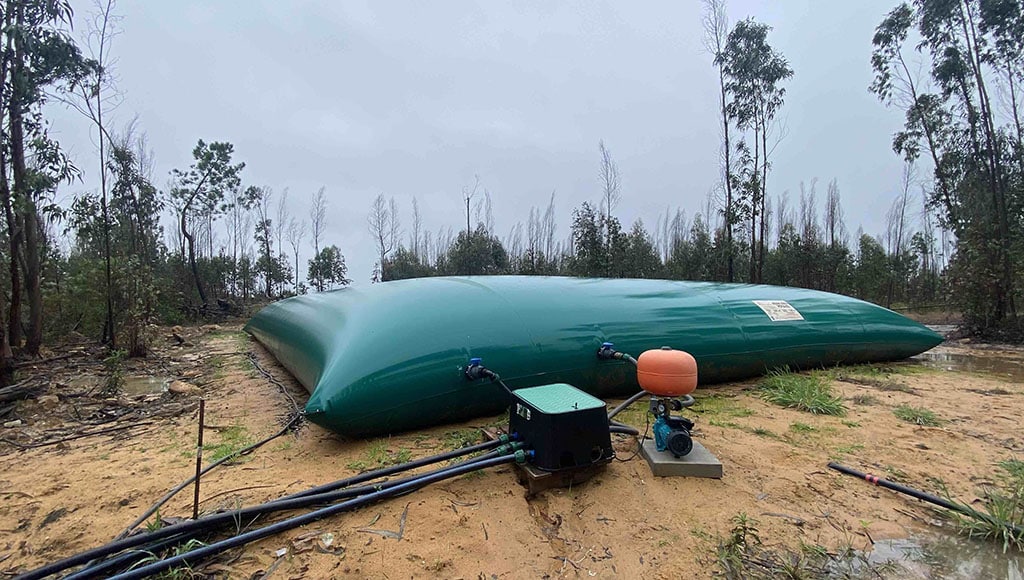
Our system uses an ultrasound sensor to make sure the infinity pool has enough water, but not so much it overflows.
We have a controller for using treated wastewater for irrigation, one for monitoring the level of a distant tank deep in our valley (far from usual WiFi reception), and another one to balance the salt levels in our drinking water … and it’s all being integrated into an app.
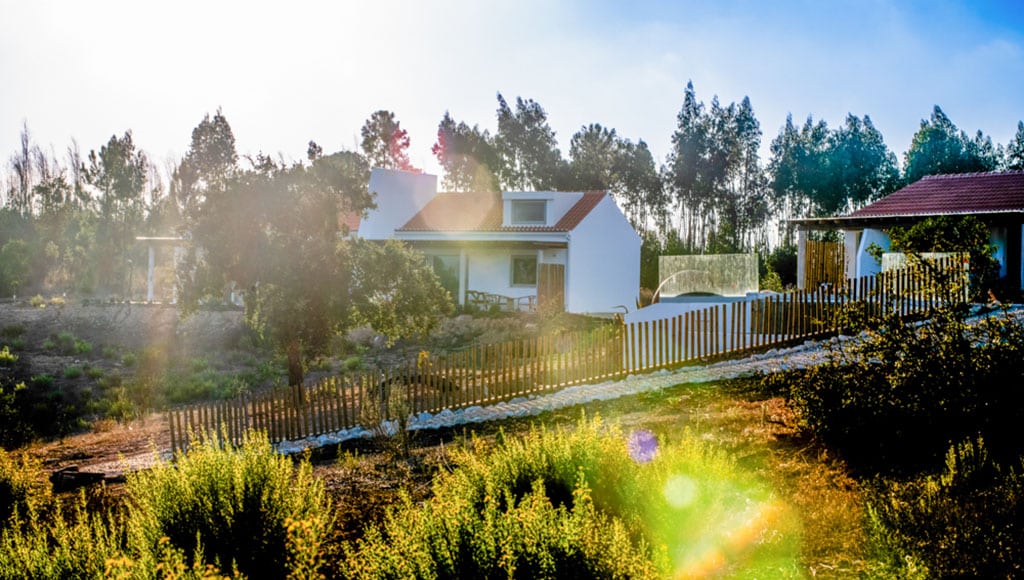
Collaboration between John Archer and water engineer Rui Faria has led to a system that alerts us when things don’t look right and get ahead of problems which the guests at Vale das Estrelas wouldn’t appreciate.
But it turns out there’s far more to this technology than just keeping watch over our water.
Regular readers will know I love a rabbit hole to disappear down, but this one took me to Torres Vedras, north of Lisbon, to teeter on a steep ladder at the top of a water tower and to a recycling depot to understand “Smart Cities.”
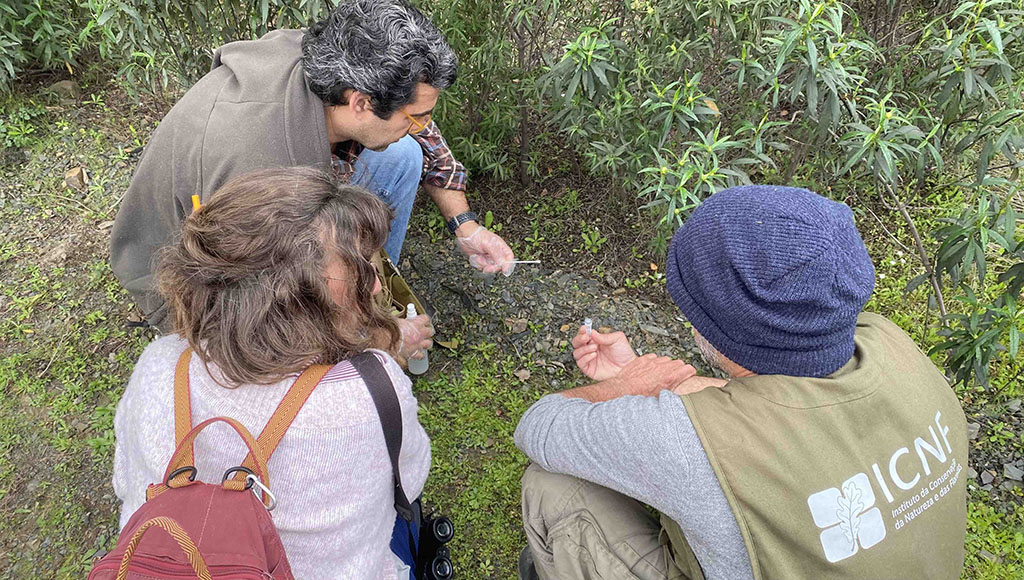
It took me into the hills south of Mértola on the trail of Iberian lynx, and almost lured me back to Kenya where they’re using it to catch poachers.
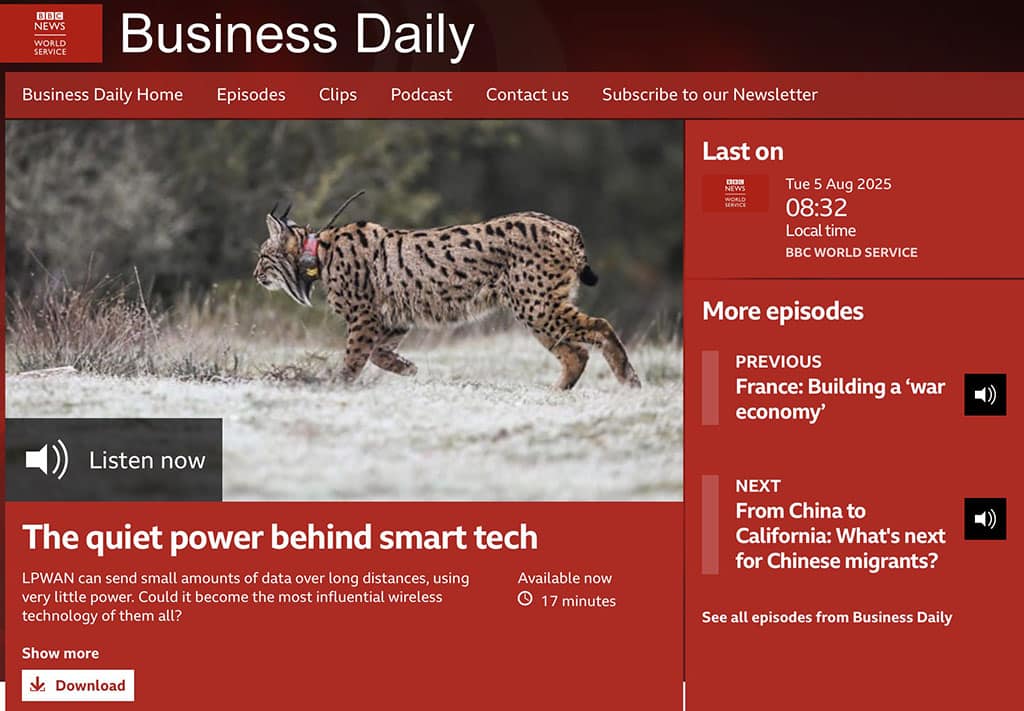
You can hear my adventure on a BBC radio programme broadcast a few weeks ago – just search for “Business Daily Leithead.”
It turns out low-power, wide-area WiFi tech is booming, and all sorts of different uses are being found for it.
The Internet of Things has relied on three technologies: WiFi, Bluetooth and mobile 3, 4 or 5G, but LPWAN adds new opportunities.
“We have been erecting the fourth pillar of the wireless data communications scene, and I would even claim that we will be the most influential among all those four technologies,” Alper Yelgin, CEO of the LoRaWAN Alliance told me.
His organisation brings together more than 350 members from all over the world.
“LoRaWAN fills a gap: the gap of providing a long range, low power, standard technology with a large ecosystem … of smart home, smart industry, buildings, cities, logistics and tracking and utilities.”
Torres Vedras is a Smart City pioneer in Portugal using data and software to make systems more efficient.
The water systems are monitored like ours – but on a much bigger scale – spotting leaks and tracking supplies all the way to people’s homes where water meters are read remotely.
Sensors in underground recycling bins tell the control room when they are full, allowing collection trucks to be re-routed.
“It’s technology that is easy to scale, easy to implement, easy to operate, it’s all about simplicity,” said Hugo Tomé from Logicalis which supports Torres Vedras Council.
“We have a lot of municipalities investing in this technology to gather all the insights they can from the water management, the waste management, from the energy management as well … all this technology will provide that.”
Smart Buildings are small versions of Smart Cities – using sensors, for example, to turn the air conditioning off when a window’s left open, to check air quality levels and turn lights off at night.
But talking of rabbit holes, it’s the use of LPWAN for tracking lynx which is my favourite.
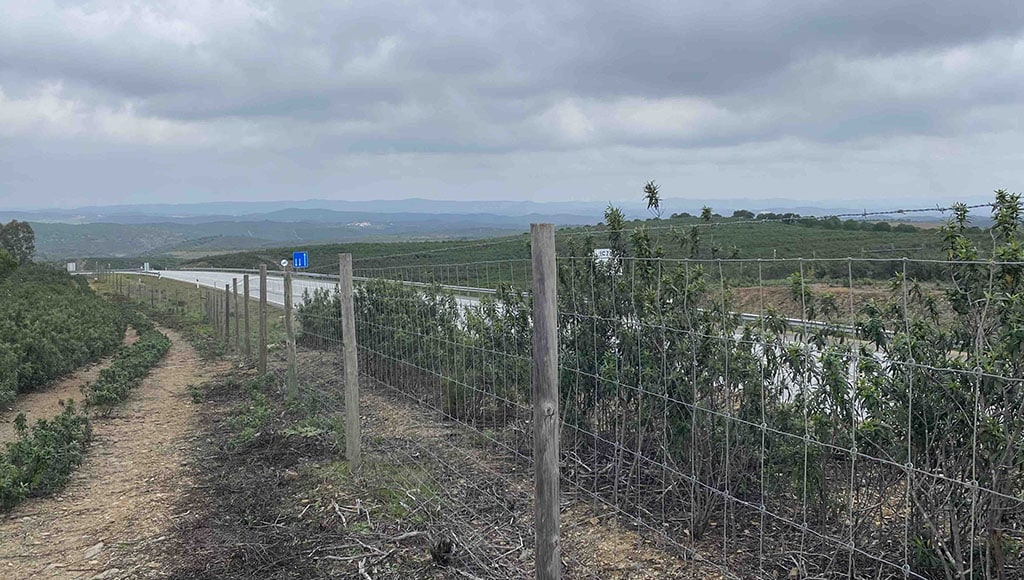
Portugal has a very successful lynx breeding and reintroduction programme, but in pursuit of their favourite food – rabbits – lynx are being killed crossing main roads.
The new, cheap, light-weight, long-lasting trackers are being integrated with the Waze navigation app to warn drivers to slow down when a lynx gets within 200m of a road.
Their use has been so successful in Kenya that the national wildlife service is rolling out LoRaWAN countrywide, fitting trackers to wildlife, rangers, their dogs and their vehicles, cattle, and even snakes!
Real time data recently helped rangers arrest a gang of poachers.
My fridge may still not be able to order me some more wine when I’m running short, but the Internet of Things is certainly a thing, and LPWAN is only getting started.