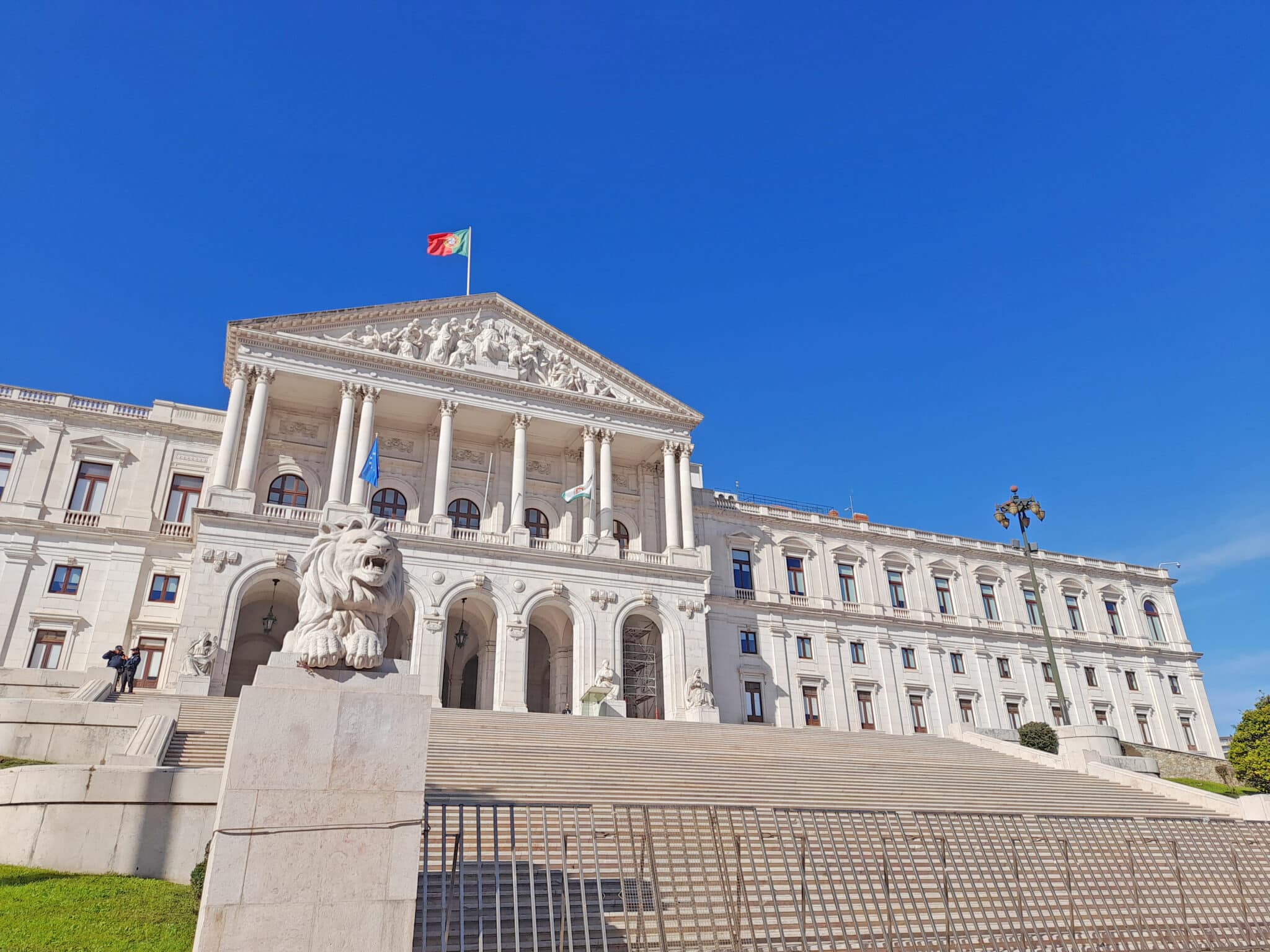
Proposals by the Liberal Initiative (IL) and PAN to open a Portuguese representation in Taiwan, backed by the CDS, were rejected in parliament by the PSD, PS, Livre and the Communist Party (PCP), with the Social Democrats warning against steps that Beijing could view as “hostile”.
The Liberal bench presented two draft resolutions in parliament on Wednesday to elevate the Portuguese State’s relationship with Taiwan, with the People-Animals-Nature (PAN) party then presenting two other initiatives along the same lines.
In the drafts that were brought before the plenary session of the parliament, the two benches warn of the difficulties faced by the approximately 300 Portuguese citizens in Taiwan, who are forced to travel to the consulate in Macau, which is dependent on Beijing, to deal with administrative issues, proposing their transfer to the embassy in Tokyo.
They also suggest opening a Portuguese representative office in Taipei to promote economic and cultural relations.
In the same debate, the Left Bloc (BE) proposed that Portugal, “with respect for diplomatic relations (…) find the most appropriate solutions for economic and cultural relations with the territory of Taiwan”.
Right-wing Chega presented an initiative recommending that the government mediate to ease tensions between Beijing and Taipei.
Rui Rocha (IL) argued that Taiwan “is a consolidated democracy, a strategic economic partner” and a territory with which the European Union is “deepening relations in a clear and open manner”.
“We are not asking the government to recognise Taiwan as a state (..) We are simply asking Portugal to behave like a normal European country, which protects its citizens, defends its interests and does not relinquish its decision-making autonomy out of excessive caution,” commented the liberal MP.
Inês Sousa Real (PAN) considered that Portugal’s position is not one of “diplomatic neutrality, it is institutional negligence” and stressed that the proposals “are not against anyone”, asking that “we do not turn our backs on democracy”.
The Social Democrats’ (PSD) José Cesário, who was secretary of state for Communities in several governments, including the first led by Luís Montenegro, considered that the IL and PAN proposals have “a clear intention to simply ignore the People’s Republic of China”, a “stance that can be considered hostile”, pointing out the “very deep diplomatic and economic relations” between Lisbon and Beijing.
In addition, José Cesário argued that the Portuguese state must also “safeguard, at all costs, the interests and security” of the approximately 130,000 Portuguese citizens in Macau and Hong Kong.
Regarding the difficulties faced by Portuguese residents in Taiwan, Cesário said that the government intends to “find administrative solutions in dialogue with both Beijing and Taipei”.
Catarina Louro, of the Socialists (PS), recalled: “In such a volatile international context, abrupt changes, symbolic gestures or ambiguous political signals can be interpreted as taking sides in a context of strategic rivalry between major powers. And that is precisely what Portugal wants to avoid.”
The parliamentary debate clearly highlighted the disagreement between the governing coalition partners, with the CDS’s João Almeida stating that several European countries already have representations in Taipei and “continue to defend the ‘one China’ logic”.
Chega’s João Ribeiro recalled Portugal’s historical presence in the Far East and, in a rare alignment with the Left Bloc, urged the government to “promote peace and dialogue” with allies and partners, refraining from “provocative adventures”.
On behalf of the PCP Communists, Alfredo Maia maintained that Taiwan “is an inalienable part” of China and that these proposals “are part of the ongoing campaign of interference and pressure against the People’s Republic of China by the United States, which is resulting in an exponential increase in tensions and threats”.
The proposals will be voted on in plenary on Friday.
Source: Lusa