THE INTERNATIONAL financial crisis would be far worse for Portugal if the government had not imposed strict budgetary measures, said Prime Minister José Sócrates.
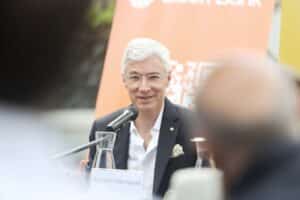
Speaking on RTP 1’s Grande Entrevista, the Prime Minister said that Portugal had suffered the fallout of “an unfortunate set of circumstances” including the US Sub-Prime crisis, a consequent lack of confidence in the international and national banking sectors leading to the credit crunch, and high oil and food prices which had all “put the breaks on the Portuguese economy”.
However, despite the slowdown, he denied that Portugal was in recession and said that the economy was “still growing”, albeit at a slower rate than hoped for, “a problem faced by most other European countries”.
When asked by interviewer Júdite de Sousa if Portugal “hadn’t woken up too late” to the problem of soaring oil prices, José Sócrates admitted oil inflation “was a shock for all Western and European economies, including Portugal,” but that no one could have guessed what was to happen a year ago. He said that even “champion economies” such as Ireland were feeling the pinch and that much of the world was in the same boat.
“In January and February, all the indications were that we were doing well and were on the right track, our growth was reasonable and our exports stronger than before,” he said.
Not giving in
“Now, most of the western world is suffering and we have to decide what our options are to respond to the situation. We do have a strategy, but that doesn’t mean giving in to (populist) foolhardy measures,” he warned.
By this he meant lowering Value Added Tax any lower than the one per cent the government has already done, from 21 per cent to 20 per cent.
The Prime Minister also meant not artificially intervening to keep petrol and food prices down, which would jeopardise the successes Portugal had achieved in reducing her budget deficit.
However, the Prime Minister did say during the 45 minute interview, at which The Resident was present, that the government would launch a package of financial measures aimed at helping the “most vulnerable sectors of our society”.
Among the proposals which will be presented to parliament is one to increase financial deductions on the first and second IRS (Income Tax) brackets.
He also promised that the government would reduce municipal property taxes (Imposto Municipal Sobre Imóveis – IMI) – a property tax fixed by local councils. “The IMI tax has risen 15 per cent and that is unacceptable,” he said without mentioning that most local authorities had been forced to do so because they were in debt and due to government capping on their borrowing and spending levels.
José Sócrates made it clear that he would not reduce income tax levels which would put public accounts at risk, although he acknowledged the “sacrifices” the Portuguese people had made. “I would love to be able to reduce taxes but to reduce taxes in 2009 would be highly foolhardy,” he warned.
Do you have a view on this story? Email: editor@the-resident.com