Portugal signs up to NATO demands for defence spending, even though it’s “a big effort”
Ahead of one of the most bizarre, and shortest, NATO summits in the Hague this week, Portugal’s government scrambled to get its ducks in a row to show that it wants to play ball, support the team and be relevant.
To be fair, no one was predicting how things would go, as the man leading the alliance’s richest and most powerful member was arriving in the wake of a number of irate posts uploaded to social media after the ‘ceasefire’ he brokered between Iran and Israel collapsed almost before it had begun.
Spain also had already caused a bit of discomfort by saying the alliance’s insistence on members contributing 5% of GDP in defence spending was “disproportionate”, “unnecessary” and not for Spain …
Portugal, however, has never been one to ‘step out of line’. Thus, ministers attending this (annual) summit said everything possible before they set off for the Netherlands to suggest that Portugal will be doing whatever is expected of it.
Minister of Foreign Affairs Paulo Rangel stressed earlier this month that “a big effort will be required” for Portugal simply to get to spending 2% on defence this year – so 5% really is asking a great deal.
“If NATO has this obligation, it is an obligation that we must fulfil if we want to remain in NATO, and we are a disciplined people – albeit with great flexibility and improvisation skills,” he said – hinting at the degree of improvisation that will be needed.
Finance Minister Joaquim Miranda Sarmento also used a clever turn of phrase: Portugal could resort to the ambitious EU loan programme (offering countries €150 billion in loans to strengthen defence), but the government hasn’t yet made up its mind – particularly as the “financing conditions (…), at this moment, are not particularly more favourable than the financing conditions of the (Portuguese) Republic (…) We are analysing all the alternatives that exist”, he told state news agency Lusa.
Expresso quite bluntly reported over the weekend that there is “no political consensus to go any higher than 2%”, no matter how dire the warnings from NATO secretary general Mark Rutte regarding future scenarios (mainly focussing on Russia/Ukraine and “everyone learning Russian” unless they radically step-up defence preparedness).
And this is ‘the thing’ about the summit: international media was stressing on Tuesday that “NATO leaders are tiptoeing around rifts (…) straining for a veneer of unity” – because of President Trump’s apparent “volcanic disdain” for the man previously lauded at NATO summits, President Volodymyr Zelenskyy, and everything that he stands for.
This palpable anxiety may well work in Portugal’s favour. A country keen to ‘please’ is not going to be a country singled out as ‘one of the bad payers/a loser’ – at least this will be the unuttered hope.
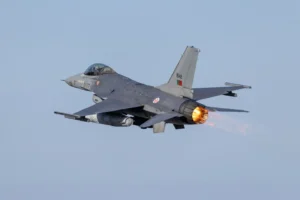
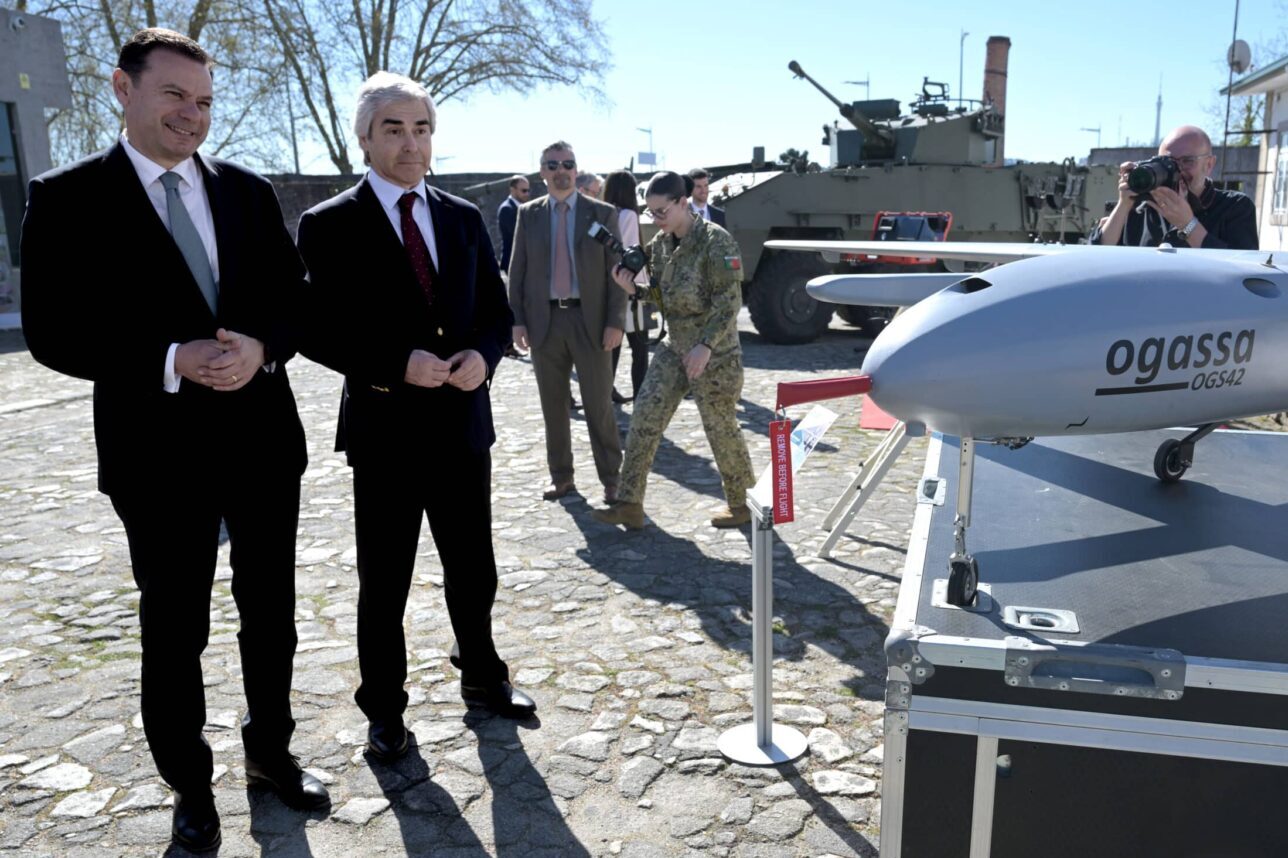
In the meantime, Portugal is full of ideas for improvisation: Defence Minister Nuno Melo started the ball rolling at the Paris Air Show recently, explaining how the country is planning to purchase its sixth KC-390 Millennium aircraft for the Portuguese Air Force, but to do so, it wants to sell 10 other aircraft to NATO members.
At the weekend, Miranda Sarmento harked back to this form of quid-pro-quo, saying “what the Ministry of Defence is doing (…) is establishing protocols with other countries”, so that they can acquire military hardware “that is mainly produced in Portugal” – the KC-390, for example, is produced with components that are made in Évora in conjunction with Brazilian company Embraer.
Embraer already has an Engineering and Business Centre in Lisbon, making the country “the gateway for a global company in Europe, with benefits for everyone,” according to Defence Minister Nuno Melo, who also sang the praises of the Portuguese manufacturing, also through Embraer, of Super Tucano aircraft ‘at the request of NATO’ – the first five of which should be ready this year.
When defence issues gripped the European agenda last year, prime minister Luís Montenegro referred to a priority objective being the creation of a defence cluster – and this may well be among discussion points on the sidelines of the NATO summit this week. But how strong the commitment of European governments truly is to increase their spending on defence to 5%, and in what kind of time-frame, will have to remain to be seen.
Portuguese “most afraid of use of nuclear weapons/third world war”
With so much focus in the media on the need to increase defence spending, the threat posed by Russia, and the implications of a Ukraine ‘abandoned’ by the United States, Portuguese people have become seriously affected.
An opinion poll conducted in 12 European countries shows that the Portuguese are those most afraid of the use of nuclear weapons, a possible third world war and a European war beyond Ukraine.
The European Council on Foreign Relations (ECFR) concedes that: “Most Europeans are waking up to the reality that they live in a very different world. While fears of a Russian attack on NATO territory are less widespread than some analysts suggest – although they are felt strongly in certain border states such as Poland, Estonia and Romania, as well as in Portugal – it is the growing fear of nuclear conflict that most clearly captures the new European anxiety.”
When asked whether they were worried about potential events, Portuguese respondents indicated that they were most concerned about the use of nuclear weapons (85%), a third world war (82%) and an even bigger war on European soil beyond Ukraine (77%). These were the highest percentages among the countries interviewed.
Conversely, Portuguese respondents were less concerned about a possible Russian invasion of Portugal (54%) and the break-up of the European Union (EU) or NATO (65% and 66%, respectively).
The Portuguese respondents (1,010, interviewed between May 16 and 28) also said they were more concerned that the state would invest too much in defence and neglect other policies than that it would not invest enough and that this would jeopardise the country’s security.
As for US President Donald Trump, the majority of those questioned in Portugal (54%) believe that he has negatively affected relations between Europe and the United States, but that such relations will improve when he leaves office.