Production is part of company’s commitment to converting refineries to 100% renewable fuels
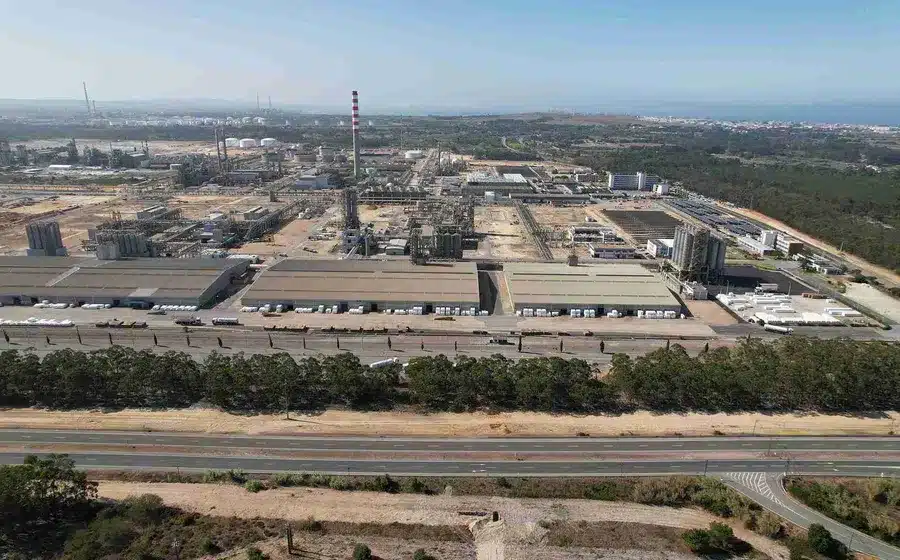
Repsol wants to start producing biomethane and hydrogen in Sines, on the south western coast of Portugal, in 2026 as part of its energy transition and industrial conversion strategy.
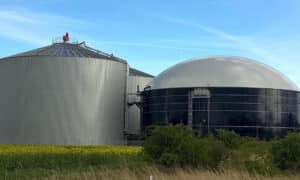
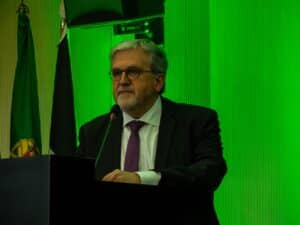
The energy company’s managing director in Portugal, Armando Oliveira, told the Lusa news agency that “everything is ready” for the new biomethane project – a renewable gas chemically similar to natural gas but produced from organic waste (manure, agricultural/ food waste).
However, there are other investments underway – namely the new polymer reuse plant and the installation of solar panels – which have affected the implementation of the schedule.
“There are a number of investments that sometimes take priority over others,” he told Lusa at an event to present the company’s new image. Thus, everything is pointing to a start date in 2026.
With regard to hydrogen, Oliveira said that Repsol also has a project underway and is analysing “the possibility of extending the service to Torres Novas”.
“We are studying almost the art of NASA, because it is all new,” he added. “It’s all a step-by-step learning process.” Even so, he is confident that there will be concrete news by next year.
Biomethane production in Sines is part of the company’s commitment to converting refineries to 100% renewable fuels, such as HVO (hydrotreated vegetable oil), obtained from agricultural and organic waste combined with green hydrogen produced by electrolysis using solar energy.
“What we are used to seeing as a refinery will be radically transformed,” he explained.
Repsol, which presents itself as the largest Iberian producer of renewable fuels, says it is focused on a “fair and inclusive” technological transition that combines various solutions.
“The final energy puzzle will be made up of several pieces,” says Oliveira, referring to the coexistence of electric cars, renewable diesel, hydrogen and other alternatives.
Asked about the increase in competition from low-cost service stations in Portugal, Oliveira acknowledged that the segment has its place, but pointed out that more than 35% of Repsol’s customers opt for higher quality products.
On the impact of geopolitical conflicts on fuel price trends, he said: “we are living in such turbulent times that it is a mistake to predict the future.
“We have already shown that we can survive even in the most difficult circumstances (…) With Covid, we learned to manage on a day-to-day basis, we didn’t know what tomorrow would bring. This sector came to a standstill, with sales falling by 60%–70% with shops closed. Even so, the sector survived.”
And regarding the power outage that affected the Iberian Peninsula on April 28, Oliveira stressed that it is essential to prepare for the ‘possible recurrence of similar situations’. “It was the first time, no one was prepared, but we have to be,” he said, highlighting the importance of logistics and communication capacity in a crisis context.
He, like others before him, also stressed that natural gas will continue to play an important role in the energy matrix.
LUSA