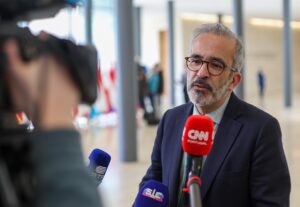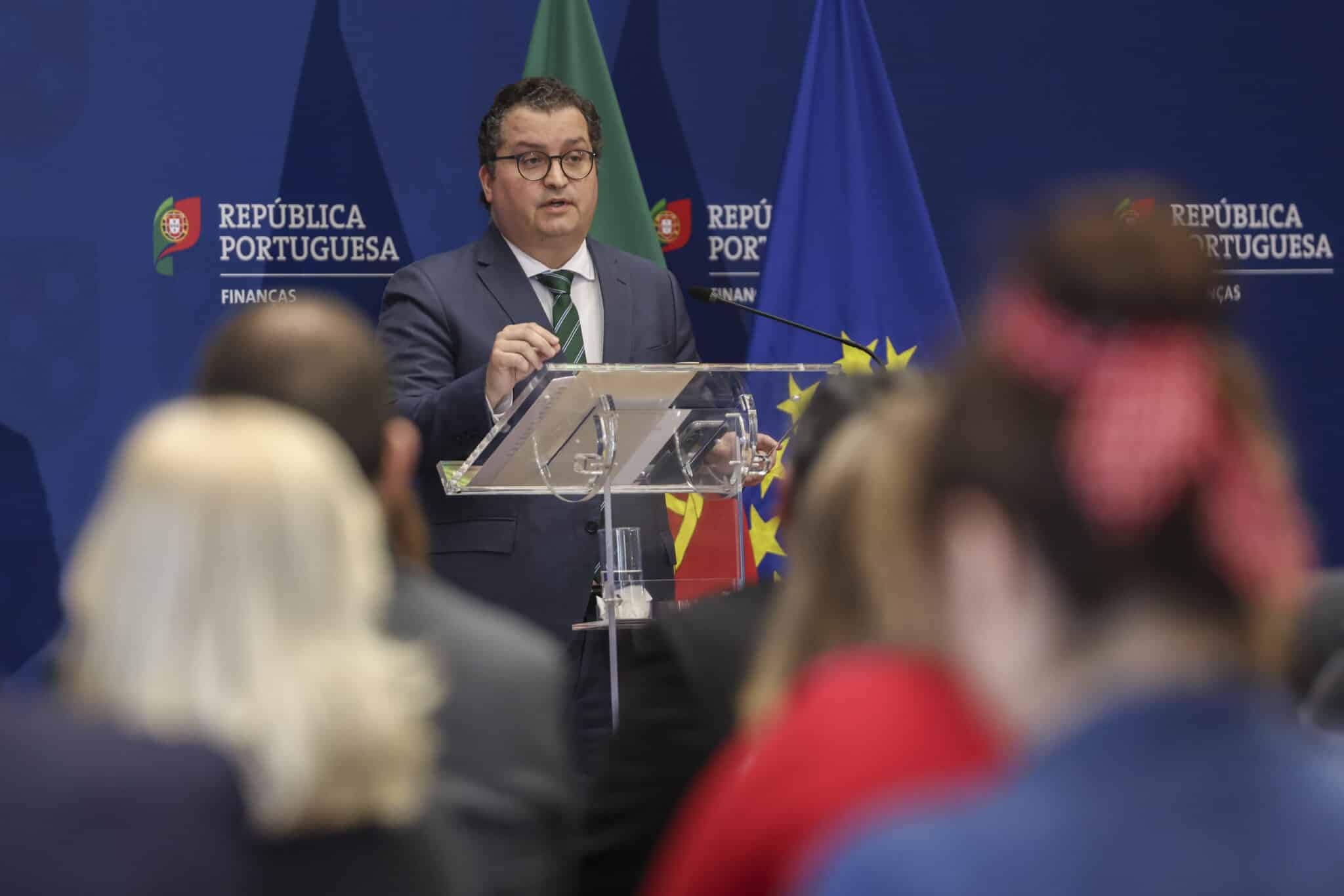
In the context of yet another week mined with conflicting narratives about the progress/duration and even motives of the war ripping the Middle East apart, Portugal’s finance minister, Joaquim Miranda Sarmento, has given a bullish interview with US business channel Bloomberg, saying he is confident that Portugal is in a “very positive situation” to cope with, and respond to, the effects of this increasingly global crisis.
Miranda Sarmento explained that his government managed a budgetary surplus for last year, at 0.7% of GDP, “higher than anticipated”, and that the country was one of the first in Europe to introduce discounts on fuel and financial help for families.
For a US-based website, catering for the international market, this was presented as “Portugal well-positioned to bear impact of war”. But closer to home, the rumblings that this may well not be the case are increasing. And even ‘elsewhere’ warning bells have sounded.
In an interview with The Economist last week, European Central Bank President Christine Lagarde said that the financial consequences of this conflict are likely to be “beyond what we can imagine at the moment” – for the simple reason that so much in the way of energy infrastructure has been destroyed that it will take ‘years to recover’: and those years will impact on every country in the world, due to the enormous variety of oil derivatives that come out of the Middle East, and on which economies have come to rely for their industries to be able to keep working.
With analysts also predicting global food shortages into 2028 – even if the conflict ends tomorrow – Portugal’s budgetary surplus and the few ‘measures of mitigation’ cited by Miranda Sarmento in his interview quickly look like less than robust life-rafts.
And then we have the ‘rumblings’ in sectors vital to everyday life, which insist that the government’s support measures this far are “absolutely insufficient”.
Firefighters and agri-sector despair at government’s fuel support
Confagri – the confederation of agricultural cooperatives and agro-industries – labels the extra 10 cents per litre subsidy offered for professional diesel (to only certain sectors) as “laughable in comparison with Spain”, which has rolled out an impressive €5 billion raft of tax cuts to help citizens with the financial consequences of this crisis, while turning its back decisively on the perceived illegality of the war – even refusing US military passage through Spanish airspace.
Confagri president Idalino Leão focuses on how his members stand in terms of competition with Spain, and for their own sustained survival. He is not impressed. He told journalists at the close of the 58th AGRO seminar in Braga this week that the government’s set of measures to mitigate the rise in the cost of fuel are “absolutely insufficient” – and neither serve to compensate farmers for the increases in their costs of production nor to narrow the ‘competitive gap with Spain’.
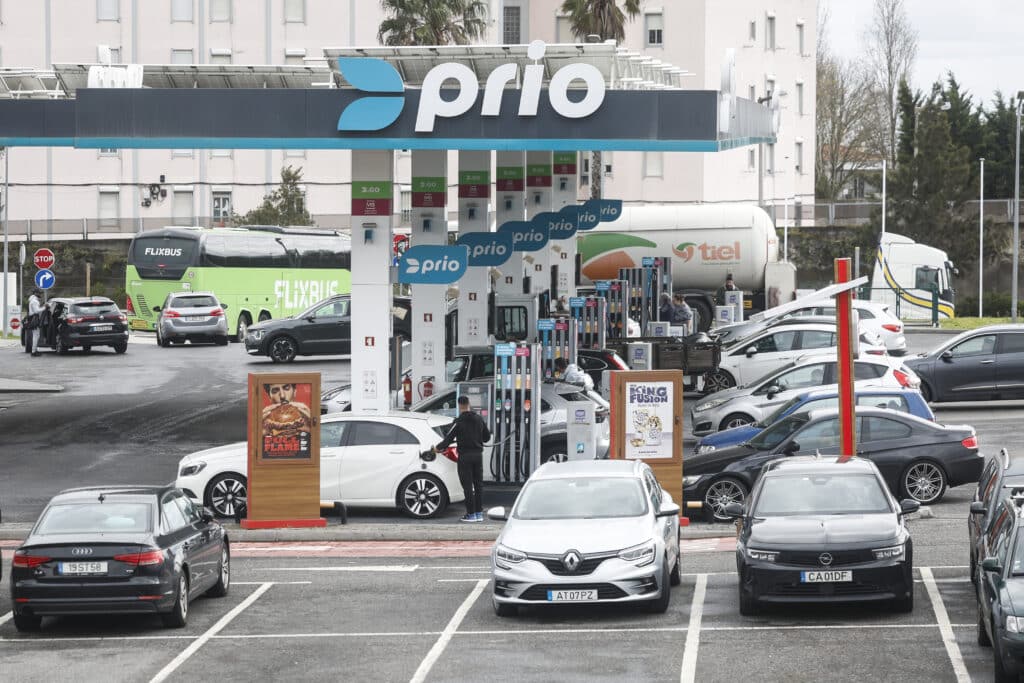
The differences now for Portuguese producers in relation to Spain are “striking”, he said. Spain “has introduced a 20-cent-per-litre discount and made available an agricultural support package worth €877 million”. For Confragi, this disparity creates a competitive gap that is detrimental to Portuguese producers. “It is impossible to strengthen the competitiveness of the Portuguese agri-food sector against its Spanish counterpart without ensuring Iberian equity in fuel and energy prices,” said Leão – something that certainly up until time of writing does not look like it is coming.
Stressing that the agri-food sector in Portugal is being “absolutely asphyxiated”, Idalino Leão’s comments suggest the finance minister’s interview may have been a tad too optimistic (the same criticism, coincidentally, that Christine Lagarde has directed at financial markets).
Leão makes no bones about it: the sustainability of his sector, and its capacity to compete in the Iberian market, is at stake.
Firefighters too are far from satisfied with the measures that the government appears to think put it at the forefront of European response.
“These measures of state support are mere band-aids that do not help firefighting corporations very much at all,” Ricardo Domingos, the commander of Coimbra fire station told SIC on Monday. Stations will have to make a “huge financial effort to cover expenses. We feel as if we are having to finance emergency response in Portugal,” he said.
Commander Domingos explained that costs are going up all the time – yet the government’s support is finite: €360 for heavy vehicles, €120 for the lighter ones – paid only once.
It means that vehicles leaving the station are having to count every drop of fuel. Bottom line: this is not the way to run an effective emergency response system, says the Coimbra fire chief.
Inflation up, consumer confidence down
Statistics institute INE has already reported an increase in inflation caused by the war. So far, the just over four weeks of conflict have seen inflation in Portugal rise to 2.7%, with the Bank of Portugal making adjustments, and increasing its forecasts for the year to a rate of inflation of 2.8%.
These increases will affect ‘everything’, including people’s mortgages. Thus, it is hardly surprising that INE has also reported a dip in consumer confidence.
According to INE’s latest data, consumer confidence in Portugal fell in March to the ‘lowest level since December 2023’. But what was perhaps even more telling was that INE’s bulletin stressed that consumer confidence had actually been “falling over the last two months” (i.e. before the United States and Israel launched their attacks on Iran) “as a result particularly of expressive negative contributions in perspectives on the future evolution of the financial situation of the country, and the financial situation of families”.
This one observation from the various soundings INE carries out within Portuguese businesses and civil society shows again how the government’s financial outlook may not gel with that of its population.
To be fair, news outlets have been covering the price increases in local fruit, vegetable and fish markets for months now – always in the context of shoppers complaining, and saying their money no longer buys what it used to, and salespeople lamenting that there isn’t the demand that they need to remain solvent.
All this, and we are only in the first month of a war that almost certainly has some weeks to run – and the outcome of which is still very uncertain.
________________________
Proactive Spain
Spain has been one of the most proactive countries in Europe introducing measures to mitigate the impact of the war. The Spanish government approved a €5 billion support package consisting of around 80 measures designed to protect households and businesses from rising costs.
The country also released 11.5 million barrels from strategic reserves over 90 days, cut VAT on petrol, diesel, electricity, and gas to 10%, lowered other energy taxes, and offered subsidies of approximately 20 cents per litre for sectors heavily affected, such as transport, agriculture, and fisheries.
Social protections, including a ban on power cuts for vulnerable households, have also been introduced.
Also read: Portuguese government approves €150 million monthly fuel support