As I write this, I’m personally sitting with the weight of an anniversary – another year since the loss of someone I loved deeply. These days have their own gravity. Time slows down in places, surges forward in others. And despite what many people hope or suggest, it doesn’t “get easier” in the way that phrase implies. It gets different.
We’re told there are stages of grief. As if we can tick them off like a to-do list and be “done.” We’re asked: “Have you moved on?” – as though grief is a place we should be trying to escape, rather than a landscape we learn to live within.
But grief doesn’t operate like that.
It’s not linear. It’s not neat. It doesn’t ask for our permission before rising again. A song, a smell, an anniversary, or a quiet moment when the world doesn’t realise someone is missing – these can call it back with full force.
Psychologists who work with trauma and grief increasingly speak of “continuing bonds.” We don’t let go of the dead. We carry them forward. They change shape in our lives – from sharp pain to quiet presence. The idea of closure has never made sense to me. What kind of door are we meant to shut on love?
Instead, I’ve learned – both personally and professionally – that we must make space for grief. Not banish it. Not conquer it. Hold it. Name it. Honour it.
Ceremonies and anniversaries help us do this. Whether religious or secular, they offer us a container. In Portugal, like many cultures, All Souls’ Day is a time when cemeteries fill with flowers and families. Here, memory is not shameful or private. It’s woven into the social fabric.
There’s wisdom in that.
Grief isn’t just emotional. It’s physical. Clients tell me they can’t breathe. They feel heavy. Disconnected. Hyper-alert. Their bodies hold the absence in ways they can’t always name.
Existential psychotherapists like Irvin Yalom remind us that grief isn’t a pathology. It’s a confrontation with the core realities of life: that we are mortal, that love makes us vulnerable, and that meaning isn’t guaranteed – it’s made.
When we try to rush grief, or pretend it doesn’t exist, we often experience anxiety or numbness. This isn’t because something’s wrong with us. It’s because we’re trying to live as if nothing happened.
And something did happen. Something irrevocable.
In the Algarve, people often speak about slowing down, enjoying the present, connecting with nature. Yet we still carry the emotional habits of the faster world we left behind. The expectation to be fine. The rush to fix.
What if we treated sorrow as part of life’s rhythm, not a malfunction? What if we welcomed it, the way we welcome the sea mist or the spring rains?
“Though the physicality of death destroys us, the idea of death may save us.”
— Irvin D. Yalom
The poet Rilke wrote, “Let everything happen to you: beauty and terror. Just keep going. No feeling is final.”
There is power in letting ourselves feel. Grief, like love, changes us. But if we meet it honestly, it can also deepen us.
The people we’ve lost are no longer here in the way we want. But they’re still here. In our habits, our values, our memories. In the way we speak to others. In the dreams we have.
Some days, grief is loud. Other days it sits beside us, saying nothing. And sometimes, it gives us the strength to speak up, to protect others, to build something new from what was broken.
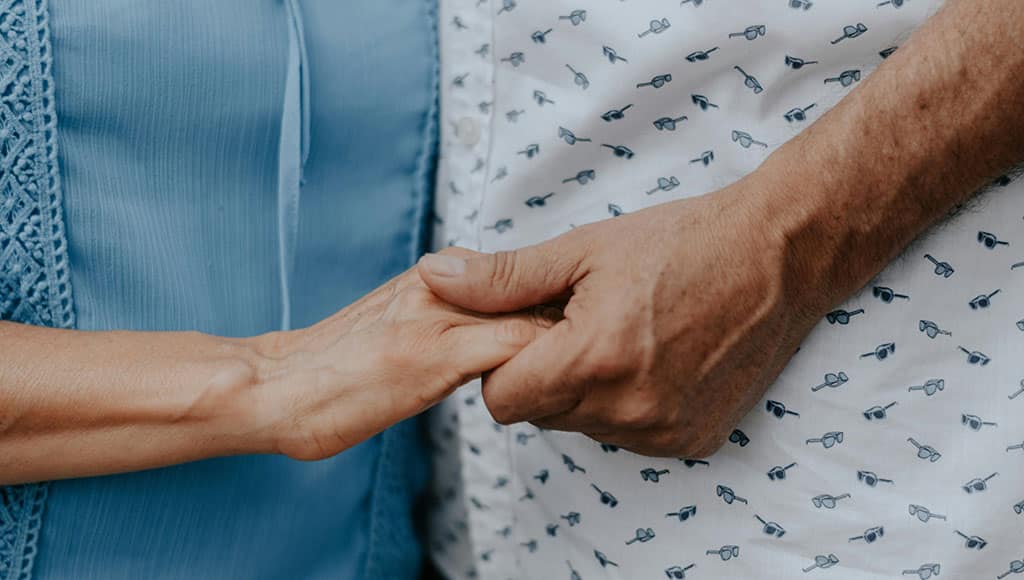
As I sit with my own loss, I think about the stories my loved one told. The warmth of their hands. The unfinished conversations. I think about what they’d say if they saw me now. I carry them into every word I write, every client I support, every moment of stillness I allow myself.
We need to talk about grief differently. Not as something to recover from – but as something to integrate. Not as a story with an ending – but as a chapter that rewrites the whole book.
If you are grieving today, know this: You are not broken. You are not “behind.” You are simply living the truth of love and loss.
You do not have to move on.
You can move forward – with.
And if you’re holding grief right now, you might try this: Sit down. Let your hands rest gently on your lap, palms up. Look at them both. In one hand, think of your joys – your laughter, your connections, your wins, the people who have lifted you. In the other, hold your sorrows – your griefs, your disappointments, your losses. Take a breath and really notice them. One cannot exist without the other. And so one becomes as precious as the other. This is the shape of a full life. To feel both – and to honour both.