The Empire State Building, which opened in 1931, was the first observation deck in the city. Located on the 86th floor, its open-air deck offered panoramic views of Manhattan and beyond. Later, an enclosed deck on the 102nd floor was added, offering an even higher vantage point. At the time, it was the tallest building in the world, and its observation decks quickly became major attractions, drawing tourists eager to see the city in a way few ever had. The Empire State’s deck combined the thrill of height with elegance, and it soon became a symbol of New York itself, immortalised in countless films, photographs, and postcards.
In the decades that followed, other towers opened their own decks to the public. Just two years after the Empire State, Rockefeller Center’s Top of the Rock welcomed visitors in 1933, offering a different vantage point over Midtown.
Decades later, in 1973, the original World Trade Center unveiled its observation deck, giving people the chance to look out from what was then the tallest set of towers in the world. In more recent years, places like One World Observatory, Edge at Hudson Yards, and SUMMIT One Vanderbilt have redefined what an observation deck can be – blending height with interactive design, glass floors, skyboxes, and immersive art.
One of the most striking of these is SUMMIT, perched atop One Vanderbilt, right next to Grand Central Terminal. At 427 meters tall, it’s the city’s fourth-tallest building, and its observatory promises not just views but an experience.
I booked my ticket for 11.30am – not for any special reason, but because it was one of the few slots left when I purchased it online the night before. It cost around €40, though tickets are pricier around sunset.
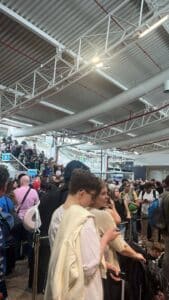
There’s no need to arrive too early, since you can only join the queue at your booked time. The line moved slowly through a lengthy security checkpoint, and once cleared, I was handed some mandatory shoe covers and a pair of sunglasses to wear if I wanted.
From there, I entered a dark corridor that was an experience in itself, with LED lights and hypnotic sounds setting the tone. Then came a mirrored elevator – a small taste of what was to come – and in just 43 seconds, I soared up to the 91st floor.
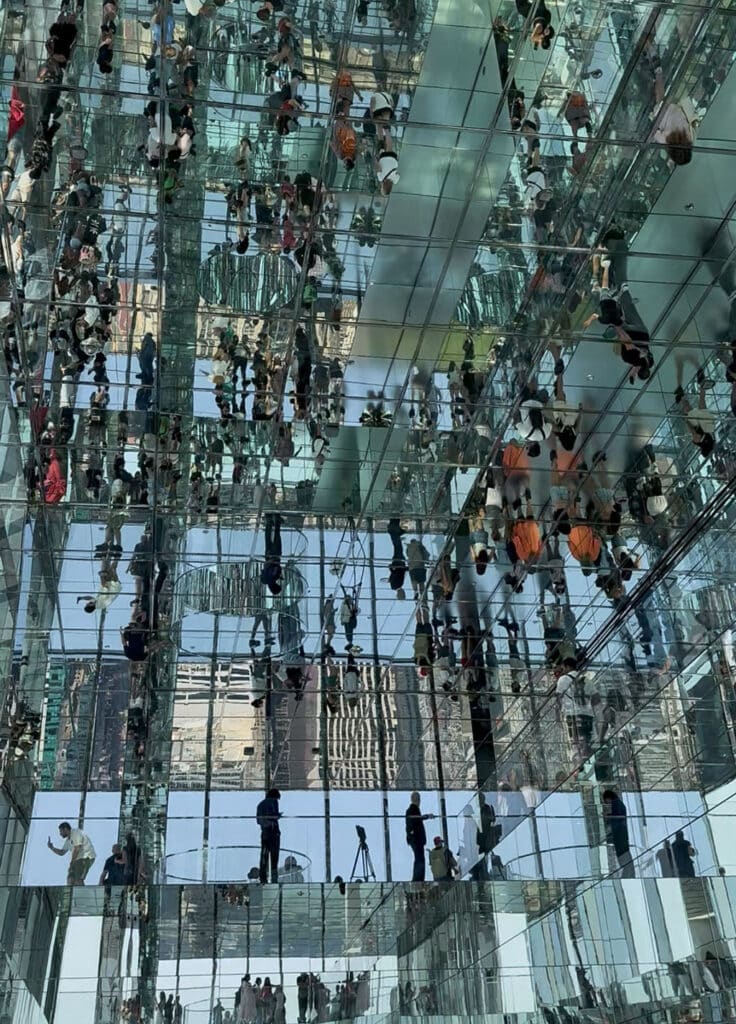
At first, I worried the crowds below would mean a packed and uncomfortable experience, but the opposite was true. The observatory’s vast floors gave everyone plenty of space to wander. In fact, the number of visitors added to the experience, their reflections multiplying endlessly in the mirrored walls, ceilings, and floors. It was as if the space – and the people in it – stretched into infinity.
The main installation, calledTranscendence, took three years to design. Mirrors cover nearly every surface, reflecting the skyline and visitors, again and again. The floor beneath my feet and the ceiling above seemed to extend forever, revealing endless levels – like something straight out of the Matrix.
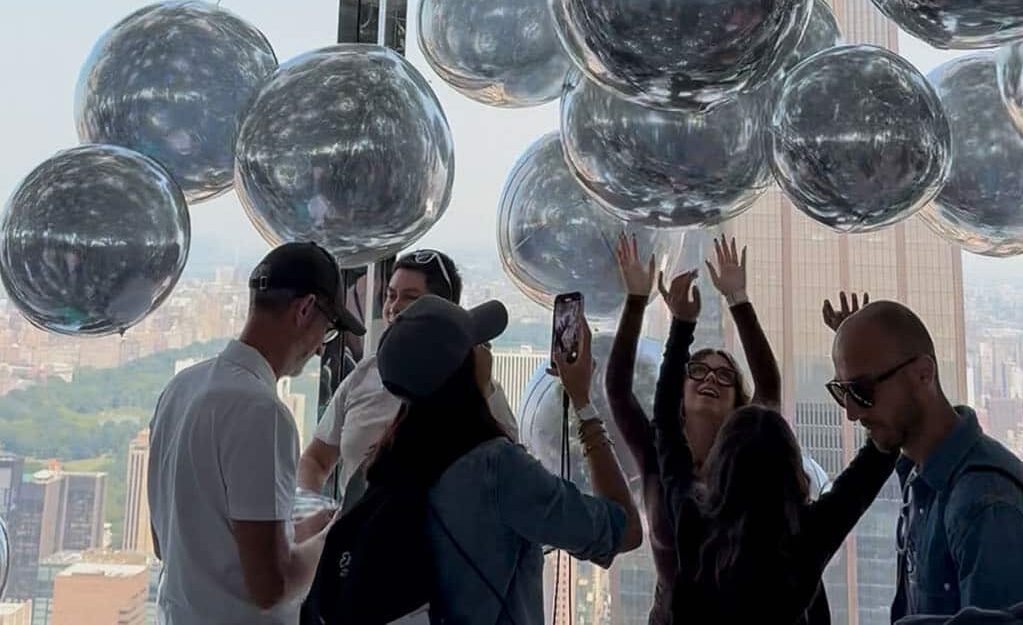
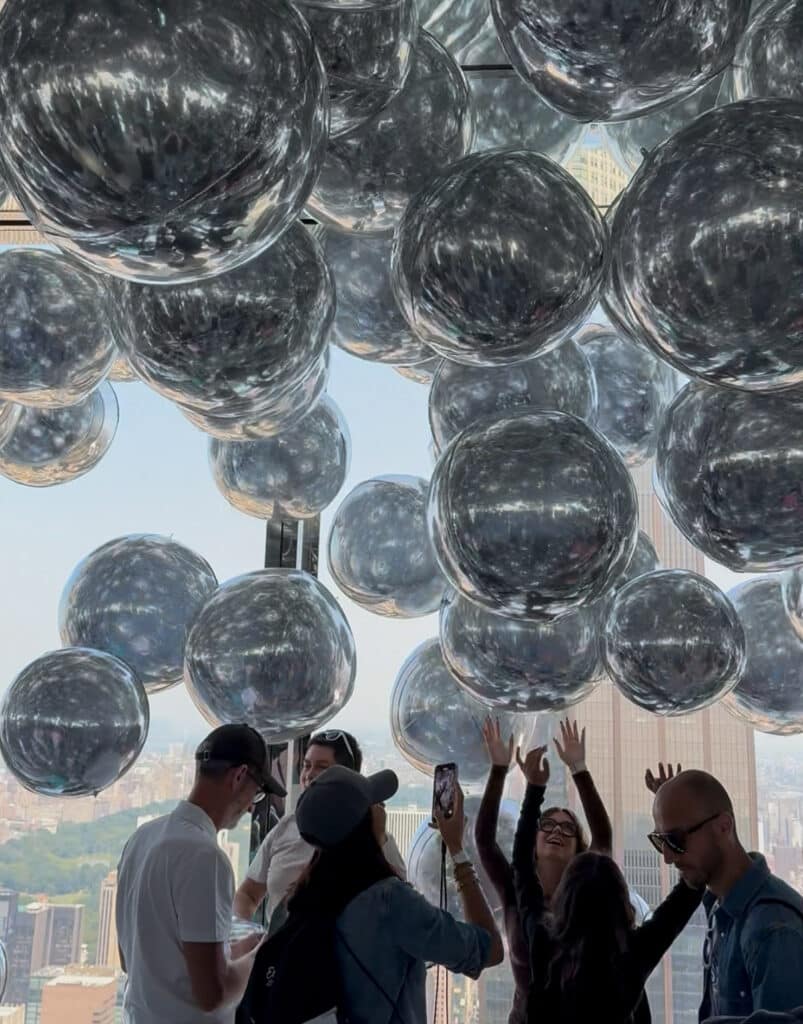
Next came the Affinity Room, a smaller space overflowing with floating silver Mylar balloons. They drifted gently through the air and rolled across the mirrored floor, with visitors swatting, nudging, and kicking them along. It was playful and chaotic, almost like stepping into a giant playground. Even with a million-dollar view just outside the windows, most people were too busy chasing balloons to look out.
After, there were two small glass skyboxes that extend out from the side of the building. Standing inside one, I could look straight down at the streets far below. However, unlike the other floors where you can linger, these are managed carefully: short queues form, and once it’s your turn, you get about 30 seconds to take a few photos before staff usher you along.
Ultimately, on the 93rd floor, there’s a bar and an open-air terrace. You can order an overpriced cocktail if you wish – though really, you’re paying for the view, not the drink. And, just as memorable is the restroom, which might boast the best view of any bathroom in New York City.
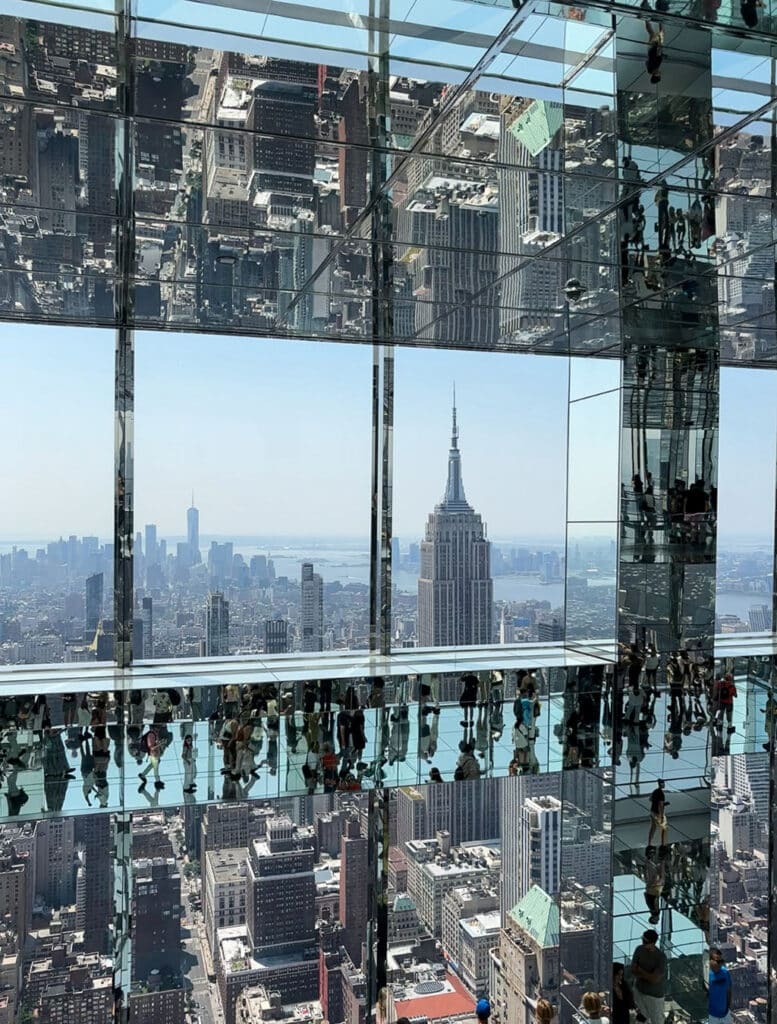
Designed by Kenzo Digital, SUMMIT is more than an observation deck. It’s part art installation, part architectural marvel, part playground. While it doesn’t carry the history or iconic legacy of the Empire State Building, it offers something different: a building that is itself an exhibit. It’s a photographer’s dream, with infinite reflections, shifting light, and bold design. And from its terraces, you get one of the best possible views of the Empire State Building itself.