Growing up, Tomb Raider was my favourite game. You played as Lara Croft, an archaeologist who explored lost tombs and ancient ruins all over the world. She was like a female Indiana Jones, but instead of a whip and fedora, she had cargo shorts, dual pistols, and a British accent.
One of the best parts of the game was exploring secret, long-lost places. Dense jungles, frozen mountain tops, deserts, hidden cities, and, of course, ancient temples. You climbed cliffs, swung across gaps, slid through tight spaces, and dived into dark, underwater passages. There were puzzles too – lots of them. You had to pull levers, move giant blocks, step on pressure plates, and figure out how old machines worked to open secret doors.
The Tomb Raider games became so popular that they were eventually turned into films, with Angelina Jolie stepping into the role of Lara Croft. In the first movie, Lara faces off against the Illuminati, a secretive group hunting for a powerful artefact called the Triangle of Light -an object said to control time. The Triangle was split into two halves long ago and hidden in ancient tombs around the world.
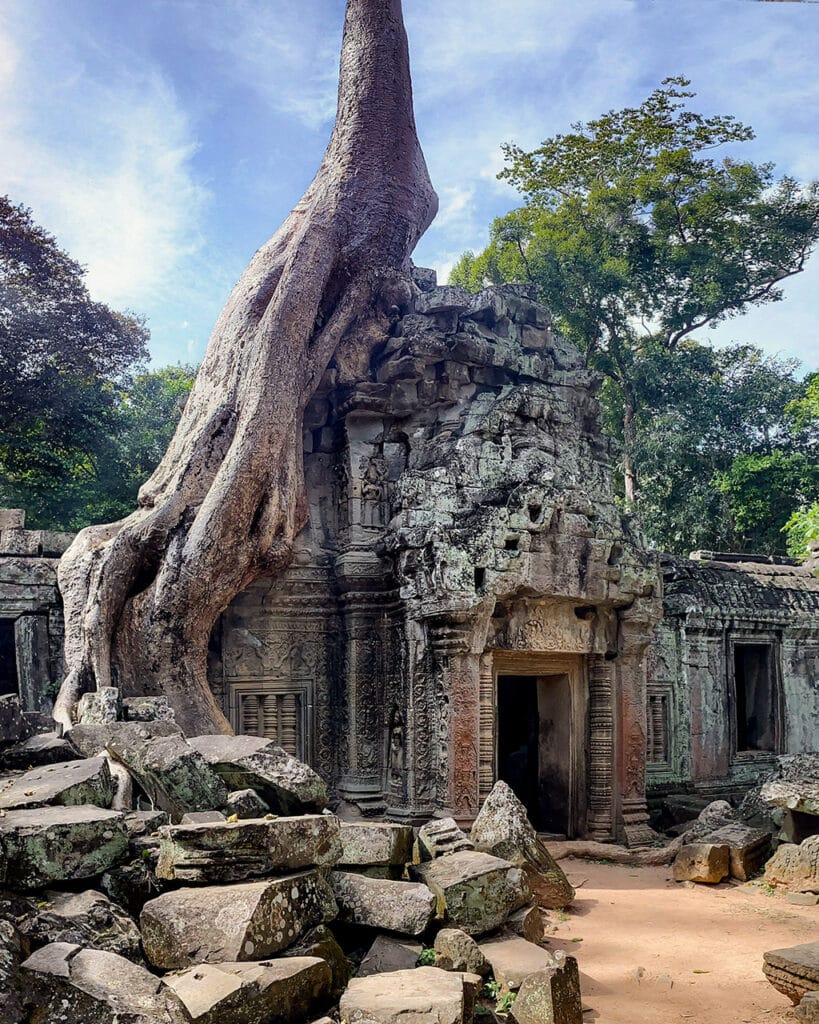
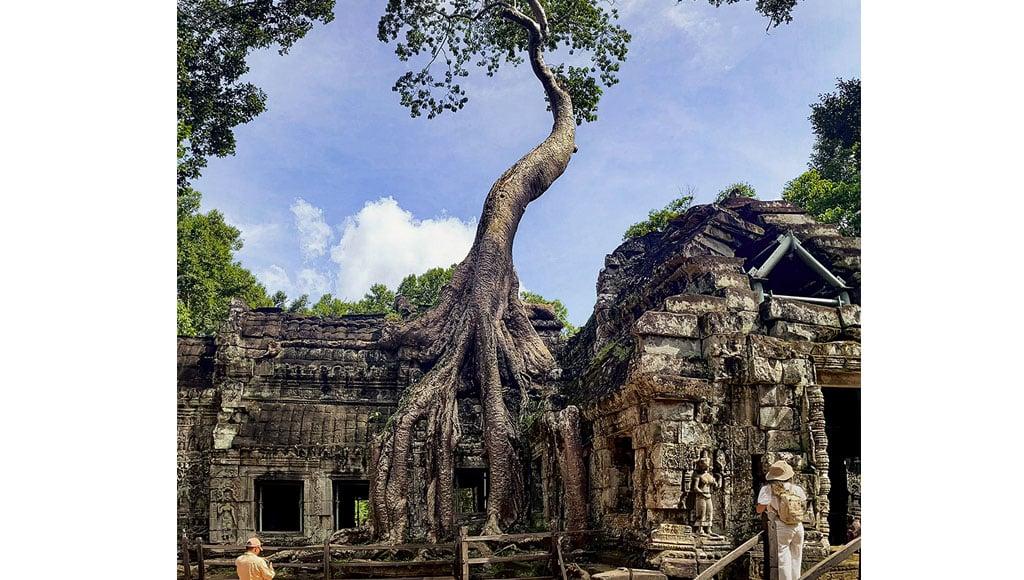
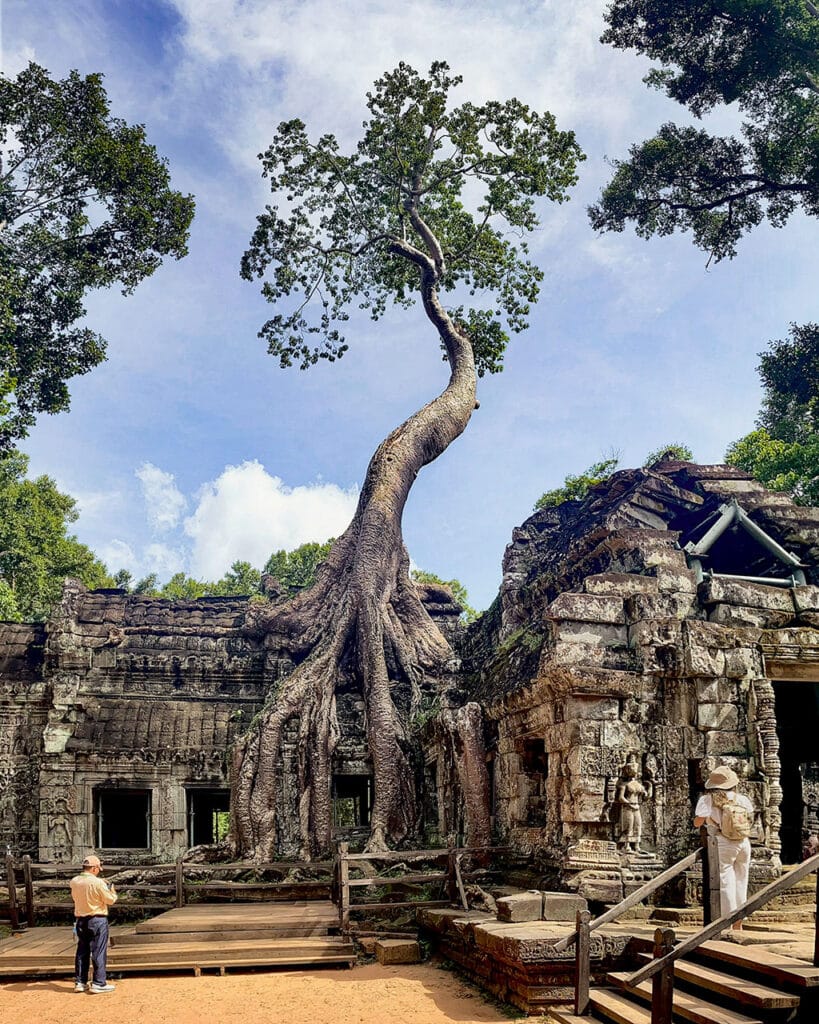
Lara’s search for the first half leads her deep into the jungle, where she discovers a temple consumed by nature. Giant trees grow straight out of the stone walls. Their roots spill over doorways, wrap around pillars, and stretch across the temple’s ground. The stone is cracked and weathered, and covered in patches of moss.
Broken towers rise out of the jungle, and narrow passageways open into hidden courtyards where nature has taken control. In many places, the trees seem to be holding the temple together, even as they slowly pull it apart. It’s the kind of place that feels imagined or mythical. And yet, it’s real.
That temple is Ta Prohm, one of the most iconic sites in the Angkor Archaeological Park in Cambodia. Unlike the nearby Angkor Wat, which has been carefully restored, Ta Prohm has been left largely as it was found – part ruin, part jungle.
It was first built in the late 1100s by King Jayavarman VII, one of the most powerful rulers of the ancient Khmer Empire. The Khmer ruled much of Southeast Asia, and their capital was at Angkor, a city filled with temples.
Jayavarman was a Buddhist and a great builder. During his reign, he built hundreds of temples, roads, hospitals, and more. But Ta Prohm was special. It was dedicated to his mother and at the centre of the temple stood a statue of Prajnaparamita, the goddess of wisdom in Buddhism. This was meant to represent his mother’s wisdom and kindness.
At its peak, the temple was like a small city. Inscriptions tell us that over 12,000 people lived and worked there, including hundreds of dancers, priests, teachers, farmers, and servants. It controlled land, rice fields, and even gold and silk. It was a busy, living place wrapped around a sacred centre.
After the Khmer Empire declined, the city of Angkor was slowly abandoned. Over time, the jungle began to grow back. Without people to care for the temples, trees started growing through the stones. Rain wore down the carvings and roots pushed into cracks and broke walls apart – though in some places, they also held the stones together.
In the 1800s, French explorers came across the ruins. Some temples were cleaned and repaired. But Ta Prohm was left mostly the way they found it. The jungle had become part of the temple. The way nature and stone had blended together was too beautiful to undo.
When I visited Ta Prohm last year, it definitely felt like I had stepped into a video game. It’s easy to get lost in the temple’s narrow passageways that twist through the ruins like a maze. One hallway leads to another, then to a dead end or a corridor blocked by piles of stone that have collapsed over time.
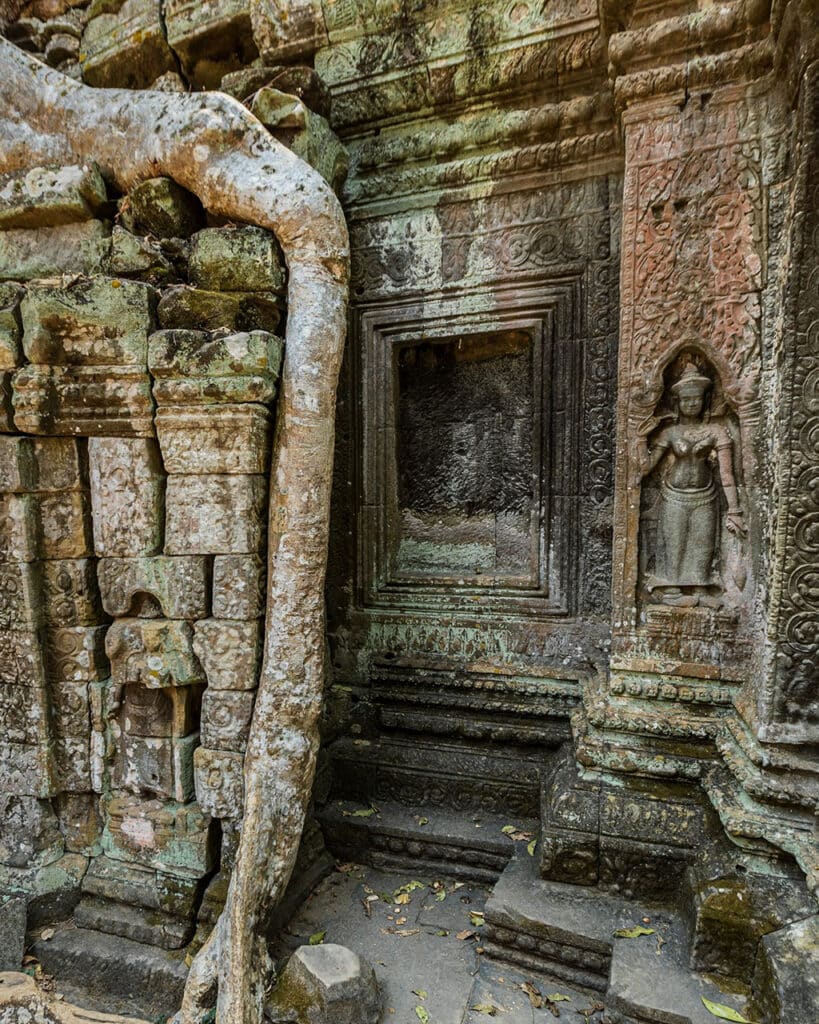
At every turn, there’s something to see – statues carved into the walls, hidden shrines, and moss-covered carvings that tell the temple’s story. Then, when you least expect it, the passages open up into wide courtyards filled with light, where trees and towers rise high above the ruins. It’s in these courtyards that you see how much nature has taken over. Giant roots twist around doorways, crawl across rooftops, and wrap around the stone like a kraken pulling a ship under.
If you’re like me and dreamed of being an archaeologist and adventurer as a kid, getting lost in Ta Prohm feels like discovering a real long-lost city – the kind you read about in legends and see on the big screen. The nearby temples are awe-inspiring too, though you’ll need to be ready to handle the heat. Angkor is definitely a place I plan on returning to.