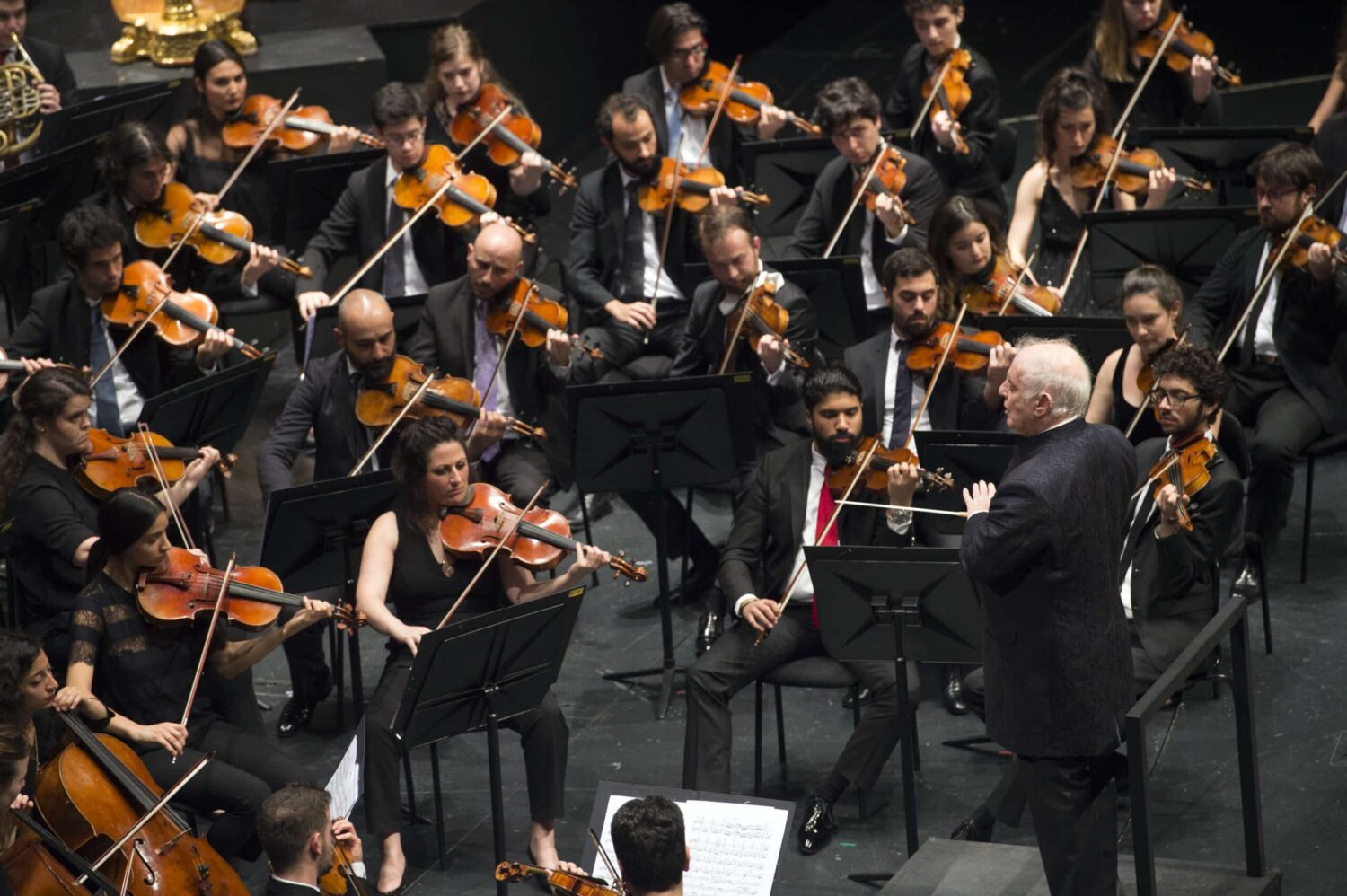
At the turn of the century, Argentinian-Israeli conductor Daniel Barenboim and US-Palestinian academic Edward Said received acclaim for the founding of the West-Eastern Divan Orchestra.
This action brought together musicians and intellectuals from a diversity of countries in the Middle East but most notably from Israel and Palestine.
The professional ability of the musicians resulted in immediate success. In year 2012, a performance in the presence of Pope Benedict XVI to commemorate the founding of the Benedictine order was succeeded by Barenboim presenting the complete cycle of the nine Beethoven symphonies at the BBC Proms.
This culminated in 2015 with the creation of the Barenboim-Said Akademie in Berlin. Initially, scholarships were provided for 90 novice musicians drawn from the same countries of the Middle East as the Divan Orchestra and authorisation was given to award degrees and diplomas of university standard.
Under the inspired leadership of Barenboim and a galaxy of international artistic sponsors, such as the Argentinian concert pianist Martha Argerich, the Foundation has produced a flow of accomplishment which fulfils the needs of orchestras worldwide.
Financial donations have enabled the construction of the Pierre Boulez concert hall for the performance of chamber music and modernist compositions.
Before his untimely death in 2003, Edward Said emphasised that the intention of the Divan Orchestra was to bring together, through music, a sense of loving co-existence which would supercede the brutality of political activism that has continuously bedevilled relations between Semitic people.
Inevitably, his principles brought a furious condemnation from both determined Zionists and fanatical Islamists (including non-Arab Iranians) whose fervent religious beliefs in ethnic superiority have fomented the horrific tragedies of genocide in Gaza and elsewhere in the war-torn Middle East.
Two composers have just released works which are highly relevant to this context.
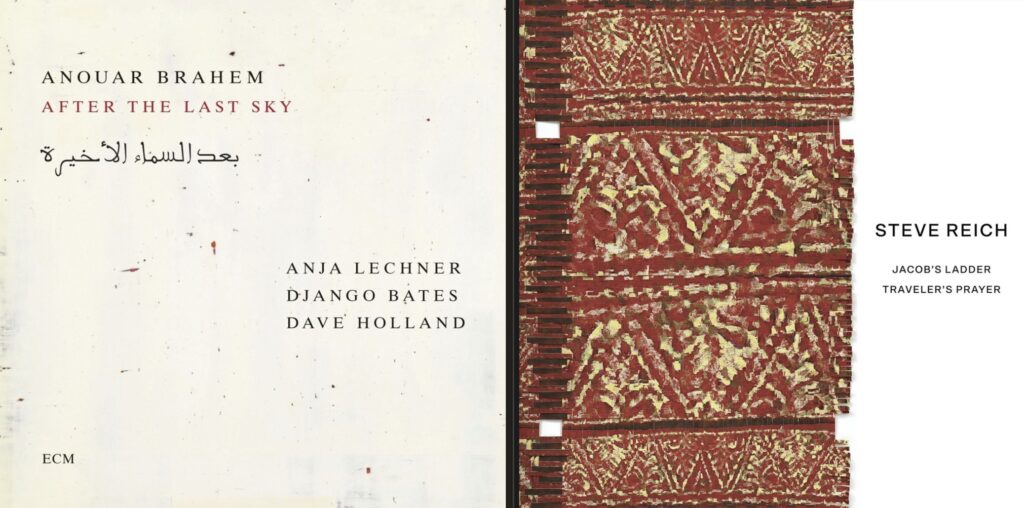
In After The Last Sky, the Tunisian master of the oud, Anouar Brahem, is aided by musicians Anja Lechner, Django Bates and Dave Holland in presenting 11 evocative tracks with titles such The Eternal Olive Tree, The Sweet Oranges of Jaffa, Dancing Under the Meteorites and Edward Said’s Reverie. These are not “protest songs” but rather a meditation on Palestinian discomfort caused by seemingly endless persecution. The style is a mixture of chamber music and ethno-jazz which demands close attention.
Equally demanding is the work of modern minimalist Steve Reich in which he draws deeply on his Jewish ancestry and biblical knowledge with Jacob’s Ladder whereby the imagery of Bruegel and William Blake is recalled by the scaling of ladders to enable the messengers of G-d to bring deliverance to the Chosen People. By contrast Traveler’s Prayer is comparable to Brahem’s Endless Wandering and recalls the often-abysmal plight of those seeking refuge from calamity.
I recommend a listening to these interesting but disturbing works as an accompaniment to viewing the videos and photographs of the horrific scenario in Gaza which have just been published by The Washington Post.