
Creatine is not new. It’s not modern, artificial, or a product of today’s fitness industry. It’s a naturally occurring compound found in the body and in animal-based foods. It plays a key role in how muscles produce energy during short bursts of intense effort – like lifting weights, sprinting, or climbing stairs. Its story begins, like many scientific discoveries, in 19th-century France.
In 1832, the French chemist Michel Eugène Chevreul was studying the components of meat. Chevreul, who had previously isolated fatty acids and contributed to soap production, turned his attention to muscle tissue. From boiled beef, he extracted a crystalline compound present in small but consistent amounts. He named it créatine, borrowing from the Greek kreas, meaning “meat.” At the time, he couldn’t have imagined how closely this compound would one day be linked to power, performance, and physical resilience.
Throughout the 19th century, creatine remained a scientific footnote. It was studied in relation to animal metabolism, muscle physiology, and later dietary intake. It wasn’t until the early 20th century that its true role began to emerge. Researchers started to understand how creatine contributed to the body’s energy systems, especially during short bursts of high-intensity effort.
In 1926, German scientists discovered that creatine is naturally synthesised in the liver and kidneys and stored in skeletal muscle. Yet, despite these findings, it remained largely unknown to the public.
Then, during the 1992 Summer Olympics in Barcelona, a shift occurred. British sprinter Linford Christie and hurdler Sally Gunnell both won gold medals – and both were reported to have used creatine monohydrate in their training. It was neither banned nor controversial. But the word spread. Athletes began asking questions. Supplement companies took notice. After more than a century of dormancy in scientific journals, creatine entered the mainstream.
Today, we know the body naturally produces about half of its daily creatine needs – roughly 1 to 2 grams per day. This internal supply is synthesised in the liver, kidneys, and pancreas. Around 95% is delivered to skeletal muscle, where it’s stored and used during movement. The rest supports tissues like the brain and heart.
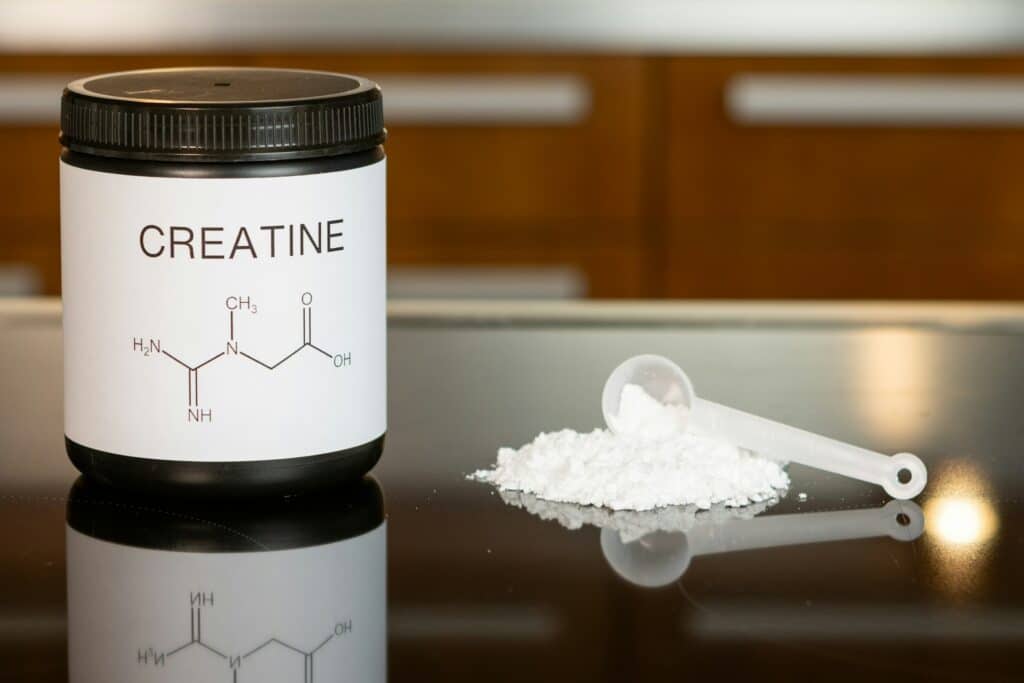
Creatine is also found in animal flesh: red meat, pork, poultry, and especially fish. Portugal, one of the world’s top fish-consuming nations, has long benefited from this. Traditional dishes – grilled sardines, cod, octopus, and tuna – have contributed to the population’s natural creatine intake.
Still, to reach the recommended daily dose of around 5 grams – the amount used in most research studies – you’d need to eat over a kilo of meat or fish every day. Not practical, not economical, and for many, not healthy.
That 5-gram target isn’t about replacing what the body lacks; it’s about saturating muscles to levels shown to enhance strength, performance, and recovery. Your body and diet typically provide 2 to 4 grams daily, but supplementation helps muscles store 20 to 40 percent more creatine than normal.
Creatine helps your body produce quick energy during intense activity. When you sprint, lift weights, or do anything explosive, your muscles burn through energy fast. Creatine helps refill that energy so you can keep going a little longer and push a little harder.
It doesn’t build muscle on its own, but by helping you do more – more reps, more sets, more effort – it supports strength and muscle growth over time. That’s why it’s especially useful for sports, gym workouts, and any kind of high-intensity training.
In recent years, creatine has moved beyond sports and the weight room. Studies show potential benefits for the brain – including improved short-term memory and reduced mental fatigue – especially in vegetarians and older adults who may have lower natural levels.
The brain, like muscles, requires a steady supply of energy to function optimally, especially during demanding mental tasks. Creatine helps maintain this energy balance by supporting the rapid regeneration of ATP, the brain’s main energy molecule.
Emerging evidence suggests it also might help with mild depression and neurological decline. While research is still early, these possibilities hint at a future where creatine supports not just athletic performance but also longevity and cognitive health.
For Portugal – an aging country like much of Europe, but one blessed with a rich food culture, a love of the outdoors, and a climate made for year-round activity – creatine may become part of the healthy aging conversation – through solid medicine, good science, and a lifestyle that already values movement, fresh food, and well-being.