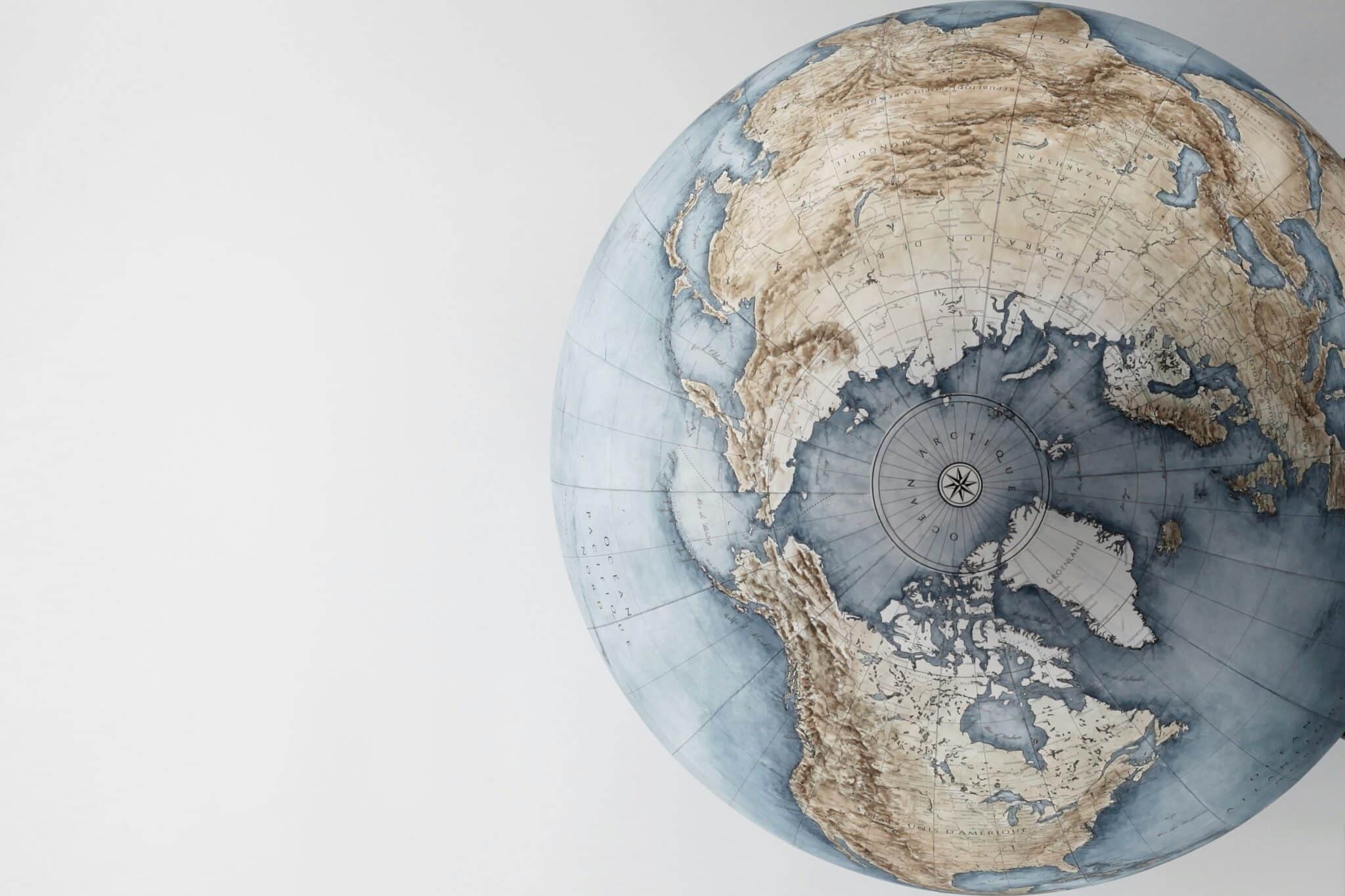
By land mass, the comparison is like that of a mouse to an elephant: the Azores measuring 2,346sqkm with a population of 242,000 and Greenland 2,160,000sqkm with 57,000 citizens mostly of Inuit descent. Both are considered to be of strategic importance to NATO and are administered by two of the smallest countries of the EU, Portugal and Denmark.
It was in 1867 that the US secretary of state, William H. Seward, successfully negotiated the purchase of Alaska for a paltry price but was then prevented from buying land of similar size on the eastern side of Canada.
Henceforth, Greenland remained in Danish hands as a colony until April 1941 when the Danish ambassador in exile signed a defence treaty with Secretary Cordell Hull. This gave the US exclusivity for the building of several military bases.
After WWII, the USA offered to buy the entire island for USD 100,000,000 payable in gold bullion but settled instead for a new extensive security agreement following which more bases were built. The largest of these was at Thule harbour where B-52 bombers were kept in almost perpetual war readiness. In 1968, one of these crashed near the coast. Of its four primed nuclear bombs, one was never recovered despite warships of the US navy having sophisticated sonar systems intended for locating submarines.
Despite the ending of the “cold war” and the disbandment of the Soviet Union, the strength of the US military in Greenland has not diminished. However, bases are now called Space Observatories and bombers have been replaced by missiles and a sophisticated “iron dome” defence system.
On its side, Russia has 300 ageing ICBMs. Of these, about 100 are located in Northern Russia and theoretically are still capable of reaching the US eastern seaboard by passing over the southern tip of Greenland.
So, the American claims that it should annex Greenland for reasons of national security are not without foundation. What is disputed is President Trump’s covetousness for exclusivity in mining the mineral wealth which is believed to be ready for exploitation now that the ice cap is receding and has a huge potential value totalling many billions of dollars.
By coincidence, it was also in April 1941 that the US, at a meeting with its Allies in Florida, decided unilaterally that it needed complete control of the Azores because of its strategic location in mid-Atlantic. Despite the claimed neutrality of Portugal, the Salazar regime considered that it was free to sell (very profitably) wolfram and other war necessities to Nazi Germany and to provide facilities at its ports for U-boats.
The American military was instructed to adapt War Plan Gray so that it could take the islands by force which would have enabled the fortification with both naval and aviation bases. This intended intervention was almost put into effect as Operation Alacrity, but intense diplomatic activity by Churchill’s ambassadors (partly using the ancient Treaty of Windsor) persuaded Salazar to sign an agreement which permitted the building of such bases under joint British/US control and was later extended to the NATO organisation. This led to the creation of the large base at Lajes on par with that of Thule in Greenland.
The motivation for the US plan to acquire the Azores “by one means or another” has less to do with military security. It is the plentiful existence of mineral nodules in the very large Azores extended economic zone of the Atlantic which presents a prized asset to the billionaire owners of US mining companies. Prospects for this were analysed in my essay “Portugal -The National Wealth of Mineral Assets”.
Since then, the USA has carried out extensive prospecting of the Atlantic seabed. In the Pacific Ocean, it has gone much further by issuing licences to US and Canadian mining companies for exploitation in waters which are solely within the jurisdiction of the International Sea Authority (ISA) which is affiliated to the UN. Such flagrancy shows how the maverick USA has become a law unto itself and bodes badly for the Azores.
Conclusion: President Trump’s precocious strategy for becoming the leader of a new World Order depends, in the short term, on the ability of his oligarchs to create the economic architecture which will benefit from all of the startling innovations expected of Artificial Intelligence. Ruthless “mergers and acquisitions” and clandestine regime change are expected to alter existing alliances and scrap trade treaties in favour of a global tariff system which will reward the acolytes and punish the wayward.
He forecasts for the EU and Britain a continuing decadence and the early retirement to the fringes of the world economy of once powerful countries with irrelevant histories of the Imperial “might is right”.
It is this which makes the Mercosur agreement seem absurd and impractical because it includes nations which have already been persuaded to transfer their allegiances to the USA or the Chinese and Russian blocks. Others will follow suit when the trade truce between China and USA ends in October 2026.
Additional text sent by the author – updated January 26, 2026, 3pm:
At the subsequent meeting of the World Economic Forum in Davos, President Trump again changed tack by declaring that, if a price can be settled by diplomatic negotiation, the USA will not use military force to obtain sovereignty over Greenland or impose punitive tariffs on opponent countries.
Inflation since 1951 has averaged 3.42% yearly so the offer made then would now have a value of USD 1,250,000,000. However, this would need to be substantially increased to include an estimate of the extent to which rare earths, battery metals and other mineral wealth may lie below the surface.
Of course, the indigenous populace has not been consulted in what has now become a gigantic real estate deal proposed by the world’s supreme wheeler-dealer to a cowed Denmark and its NATO allies.
Spurred on by the tech-titans and financiers of industry who now control the real power of the USA, President Trump and his acolytes should be able this year to achieve the philosophy of MAGA and beyond.
No mention has been made in Davos of the Azores islands which may be on the Trumpian shopping list for “mergers and acquisitions”. However, what has become clear in this portentous conflict of super-state poker is that the Portuguese will not be offered a place at the table when the microchips are finally called in by the intelligent but artificial dealer.
The use of military force to obtain control of the Azores would now seem to be a remote possibility. What is more likely is that the omnipotent US mining companies will commence exploitation of the mineral wealth of the seabed in the E.E.Z. with flagrant disregard of both the International Sea Authority and the EU.
A craftier approach would be to deploy influencers (agents of the CIA?) of the social media to support a political campaign for holding a referendum of the Azorean electorate to determine full independence from Portugal. If thus achieved, a switch of sovereignty and consequent golden visa to citizenship to the USA would follow.