Case remained in headlines for months due to minister’s perceived guilt
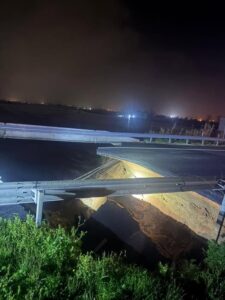
The trial has begun of the chauffeur of former minister Eduardo Cabrita who fatally hit a motorway worker on the A6 almost four years ago.
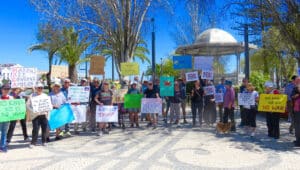
At the time, news stories focused on the reaction of Mr Cabrita; his apparent lack of concern for the victim’s heartbroken family and the difficulties they were having in surviving financially as a result of the death of father-of-two Nuno Santos, 43.
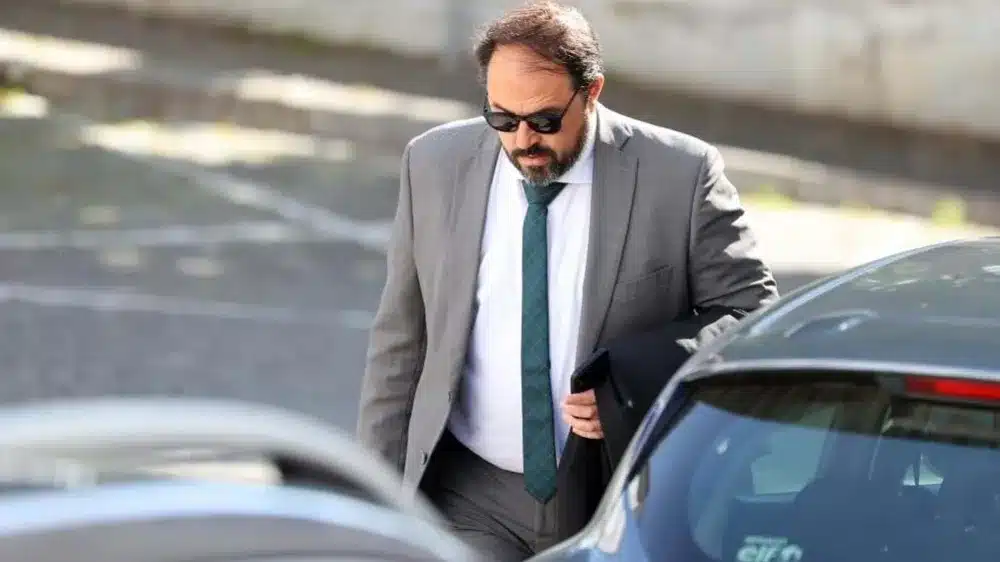
Efforts then moved on to attempts to prosecute Mr Cabrita, on the basis that he was the person ‘in charge of the vehicle’, even though his driver, Marco Pontes, was at the wheel.
In the end, only Pontes, at the time 43 years old, was sent for trial, for the offence of manslaughter.
He has told the court today that he knew instantly following the crash that the event had “destroyed” his life.
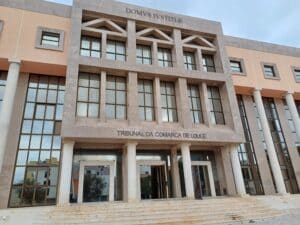
In the first session of the trial at Évora court today, Pontes has said that he has no idea how fast he was driving when he hit Santos – and that he only noticed the roadworks moment before impact.
Questioned by Judge Vanda Simões about a “speed of 155 kms per hour determined by an expert”, he said that he did not realise he was travelling at that speed, and that he was even “driving slowly given the conditions”.
Pontes clarified that no one gave him instructions about the speed of the car, and that minister Cabrita was in no hurry to get anywhere (he had been to a meeting in Portalegre, and was returning to Lisbon with various members of his team).
The trial began with a statement by defence lawyer, António Samara, who pointed out that Nuno Santos had been walking with his back to the traffic and that “there was no time for the driver to avoid the collision, nor could the pedestrian avoid it”.
Pontes described minutely how the accident happened, stressing that he had been surprised by the presence of a pedestrian ‘in the middle of the lane’ on the left of the motorway where he was driving.
“I saw the pedestrian, I braked and honked,” but “the pedestrian, upon hearing me, turns and tries to go to his left, to the side of the motorway”, but then ends up heading “towards the central divider and that’s when the collision occurred,” he said.
“Of the thousands of convoys I have been part of as a driver, this is the formation used and the instructions we are given,” he told the court, explaining that the car he was driving was in the left lane of the motorway and in front of two others in the same convoy, in a triangular formation, which he justified with rules established by safety regulations.
When asked if any signs indicated roadworks on the motorway, Pontes replied that “the only signs were those attached to the van” used by the workers.
“I saw the van at the moment of the collision, in those milliseconds,” he told the court.
As for the victim, Pontes said he was wearing “a grey uniform, which was dirty”, and acknowledged that he may have had “some reflective strips on his clothes.”
Pontes, who stopped working as a driver for the Ministry of Internal Administration in 2022, acknowledged that, looking back at what happened, he would not have done anything differently to avoid the collision.
He added that after the accident, security personnel transported Eduardo Cabrita in another vehicle – and that he remained inside the car because he was “in shock and upset”.
“I immediately thought that this event had destroyed my life,” confessed Pontes, who has since been receiving psychological and psychiatric counselling after being diagnosed with post-traumatic stress disorder.
During the trial, Nuno Santos’ wife and two daughters gave statements about the consequences of their loved one’s death.
At the end of the session, the family’s lawyer, José Joaquim Barros, told journalists that an attempt would be made to reach an agreement between the family and an insurance company regarding a civil compensation claim. In the ‘early days’ following the tragedy, they had been asking for €1 million.
source material: LUSA