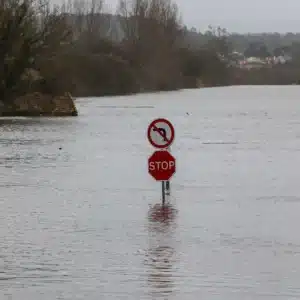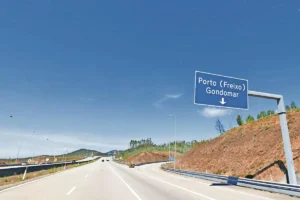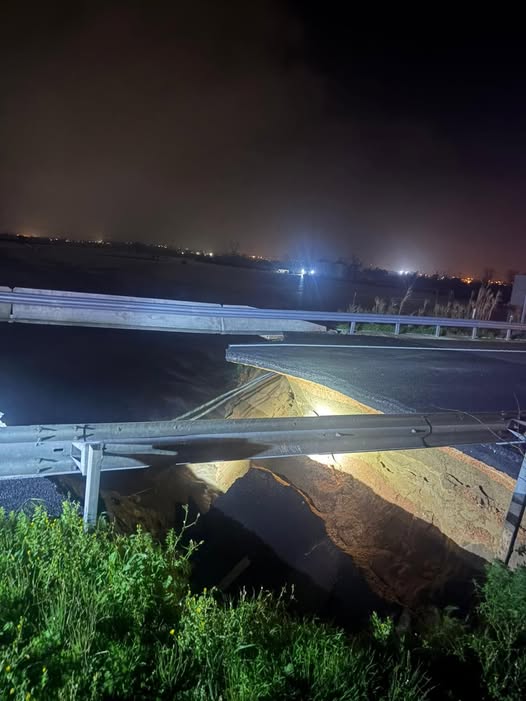
Hours after one of the dykes on the Mondego river ruptured late yesterday afternoon – sending tens of thousands of litres of water into farmland – a 10-metre stretch of the A1 motorway (connecting Porto to Lisbon) collapsed.
No drivers were affected because authorities had already closed that section of motorway (at Casais, between the Coimbra North and Coimbra South junctions), aware that it passed directly over the point where the dyke had ruptured.
Today, Infrastructure minister Miguel Pinto Luz will be travelling to Coimbra to assess the situation, and discuss immediate ‘solutions’.
Coimbra’s mayor, Ana Abrunhosa – herself a former minister under the last Socialist administration – admits that repairing the motorway, and all the other infrastructure that has been damaged in the last few weeks of bad weather, will take “many months, if not years”.
And she concedes that she has “great fear” for the integrity of infrastructure – not only in Coimbra, but throughout the country – as a result of the country’s pounding by so much rain.
“I am truly worried about safety”, she told RTP. “There are infrastructures that we have to analyse (…) Coimbra and many municipalities have very serious problems on roads, on bridges… They may not be visible, but they are every bit as serious (as if they were visible).”
Ms Abrunhosa stressed that when Miguel Pinto Luz arrives in Coimbra today, their discussions “cannot only be about the A1”.
As for last night’s collapse of this highway that is critical in terms of national mobility, it occurred precisely at the point where the motorway passes over the viaduct through which the dyke had burst. SIC journalist Nélson Mateus explained that with the dyke rupture, water flow increased, eventually putting pressure on the bridge deck pillars, as well as the surrounding land.
First signs that the collapse was imminent came in the form of a crack on the tarmac which eventually developed to a width it is now of 10-metres.
Motorway concession company Brisa has suggested ‘alternatives’ to drivers that would normally use the highway between kms 198 and 189.
Mayor Abrunhosa adds that traffic congestion in and around Coimbra will now become much worse – but there is nothing immediately that can be done to change this.
The mayor did stress again last night the importance of people heeding Civil Protection advice. She explained that five agricultural workers refused to leave the area where the dyke ruptured late yesterday afternoon, and as a consequence they had to be rescued by helicopter.
Miguel Pinto Luz meantime has described what is happening to the country right now as “an absolutely extraordinary situation” that will necessarily require “extraordinary solutions”.
Sources: Expresso/ RTP/ SIC