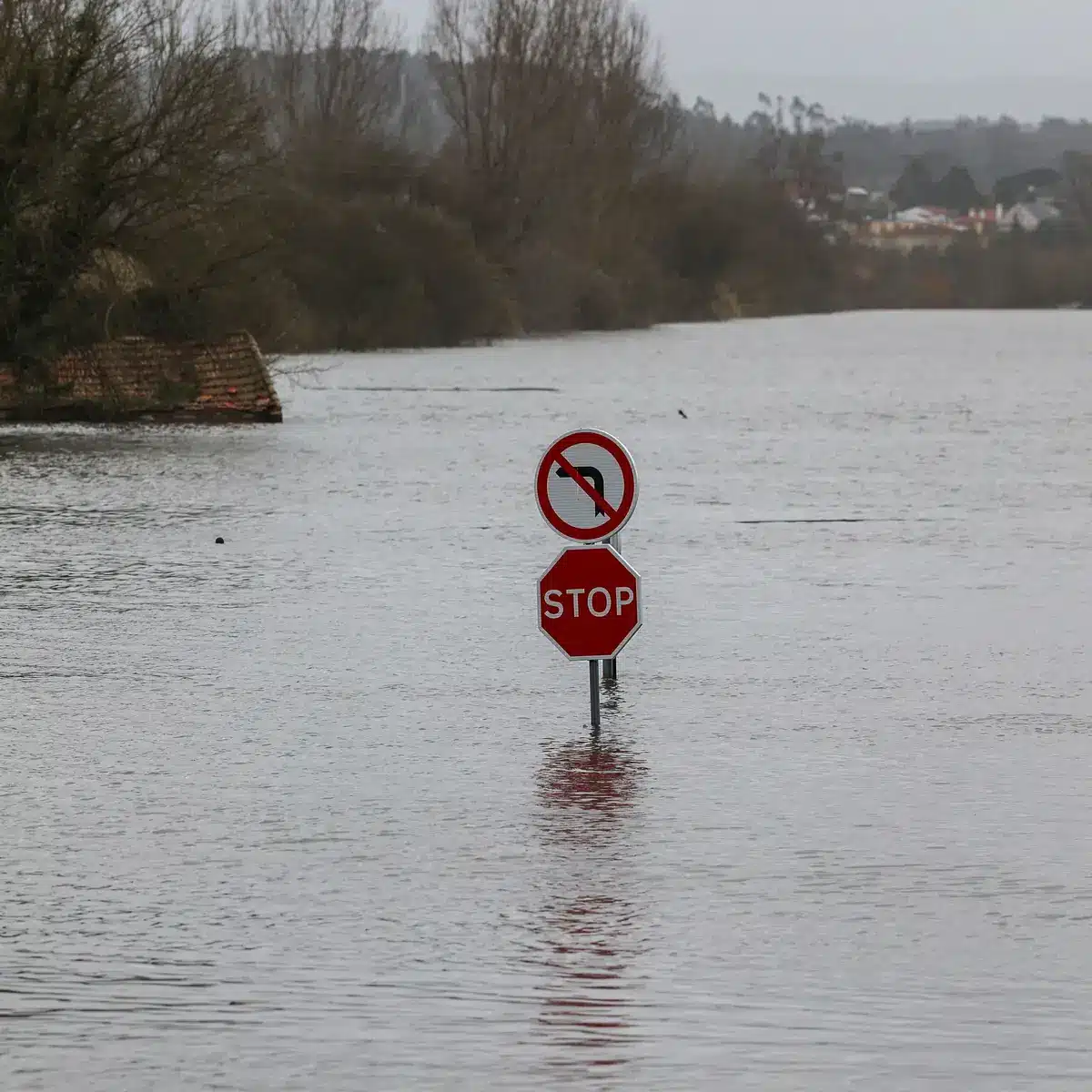
Coimbra City Council is taking a vote today on something that a few months ago would have sounded like utter madness: the municipality wants to partially suspend its PDM (local development plan) to allow the development of ‘accessible housing’ on the banks of the Mondego river – the same Mondego river that overflowed spectacularly this winter, breaking through dykes, destroying a stretch of motorway… and flooding numerous homes and businesses.
Mayor Ana Abrunhosa tells Expresso: “We have to make the heart of the city and housing accessible for the middle classes (…) We cannot leave (Coimbra) just for people who have money…”
This is the same mayor who in February was ready to evacuate 9,000 people because of an impending 100-year flood.
As we say, a few months ago, this proposal would sound like madness. But today, Ana Abrunhosa maintains that the areas she has in mind are those that have ‘minimal risk of flooding’ – and which have been signed off (for development) by environment agency APA, Civil Protection and the CCDR (commission for regional development and coordination).
In other words, the idea must not be as mad as it immediately sounds.
The focus in Coimbra is not just on promoting accessible housing. The city equally envisages “large investments in mobility”.
According to Expresso, there are two areas of the Mondego riverbanks where the council proposes to “increase construction currently allowed by up to 30%”, provided that the increase is “earmarked for social housing, cost-controlled housing and/ or affordable rental accommodation”, leaving 70% for the open market.
“The objective is to allow buildings above four-storeys, without increasing soil impermeability.
“The areas in question are between Ponte de Santa Clara and do Açude,” Expresso continues, “in a radius of around 350 metres along the route of the Metrobus corridor.”
The movement ‘Citizens of Coimbra’ is all for the idea, stressing the need to “allow more densification in areas well served by mobility and near the city”. Jorge Gouveia Monteiro, for the movement, believes flooding risks can be mitigated by dredging, and renaturalisation of the riverbanks. He tells Expresso that ‘the threat of flooding’ cannot be seen to block urban development.
But specialists, unsurprisingly, do not quite see things this way. Geologist Pedro Proença Cunha, from the University of Coimbra, fears that flood mapping data may “underestimate the real risk” as well as the areas that could be affected. He also points out that “progressive occupancy of flood plains over recent decades has fed a false perception of safety, going against the natural dynamics of the river”.
He is not alone. António Bento Gonçalves, also a geographer, made the same points right after the devastating floods this winter, stressing: ““We cannot continue to give people authorisation to set up shop, whether individuals or businesses, install companies, warehouses, factories, houses, in floodplains – because no matter how much is done, no matter how much work is carried out,(flooding) will always happen.”
Pedro Bingre, of the League for the Protection of Nature, has ventured into “they must be mad” territory, suggesting “one should question the sense of increasing construction and the number of people living in areas at risk of flooding”.
But, for the time being, it is looking like Coimbra municipal council will get its way.
Source: Expresso