Geographer and climate expert, António Bento Gonçalves, has been spelling out the task ahead of Portugal’s government to ‘build back better’ from the catastrophic damages of recent weeks.
Talking last week to RTP, he stressed how “We can’t go on constructing high tension power lines that cannot take 200 km winds (…) We cannot go on constructing motorways over flood plains”.
In short, the system has to be much more integrated. Knowledge needs to be used rather than abused.
Gonçalves, whose expertise runs to ‘forest fires, soil erosion and degradation and natural hazards’, let slip during a discussion on the Mondego flooding that agencies have reams of information on sensitive areas in Portugal. It is simply that ‘political decision-making’ up till now tends not to take advantage of this information.
He cited data from 2021 that shows at that point Portugal has “around 26,500 buildings in areas prone to flooding”.
This is all about ‘an inconvenient truth’: flooding in the Mondego river basin has been a scourge since the 15th century.
Back in 1464, the king of the time forbade land-burnings it was recognised (even then) that these would ‘erode the soil’ in the area, encouraging flooding.
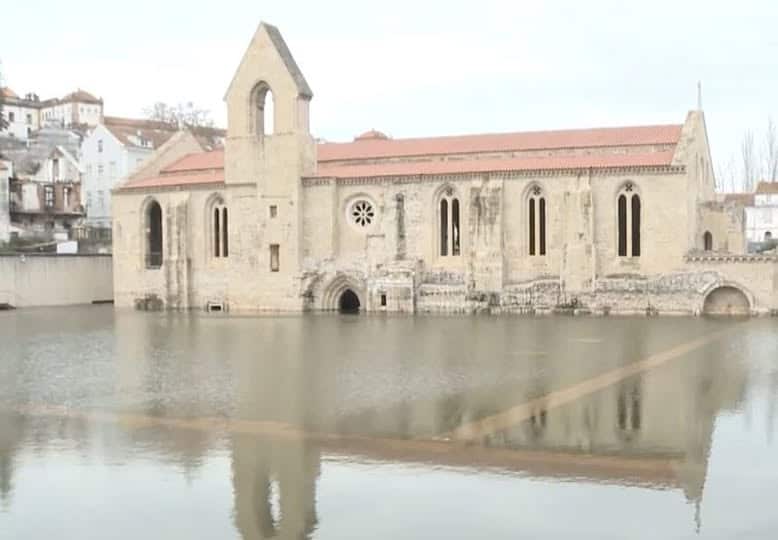
In the 17th century, nuns of the Santa Clara convent, in Coimbra, moved to a higher area altogether (abandoning the old building) due to persistent flooding – and yet as the centuries rolled by, somehow this knowledge has been ‘lost’ ‘ (or rather, not given the attention it merits).
This way, we have arrived at the 21st century frequently constructing on flood plains…
According to Bento Gonçalves – who is the director of the under-graduate programme in Civil Protection and Territorial Management at Minho University (and who in 2010 to 2015 was vice-president of RISCOS (the Portuguese association of risks, prevention and safety) – it is “urgent to abandon reactive logic and adopt strategic prevention.
“We cannot continue to give people authorisation to set up shop, whether individuals or businesses, install companies, warehouses, factories, houses, in floodplains – because no matter how much is done, no matter how much work is carried out, (flooding) will always happen.”
The researcher, who also holds a PhD in Physical Geography and Environmental Studies, stresses that local authorities are also to blame, as they frequently set up infrastructure on floodplains – instead of giving an example to their communities.
Given ample space to explain his understanding of this problem on air, Bento Gonçalves has stressed how forest fires have exacerbated flooding risks: the soil erosion that results reduces water infiltration on slopes, which means more water ‘runs off’ into rivers – leading to these building up silt.
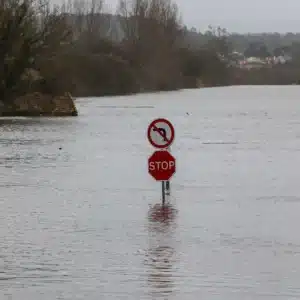
Then there are the ‘critical infrastructure’ (namely motorways and railways) constructed in areas prone to flooding and without the required degree of reinforcement. Bento Gonçalves points to the case of the A14 connection Coimbra with Figueira da Foz which, he says, was designed “without taking into account, I would say, the risk of flooding”. It is currently submerged in areas like Montemor-o-Velho.
In short, Bento Gonçalves’ message is that political leaders need to approach this moment of crisis with an integrated vision – taking history/ geography/ all Nature’s probabilities, into account, so that the future is not ‘more of the same’ but one in which communities can be protected.
Source material: RTP/ SIC