About a month ago, I was in my local small grocery store resupplying my weekly cash of wine and other goodies. The store had recently changed hands. For over a decade, shoppers in Santa Bárbara de Nexe knew the place as a Jafers, but now it is operated by the SPAR chain, even though most of the locals still call it Jafers.
Not much changed (not even the sign), but some items were discontinued or never carried by SPAR and some things were located on different shelves. Which meant I had to adapt and was placing unfamiliar bags of potato chips on the checkout counter. That was when the nice young lady who was operating the cash register noticed and mentioned that my favorite chips had been moved to a new separated location in the store, on an aisle that I seldom went down.
Sure enough, Silvana was right and the “Algarvia Batata Frita” were on their own shelf. My lovely wife and I prefer these tasty chips because they’re fresh, since they’re produced locally in nearby Almancil. The point of this story (I’m sure you were beginning to wonder) is that something like that will most likely only happen in a village or tight-knit neighborhood.
Clerks at big-city supermarkets seldom, if ever, remember what brands of chips or anything for that matter are purchased by once-a-week customers, even if they do load up their trollies with over a dozen bottles of Portuguese wine. But Silvana did and was considerate enough to mention it. Just being nice, but to a familiar face and fellow resident of the village.
My lovely wife and I moved to the village of Santa Bárbara de Nexe over nine years ago and we’re very glad we did. Some of our friends from Lagos or Tavira actually say out loud that they think we live “out in the country” and we do, sort of … but we can see Faro and the airport from our roof-top terrace.
ur place is one of three apartments built into the original farmhouse our landlord was born in. It’s all in the family. Actually, the condo we rent is in a neighborhood of villas called Canal, which is an outskirts of Santa Bárbara de Nexe, but the village with its one-way main street has pretty much everything we need, except a bank.
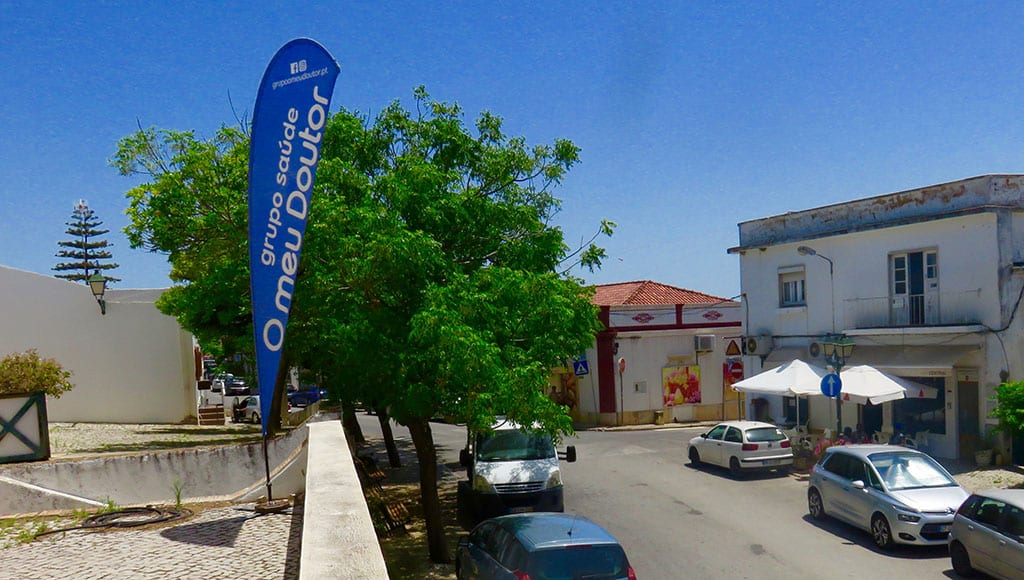
There are two grocery stores, a post office, a hardware store, a pharmacy, a flower shop, a bakery, a barber shop, a couple of beauty shops, four nice restaurants and two or three cafés or bars. I don’t even have to leave the village to get a pedicure.
We were introduced to village life by Julie Ancell, who was the proprietor, along with her late husband Martin, of the aptly-named Julie’s Pub, which was on mainstreet in the center of town.
Showing us absolutely no anti-American bias, Julie took us under her wing and introduced us to her mostly British clients as well as to pub life. The British ladies had the 501 club and met every Monday at that time for gin and tonics, while the men gathered around the corner at Filopa’s, a rustic bar with a pool table out front and formica tables.
While my lovely wife was welcomed almost immediately, I wasn’t so lucky. I dropped her off and went around the corner and walked inside where I spotted a group of six or seven Brits standing at the bar. I said “hello, gents” and must have given away that I was “a yank,” because nobody responded with even a nod much less a cheery “hello.” Undaunted, I purchased a “mini” and spent the next five minutes or so trying to penetrate the inner circle. It’s the only time I can remember being given literally the cold shoulder.
I don’t think it was because I hadn’t bought a round yet, but I was like a substitute player who wasn’t allowed in the huddle. When I finished my small beer, I thought to myself, “These guys don’t even know if I’m an idiot, or not, I never had a chance.” And left (I used a different term, but you get my drift).
Luckily, later that same week, we got talking to some pleasant folks at the next table at a restaurant on the road up to town, and a guy named Doug suggested that we meet on Mondays at Filopa’s. Surprised, I explained my recent rejection and my reluctance to try again. Not surprised, Doug explained that that had happened to him as well and he’s Scottish. He assured me that the “nice chaps” met out on the front terrace and that I must have failed to notice on the way in and out.
Sure enough, there was a happy ending to this anecdote, and I became a regular with a dynamic, always changing group of over 40 guys who came and went and were consistently friendly and talked about football (soccer) way too much.
From then on, my lovely wife and I were invited to birthday parties, fundraising events, Halloween, Christmas ladies’ and gentlemen’s lunches, and New Year’s parties, and watched dozens of sporting events, World Cups, Grand Nationals and Six Nations at Julie’s. I came in third in the annual crazy golf (miniature golf or putt-putt) tournament for three straight years for a “three-peat” village record.
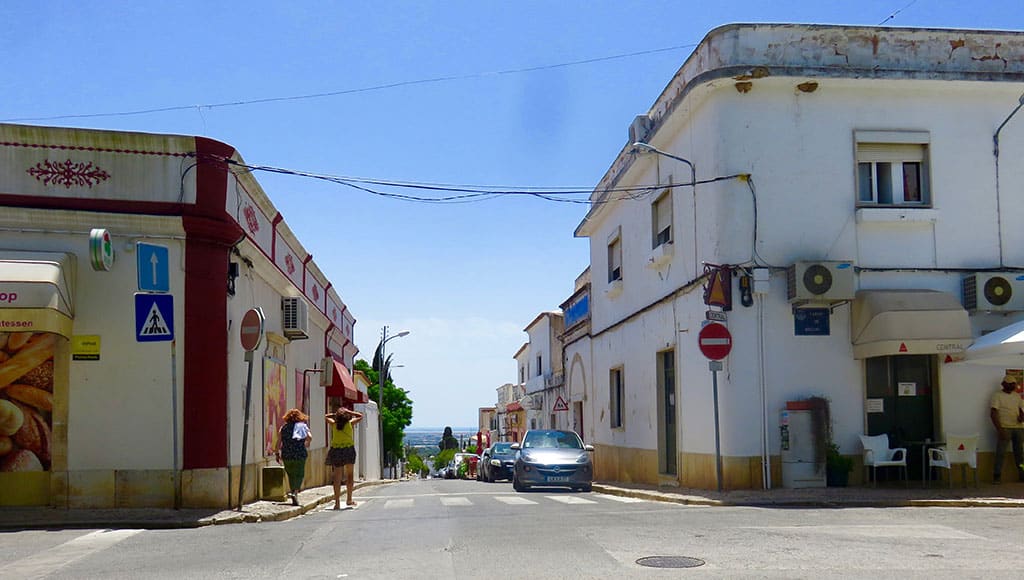
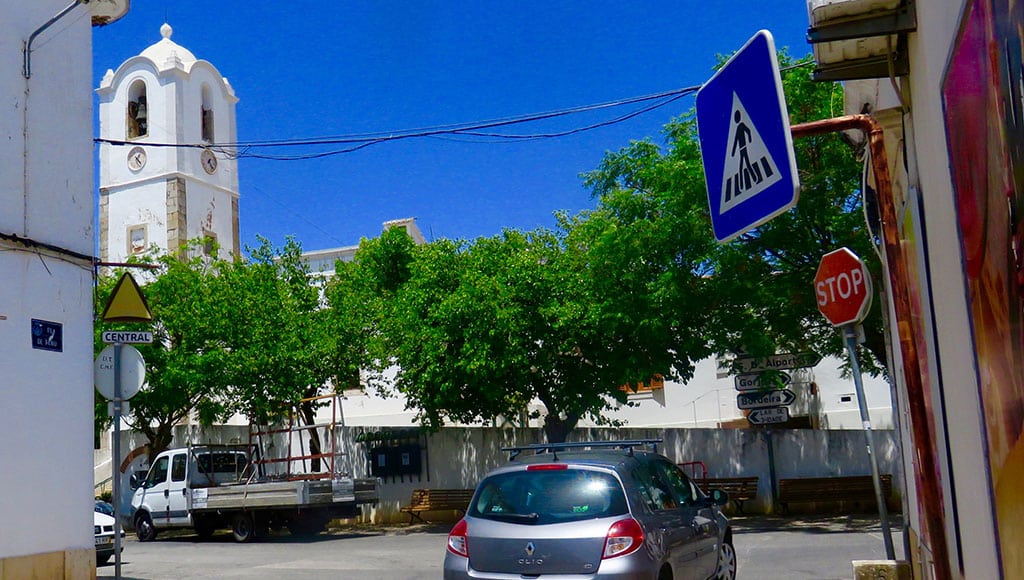
The center, both literally and figuratively, of village life, as far as I’m concerned, is Paulina’s, a small grocery or convenience store located at the corner of Main Street and the one-way road up from Faro.
A unique feature of this particular “T” intersection is at the stop sign beside Paulina’s; while facing the majestic village church, you can turn either way, but left is two-way while right is only one-way. The signage is very limited and traffic flow mostly works dependent on local knowledge. That can only work in a village.
Every Thursday, I pick up the latest edition of the Portugal Resident, the leading English-language newspaper in the Algarve, and discuss what’s going on with Paulina.
For nearly eight years, I also bought my cigarettes there, but now I sincerely believe that neither Paulina nor Sophia, her assistant, would sell them to me because they both were so proud of me when I quit.
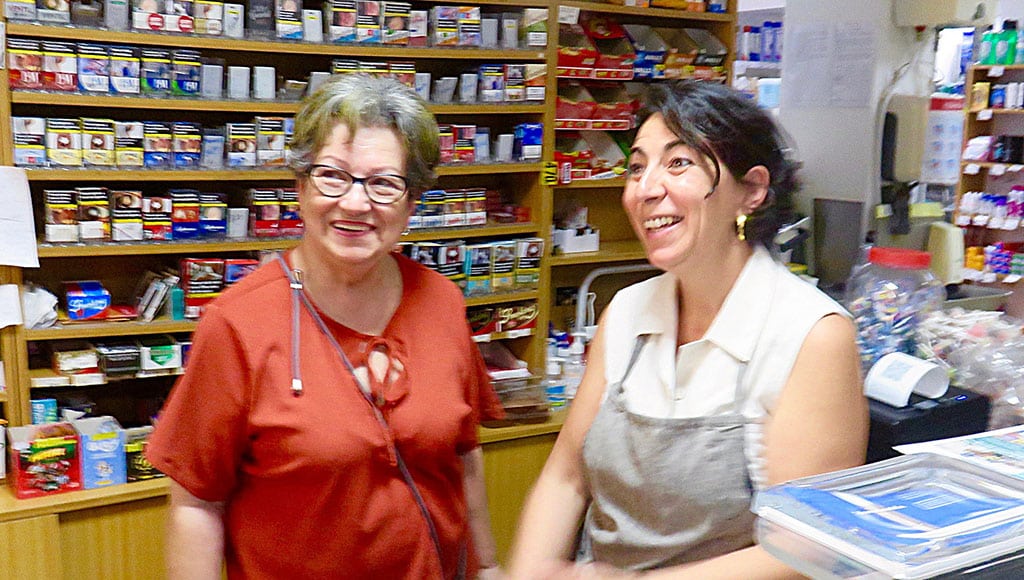
I firmly believe that Paulina did more than anyone to help maintain village life during the lockdown caused by the Covid-19 pandemic. First and foremost, they stayed open, and they followed every rule about distancing, masks, and customer counts in a sincere cheerful way that was reassuring.
Along with her husband Amadeu, the Guerreiros also own and operate a café that is attached to the store by a door and caters almost exclusively to native Portuguese. It is in the café that they sell lottery tickets, which is a blessing since I don’t have to watch yet another gambler feel disappointment while I wait to pay for some fresh local lemons, tomatoes and my paper. Now that I no longer have the expense of smokes, Paulina and I have a continuing refrain (running joke), “Good deal!” no matter what the bill even for a canister of gas, “Good deal!”
Immediately, across the street, on the two-way section, is the aptly-named Café Central. Owned by Sérgio Dias Barra, this meeting spot is also very much at the center of most village activities and took over as a regular, casual meeting place for many of the expats, as well as plenty of locals. This is where a lot of us gathered after Julie and Martin retired.
Sérgio’s is where you often found a table during festivals, parades, and our local charming Carnaval, which almost always came down the street the wrong way. For a number of years, I would walk into town and have a café americano, a couple of pastéis de nata for breakfast, while I read the Resident.
Back up the street in the “right” direction, in the space that used to be Julie’s and later was a series of unsuccessful “pubs” that were run by British blokes, who basically wanted a place in town to drink with their pals, is a new French café with the clever name O Bar Bara. This tapas and lounge bar is run by Eve, the hostess, and her husband Cheick, the chef.
Starting out slowly, the menu was limited and the best thing they had going was the imperial-style beer in china cups that was the coldest in the village. But the menu evolved and progressed until now it is a very popular dining spot, with the best pumpkin soup I have ever had, and delivered with a real, sincere French flair (more about the French in upcoming Part 2).
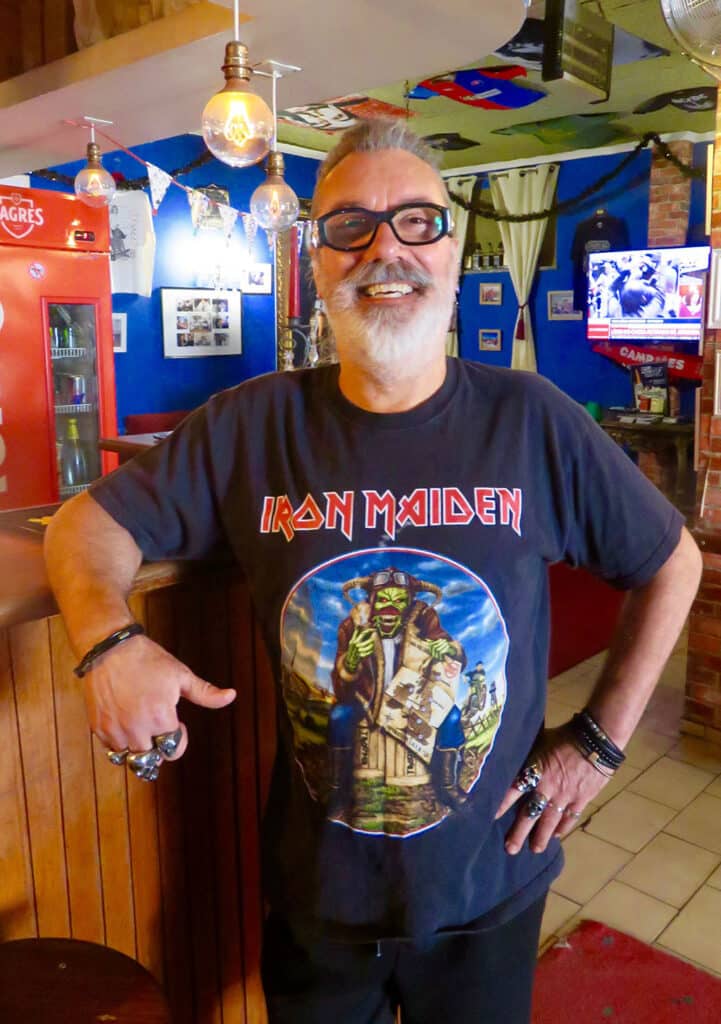
So, what ever happened to the pub around the corner after Filopa, a well-liked old guy, finally retired? It is now known as Sooner or Later, a rock ‘n’ roll pub with a huge portrait of Jim Morrison overlooking the main room and curved bar. We’re not heavy metal, but we still regularly order what we consider the best hamburgers in the Algarve as prepared by Elisabeth Lundbo Costa, a striking, tall Swedish gal who runs the place with her husband Carlos.
For the most part, it’s a biker bar, though most of the old regulars never left and Carlos’ motorcycle is the only one parked out front. Even though he looks the part, with long hair in a ponytail, skull rings on most fingers, and sun glasses, Carlos is very civic minded and serves as a quite active secretary and supportive assistant to Sérgio Martins, the Mayor of Santa Bárbara de Nexe.
These guys organize the festivals, keep track of road works and “junta” management and plan for the future (more about that in Part 2, coming soon). The last couple of times at the snail and then the sardine festival, Carlos made a point to stop by and talk to us. Carlos is a bud.
Back in 2018, I was sitting on the porch out front of Sooner or Later, sipping a Sagres beer and looking at all the flags from countries that were participating in the upcoming FIFA World Cup. I noticed that there was no flag from Panama even though that isthmus country, with a prominent canal, had qualified for the first time in its history. My loyal reader probably remembers that my lovely wife and I had first retired to Panama for 12 years before moving to Portugal. So, I confronted Carlos with this omission.
“I know,” he said in his usual exuberant manner, “I cannot find one!” Well as luck would have it, we were planning a visit back to Panama later that week and would be back in time. I was able to present Carlos with a large flag, which he proudly displayed. Except for the England game, that Panama lost 6-1, but were thrilled because they scored their first goal in World Cup history.
We were the only patrons in the village that were at all interested in seeing Panama play. That meant that the rest of the games, especially England, were on the big screen, while we were tucked into a corner with a regular TV and an exclusive view of Panama in the first round, which they ended without a victory losing finally to Tunisia 2-1.
Thanks to our friend and host Carlos, we were able to wear our red jerseys that we got with grocery store coupons while in Panama City. I think having our own semi-private viewing station can only happen in a village.
For a number of years, Carlos and Elisabeth hosted bands on the weekend and more than justified calling their place a “rock ‘n’ roll pub”. So much so, that the loud music became somewhat of a problem since it literally blew out the apartment building next door.
So, after the pandemic, the Costas, with the help of their adult children Olavo, a promising artist, and Isabel, a future lawyer, opened a night club by converting the land around the family house into what is now known as “The Rock Garden”, with relatively big acts performing most Saturdays and Sundays. The house with a grand view of the sea goes all the way back to Carlos’s great, great grandfather, making it very much a historical part of village life.
Keep your eyes open for “Village Life, Part 2”, coming very soon, where I will continue my discussion of village life as exemplified by Santa Bárbara de Nexe. I will also discuss the implications of growth in the area. If you have any suggestions, questions, concerns or comments about this article or the expat experience in the Algarve in general, please contact me at goodoldpatinportugal@gmail.com. Story suggestions are always considered and happily accepted.