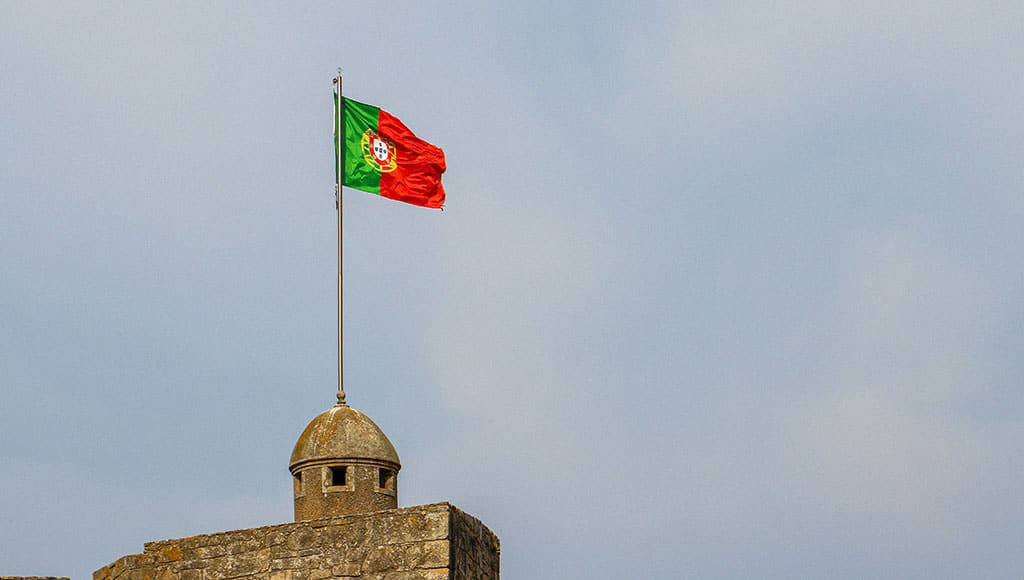
As Portugal prepares to mark Portugal Day, the air is filled with cultural pride, reflection, and the echo of poetic legacy. It is a moment for national introspection, shaped by the memory of Luís de Camões, whose words once gave voice to a people navigating seas, identity, and destiny. And yet, beneath the fanfare and formality, something quieter stirs – a shadow that trails behind the headlines, embodied in the recent ascent of the far-right Chega party to prominence.
What does it mean to reflect on national identity in a country where many of us are guests, newcomers, or in-between? What does belonging mean when we haven’t always known the language of the poets or grown up with the rituals of the land?
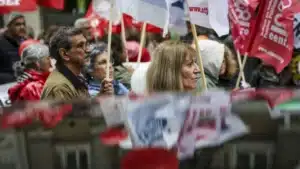
The election results earlier this year sent ripples through Portugal’s political landscape. Chega, once a fringe entity, surged to become the main opposition party. For some, this was a necessary reckoning. For others, a red flag waving in the face of a democracy that prided itself on tolerance and inclusivity. And for many of us living here as expatriates or immigrants, it raises uncomfortable questions: What is our place in a conversation that isn’t originally ours? What is our role when the atmosphere starts to shift?
In my work as a psychotherapist, I have often seen how the desire for certainty can eclipse the subtleties of nuance. In the face of ambiguity, human nature clings to clarity – even if it comes wrapped in fear, blame, or righteous anger. This psychological instinct is not exclusive to individuals; entire societies can be swept along by it.
The far-right’s appeal often rests on its promise to restore a supposedly lost order. “Make us whole again,” it whispers. “Protect what is ours.” But what is this ‘ours’? And who gets to decide where its boundaries begin and end?
Carl Jung spoke of the shadow – the repressed, unacknowledged aspects of the self that, when denied, project outward onto others. Portugal, like many nations, has its own shadow. Colonial history, economic inequality, and cultural anxieties around immigration and identity have often simmered beneath the surface. When unacknowledged, these shadows can take form in policies and populist rhetoric that draw neat lines between “us” and “them.”
Portugal Day should, ideally, be a celebration of shared story – a time to reflect on the journey that brings so many different people to this country. But memory, like identity, is selective. We remember the explorers, the poets, the victories. We rarely sit with the discomforts: the occupation, the forced migrations, the legacies of exclusion. In this selective amnesia, the soil becomes fertile for fear to take root.
In couples therapy, I often ask partners: “What part of this conflict belongs to you?” It is a gentle invitation to introspection, a turning inward before pointing fingers. On a national scale, we might ask the same. What part of our political anxiety, our societal unrest, belongs to our own unresolved narratives?
A 2023 study by the European Council on Foreign Relations found that, across Europe, cultural anxiety was a stronger predictor of far-right voting behavior than economic precarity. In Portugal, the fear of cultural erosion, of being ‘left behind’ by globalization or overwhelmed by change, is not uncommon. But fear does not have to be a moral failing; it can be a messenger.
As Luís de Camões wrote in Os Lusíadas, “Times change, and we change with them.” The beauty of this reflection lies in its implicit challenge: to change consciously, not reactively. National identity, like individual identity, is not fixed. It evolves. It can be widened. It can be generous.
So, what does all this mean for those of us who have adopted Portugal as home – whether temporarily, permanently, or somewhere in between? It means noticing. It means recognizing the quiet tug of fear that may lie beneath our more vocal convictions. It means holding up a mirror to our beliefs and asking not just, “Are they right?” but “Are they kind? Are they inclusive? Are they growing?”
In my practice, growth does not come from denying conflict but from engaging with it courageously. Portugal stands at a similar crossroad. The rise of Chega may not represent the will of all, but it reflects something real – a portion of the nation asking, shouting, perhaps begging to be heard. The challenge is to listen without surrendering to fear.
Perhaps this Portugal Day, instead of flags and fireworks, we mark the occasion with something quieter: a pause, a reflection, a conversation with a neighbor we don’t yet know. We can appreciate the poetry of the past even if it wasn’t written in our native tongue. We can honor the heritage of others while acknowledging our own paths and how they intersect here.
As psychologist Rollo May once said, “The opposite of courage in our society is not cowardice, it is conformity.” Let us be courageous enough not to conform to our shadows, but to step beyond them – into dialogue, into compassion, and into a Portugal that belongs to all who call it home.
Let us speak not just of pride, but of connection. Let us remember Camões not only for what he wrote but for what he represents: a voice searching for meaning amid stormy seas. And let us be mindful that in searching for ‘us,’ we do not create too many ‘thems.’