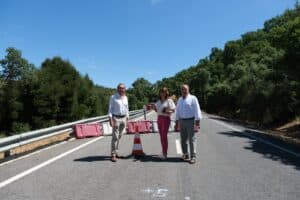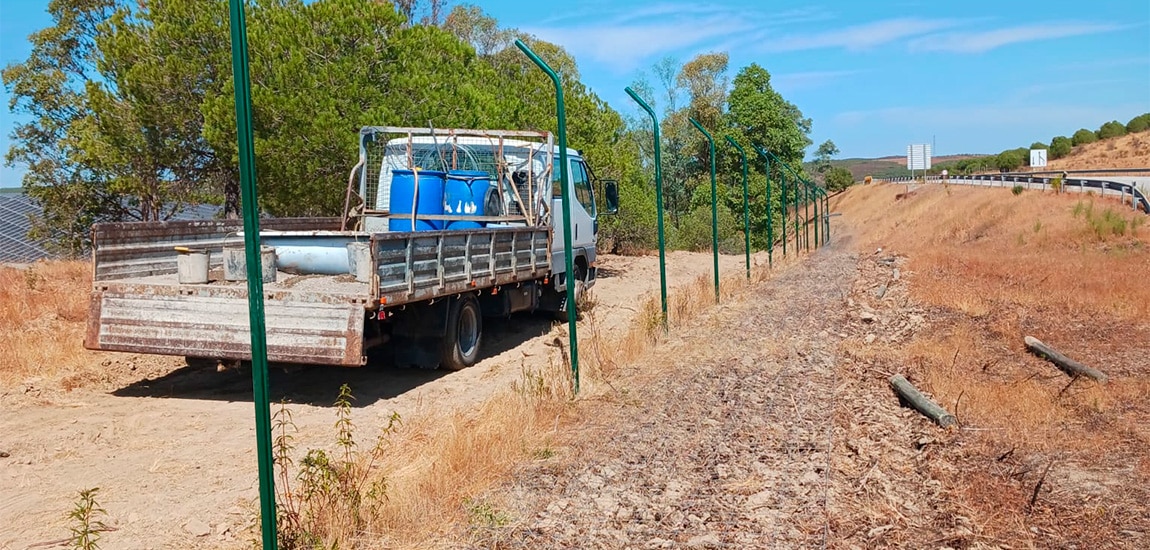
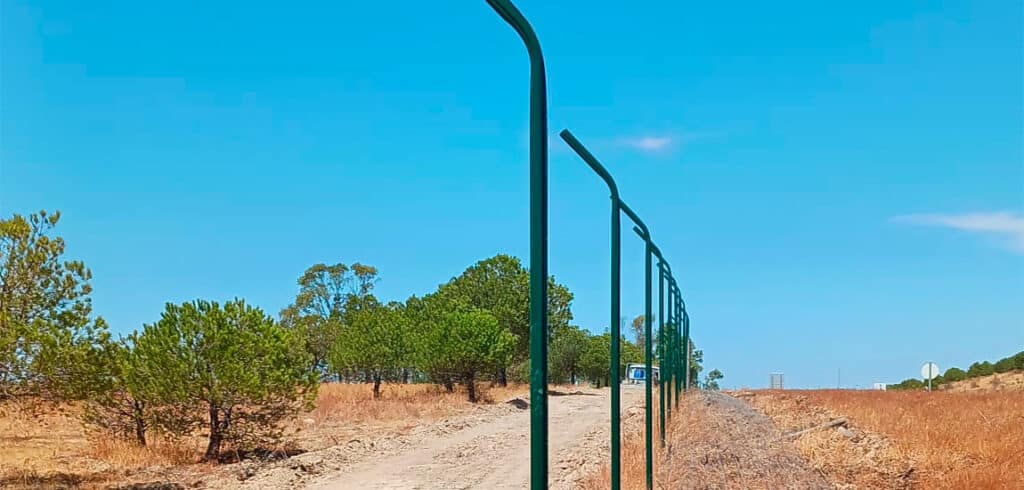
Portugal’s infrastructure authority is taking action to protect the Iberian lynx from road accidents in the Alentejo and Algarve regions, installing protective fencing along key stretches where the species is most at risk.
The project, funded by the European LIFE program, is focusing specifically on sections of the IP8 in the municipality of Serpa, the IC27 in Alcoutim, and the EN122 in Mértola – all known areas for lynx crossings.
Road accidents remain one of the main causes of death for the Iberian lynx. As part of the LYNXCONNECT project, Infraestruturas de Portugal (IP) has been putting several safety measures in places, including warning signs, adapted underpasses for animals, speed control devices, and vegetation clearing to improve visibility for both drivers and wildlife.
In 2024, IP introduced real-time lynx monitoring using LoRA technology – a wireless communication system designed to send small amounts of data over very long distances using low power. This led to a partnership with the Institute for Nature Conservation and Forests (ICNF) and the Waze Portugal Community, allowing drivers who use the app to receive alerts when a lynx is near the road. The alert system is already active on the EN122, EN123 and IC27 in the Guadiana Valley area. When a lynx enters a virtual zone of 200 metres along these routes, drivers are automatically warned. Experts believe this technology could significantly reduce road accidents.
IP is part of LYNXCONNECT, a project that brings together 22 organisations from Portugal and Spain with the goal of strengthening the connection between lynx populations across the Iberian Peninsula.
Since 2015, the reintroduced lynx population in the Guadiana Valley has grown from 107 to 354 animals by 2024- including 67 breeding females and 110 cubs. The species is now spreading from Mértola to nearby areas such as Almodôvar, Serpa, and Ferreira do Alentejo (in the Alentejo region), and Alcoutim and Castro Marim (in the Algarve).