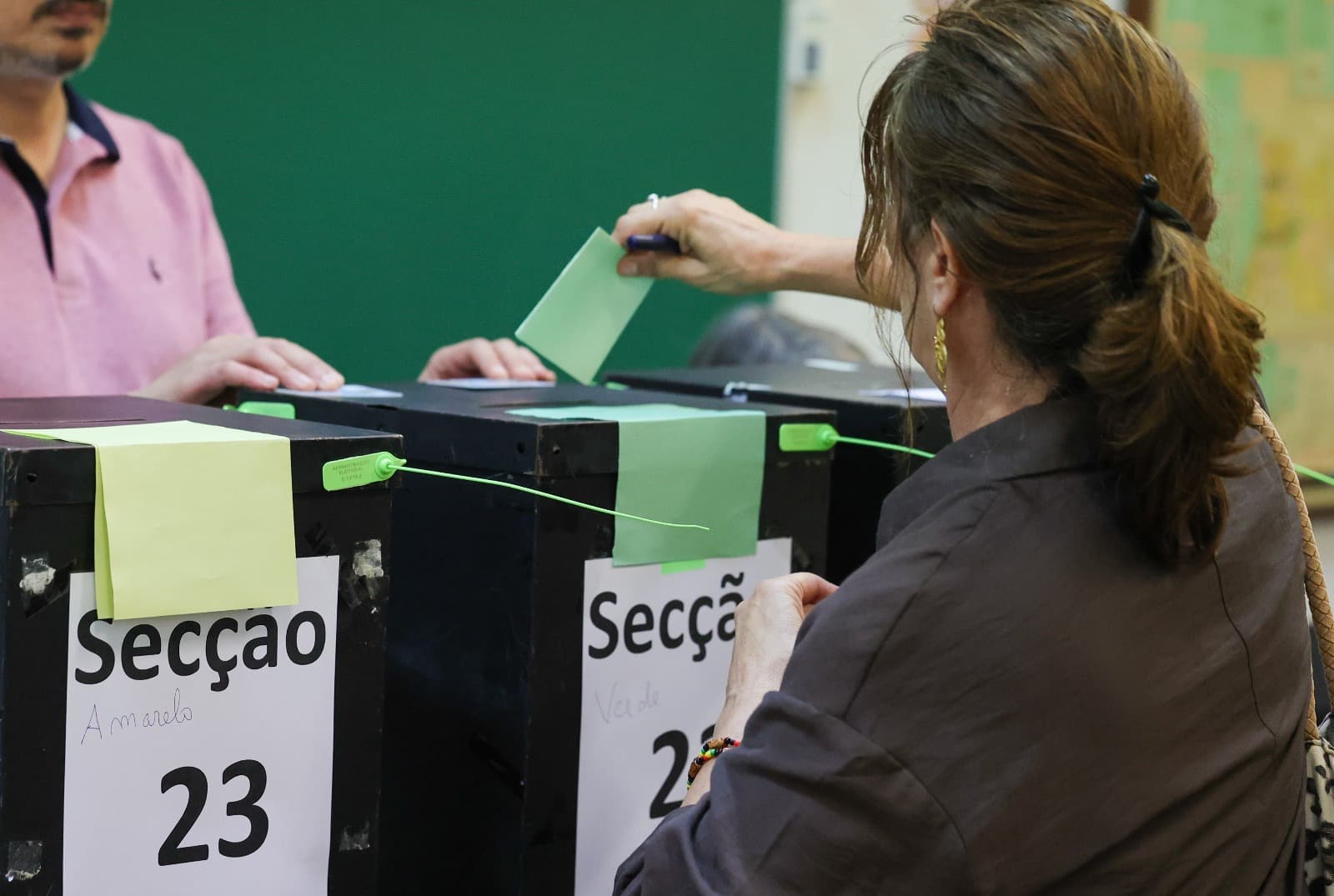
With results coming through all night, the municipal elections have brought some real surprises across the board – not least in the Algarve, where the ‘earthquake’ of the evening shook the status quo in the western municipality of Aljezur.
A bastion of the PS Socialist party for decades (there have only been a few years in the late 80s to 90s when the municipality had a communist council), this evening it went to an Independent Movement of Citizens, Renascer – led by former mayor Manuel Marreiros, whose extraordinary political journey has seen him run the municipality for the communists, then socialists; saw him lose his mandate over perceived licensing infractions – and now sees him returned to local power years later with an apolitical outlook that has won extraordinary grassroots support. Everything in the borough went to Renascer bar two parishes (freguesias), Aljezur and Odeceixe – the latter being lost by just five votes. The level of celebration at Renascer’s headquarters this evening was worthy of a World Cup win: a borough that has been ‘forever Left’ voted over 56.86% for change, leaving PS Socialists with 33.36%.
Faro too is celebrating change, again after years of one political colour (PSD), to another (PS). The municipality will be led by former mayor of Olhão António Pina, who is also the president of AMAL, the intermunicipal community of the Algarve. Faro is one of the municipalities that both PSD and CHEGA had their sights on, but Pina proved too much of a competitor, winning 35% of the votes, against the 32% polled by Algarve MP Cristóvão Norte and the 21.2% by CHEGA parliamentary leader Pedro Pinto.
Albufeira however has gone to CHEGA: the new mayor will be Rui Cristina (formerly PSD) who ousts incumbent mayor José Carlos Rolo, after years of PSD leadership and an unwelcome focus on ‘violence in the borough’. Results for Albufeira are still coming in, but it seems unlikely that Rui Cristina’s 37.9% of the vote will be caught up by José Carlos Rolo, who currently stands on around 31%.
Change has also come to Vila do Bispo, where the new mayor will be Paula Freitas (PSD), bumping former PS mayor Rute Silva into second place, with barely more than 1% in the final result.
The interesting aspect of tonight’s election results is that while the general elections saw vast swathes of the Algarve fall to CHEGA, this is not happening in these local elections: if anything, the blocks of colour showing up on television results boards show slightly more PS councils than PSD, with CHEGA so far only winning in Albufeira.
Alcoutim remains with PS Socialists, as do Lagoa, Lagos, Monchique, Potimão, Tavira and Olhão, while Silves has continued in its communist vein, with a new mayor (after three terms under Rosa Palma): Maria Elisa Conduta , who “guarantees continuity of the project that has marked the governing of the municipality over recent years”, says local media outlet avozdoalgarve.
Nationally, PSD appears to be ‘winning’ the majority of borough councils (delighting in retaining Lisbon), but only by a short lead: at midnight there were 119 PSD wins, compared to 109 PS, 17 Independent, 11 CDU, 6 CDS, 3 CHEGA.
Results will become much clearer tomorrow. In some cases – even in Faro – there are ‘technical ties’, in as much as the council may have gone to one political colour but seats on the council are too close to give the party an easy ride. In Faro’s case, António Pina has ‘won’ for the PS, but the win gives him only 4-5 mandates. PSD hold 3-4 mandates, and CHEGA holds 1, so business will be a constant ‘haggle’. The same goes in seven other municipalities throughout the mainland: Braga, Coimbra, Sintra, Vila Nova de Gaia, Loures and Setúbal.
Much more will come clear tomorrow. As we were finishing this report, PS admitted defeat in Porto, which has gone to PSD’s candidate Pedro Duarte.