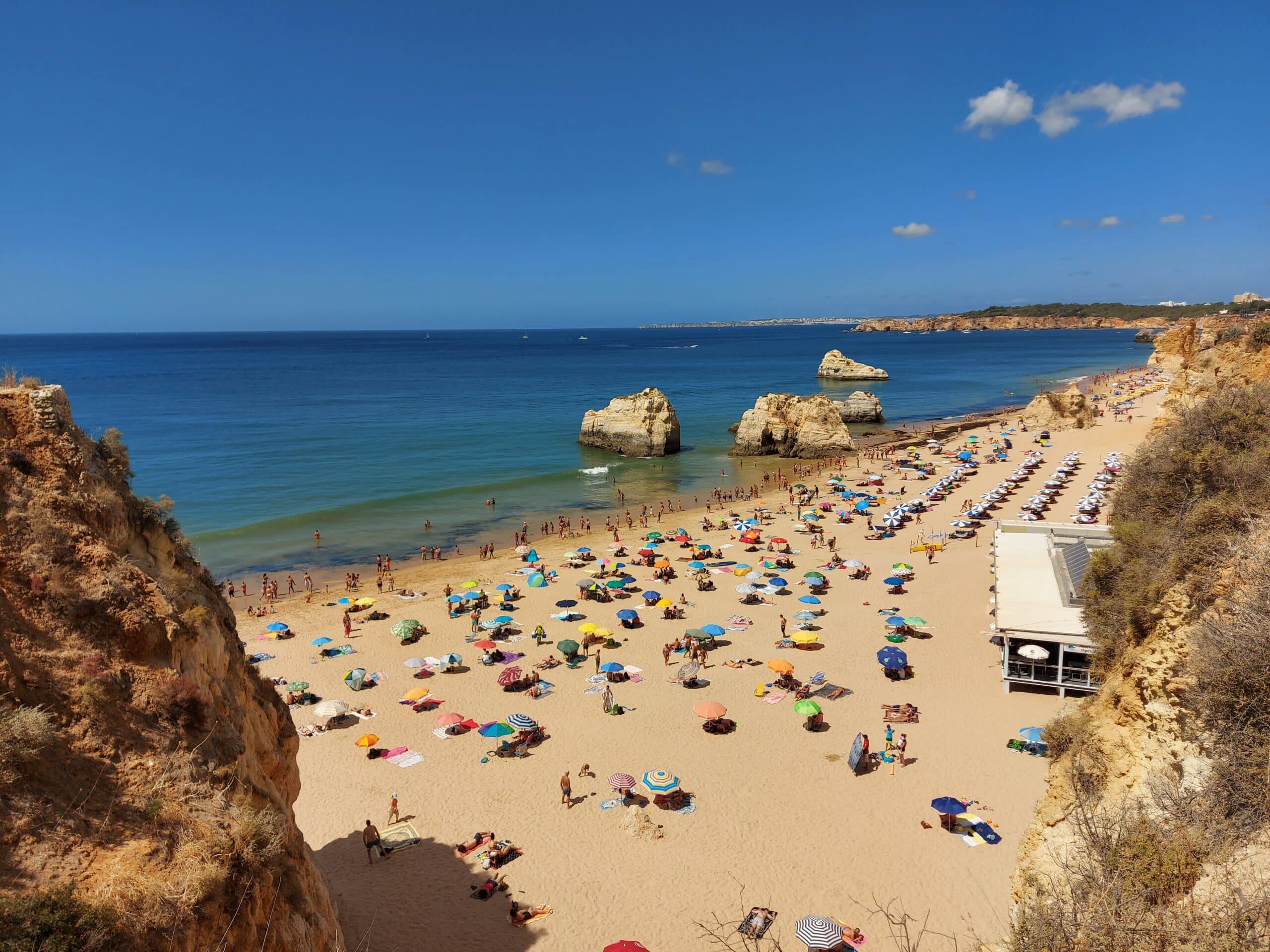
Awnings set up under dangerous cliffs, locked toilets, and first aid stations turned into storerooms are just some of the violations uncovered during inspections of Algarve beaches this summer by Portugal’s Environment Agency (APA).
In August and September, APA carried out checks at 29 beaches across the region, targeting spots with previous complaints or safety concerns. Two beaches – one in Castro Marim and another in Albufeira – were even found with restricted or prohibited public access.
Inspectors also found concessionaires flouting rules: toilets closed to the public, piles of rubbish near facilities, and lifeguard posts used to store goods. At Monte Gordo, for instance, restrooms were reserved exclusively for paying customers.
At Tremoços Beach in Lagoa, inspectors discovered dozens of unlicensed awnings set up by a resort directly beneath unstable cliffs, clearly marked as a high-risk zone. Meanwhile, in Armação de Pêra, the licensed concession area had been exceeded, while in Portimão, namely at Praia da Rocha, Alvor and Prainha, illegal street vendors were seen occupying parts of the beach and even using cliff walls as makeshift display stands.
“The concessions are granted to occupy a certain space. They cannot limit or prevent someone from placing a parasol in front of the concession area. We will have to work to correct these situations,” APA boss Pimenta Machado told Lusa news agency.
The agency also noted that unclear or insufficient signage was a recurring issue and has asked the national lifeguard service to improve beach signs. APA also defends that local authorities should be given more resources to exercise their power in bathing areas.
Following the detection of the infringements, around 10 reports were filed which could lead to fines for the offenders. However, APA says that whether they “voluntarily corrected the situation” will be taken into account when deciding on the fine.
According to Portugal’s environment minister, Maria da Graça Carvalho, special inspections will be carried out next year on beaches in the Centre region, in addition to those in Ourique (Beja). The minister also reiterated that the government is looking into a way of having “flexible teams” of lifeguards on beaches outside the bathing season, “who can help on the busiest beaches throughout the year, when the weather is good and the beaches are very busy”.