In the fevered political landscape as the country counts down to municipal elections on Sunday, various voices have piped up as the media hurtles forwards with further Spinumviva coverage.
‘Don’t allow yourselves to be distracted’ is the message.
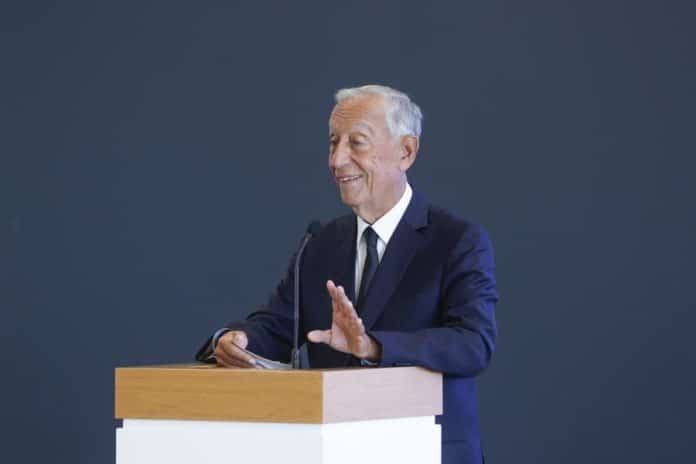
It has come, obliquely, from President Marcelo; less obliquely from defence minister Nuno Melo, and fairly obviously from former PSD leader Pedro Passos Coelho, who has returned to the spotlight in recent days, supporting the PSD candidate for Sintra.
PS leader José Luís Carneiro has also been very clear in keeping off the subject of Spinumviva even when specifically tackled about it, while CHEGA leader André Ventura has gone the other way, suggesting it is the reason the government has brought forward its presentation of the State Budget for 2026.
Media outlets meantime keep up the constant flow of ‘information’: today’s being that public prosecutors and the PJ want to know if the prime minister’s family holiday to Brazil in 2024 was charged to Spinumviva (their then joint family-owned company), something (if true) that would represent “an eventual violation of the regime of exclusivity to which Luís Montenegro is bound as leader of the government”.
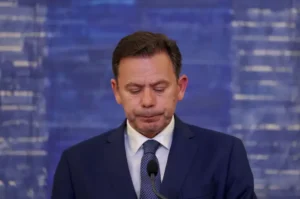
Mr Montenegro’s reaction to all this, returning at such a crucial time regarding voter support, has been well documented. He is ‘outraged’, and calls the latest revelations “a disgrace”. He is particularly upset that allegations have been made in the ‘public space’ before they were addressed to him, in the way that he believes they should have been.
Why is the press so focused on Spinumviva, and the PM’s possible conflicts of interest?
Correio da Manhã today drops some heavy hints. According to deputy director general Eduardo Dâmaso, a proper inquiry (not the current ‘preventative inquiry’) ‘should have been opened six months ago’.
In an editorial, entitled “A disgrace” (repeating the PM’s words back at him, so to speak), Dâmaso suggests Luís Montenegro “has three problems with justice and scrutiny”. The first being the fact that a proper inquiry should have already been opened. The second being the renovation of Espinho railway station and what Dâmaso calls “the dangerous connections between the council of Espinho (the PM’s hometown), the building contractor and the owner of ABB, close to António Salvador, from Sporting Braga (football club), concessionaire of the local car park and friend of Montenegro”.
In Dâmaso’s opinion, all these connections need to be properly investigated, “to show at the very least that the house of the prime minister (the house constructed in 2017 in Espinho) is not a kickback for anything”.
“Finally, Montenegro has a third problem with the Transparency Entity which does not accept part of the explanations that he has given them.
“Explaining everything on all fronts, in a clear way, is the minimum that is demanded of a prime minister. That’s how it usually is in a democracy. Unless AD is thinking of changing the laws of the Republic and the Republic itself to a regime of grovelling respect and reverence for the nation’s authorities, as in Salazar’s time. That would indeed be a huge disgrace. The rest is just democracy at work. Get used to it!” (The last two sentences being tongue-in-cheek references to habitual political ripostes to complaints about how things are going).
source material: SIC/ Lusa/ Correio da Manhã citing Sábado