Portugal’s prime minister Luís Montenegro has acknowledged today that Portugal may well have a deficit in 2026 due to the “exceptional” impacts of the energy crisis, not to mention the financial toll of the winter’s ‘carousel of storms’.
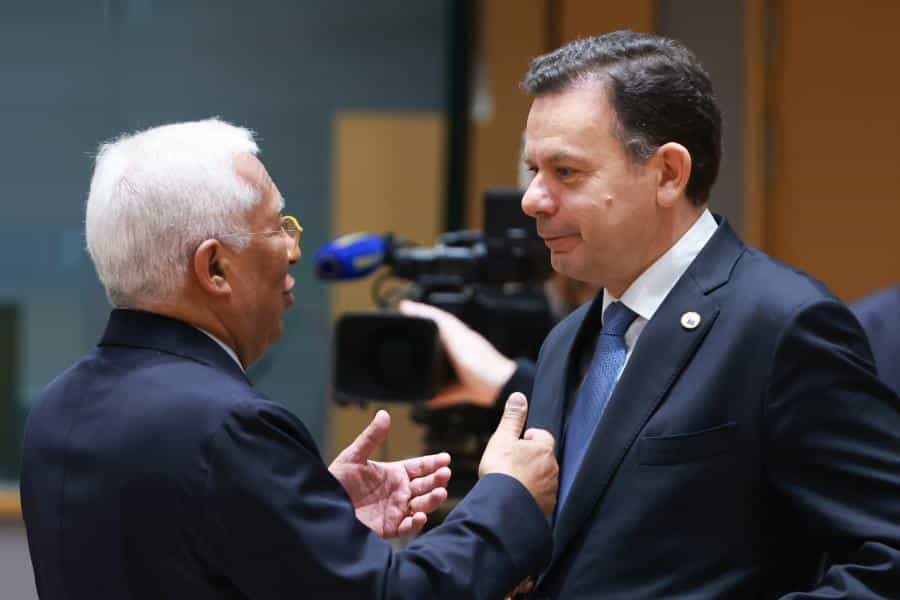
Speaking in Brussels on arrival at the meeting of the European Council, he said: “As I had already anticipated regarding the storm recovery process and now with the exceptional situation in the energy market, I just want to say that, because we have had sustained economic growth and good budgetary performance in recent years, we may, eventually, have a deficit situation and still maintain balance in our public accounts.”
The fact that Portugal might have a deficit this year “does not mean being in an excessive deficit procedure or an imbalance procedure (with the European Commission),” but rather that the government will not allow “the country to be penalised in an exaggerated way by an obsession with having surpluses,” he added.
“Our conviction is that we are still in a framework where it is possible to safeguard the budgetary balance so that we have a positive result,” but “we are not obsessed with that.”
The leader of the AD coalition government stressed: “We strive to have a positive situation in our budget balance, but we want a country that is socially just and economically vibrant.”
Military escalation in the Middle East – caused by the US and Israel’s attacks on Iran and the subsequent Iranian response – has worsened vulnerabilities in Portugal, primarily through rising energy prices, which pressure inflation and reduce the purchasing power of families, leading the state to adopt mitigation measures.
Added to this is the effect of the storms that hit the country causing billions of euros worth of damage to infrastructure, housing, and economic activities.
“It has been a fate of the governments I have presided over that a scenario is always shown in advance where we are going to return to deficits, and then we have surpluses. I have that expectation for 2025 as well, and for 2026, I have that expectation too. Of course, the situation is much worse, and it is worsened by two phenomena, two absolutely unforeseen circumstances,” Mr Montenegro conceded.
Regarding Storm Kristin which hit at the end of January, what is at stake is a loss of productive capacity in the central region of the country, which represents about 17% of the Gross Domestic Product (GDP), is responsible for approximately 16% of national exports, and accounts for about 16% of employment in the country.
“I myself will have the opportunity at this (European) Council to inform my colleagues and the Commission about the economic effect of the damage from the storms we had in Portugal,” Mr Montenegro added – explaining that this impact “harms this year’s budgetary execution and also economic activity, in addition to the expenditure entailed by the recovery process.”
“On the other hand, we (also) have an international situation of instability.”
Regarding the storms, the European Council will, at today’s meeting, express its solidarity with Portugal due to the “devastating extreme weather phenomena” at the beginning of the year in the country, according to a draft of the conclusions accessed by Lusa.
But primarily today’s meeting is to discuss how the European Union can contain the impacts of the military escalation in the Middle East, while also ensuring security of energy supply.
Source: LUSA