A group of environmental associations has filed an injunction to halt construction of the Pisão Dam in the eastern Portuguese municipality of Crato, Portalegre district – and a project that the government has described as “urgent and unavoidable”.
According to Helder Careto, the executive secretary of Geota , the injunction to halt construction of the Crato Multi-Purpose Hydraulic Development Project, also known as the Pisão Dam, was filed with Castelo Branco Administrative and Fiscal Court (TAFCB) last week.
“The purpose of the injunction is, obviously, to stop the works, because at this point there is already a large area of destruction,” Careto, head of the Land Use and Environment Study Group (GEOTA), explained, stressing that after the case was filed and the various parties notified by the court, “the works did not stop, they continued,” with environmentalists having to take further legal action to denounce the situation.
“At the moment, the matter is pending, and we are awaiting the reasoned decisions of various entities mentioned in the proceedings and also the judge’s decision,” he said.
“The work was supposed to be completely stopped, because the judge ordered the work to be stopped, but that did not happen.”
The injunction was filed by GEOTA, Quercus, LPN (League for the Protection of Nature) and ZERO, while the Alto Alentejo Intermunicipal Community, responsible for the work, and APA, the Portuguese Environment Agency, among other entities, have already been notified.
At the beginning of the year, the same court annulled the Environmental Impact Statement (EIS) included in the project’s Single Environmental Title (SET), as a result of a lawsuit filed by the C7 Coalition of environmental NGOs.
In February, Minister for the Environment Maria de Graça Carvalho announced that APA had appealed this court decision and, in early June, minister for the economy and territorial cohesion, Manuel Castro Almeida, announced that construction of the dam ‘could go ahead’.
Also contacted at the time by Lusa, José Janela, from the Portalegre regional branch of Quercus, one of the non-governmental organisations responsible for the injunction filed in the Castelo Branco Administrative and Fiscal Court, considered the Government’s understanding that work was able to go ahead “incorrect”.
“The Castelo Branco Administrative and Fiscal Court ordered that the case be sent to the South Central Administrative Court for consideration of the appeals, but without overturning the decision that ruled in favour of the environmental non-governmental organisations,” he said.
Funding for the Pisão Dam project was transferred from the Plan for Recovery and Resilience (PRR) in March this year to the state budget, and increased from €151 million to €222 million.
According to the intermunicipal community, in addition to irrigation that will serve more than 5,000 hectares, the dam will have a 150-megawatt floating photovoltaic power plant, with a cost of around €51 million.
Among other components, the project includes, in addition to the dam and photovoltaic power plant, a mini-hydroelectric power plant and canals for agricultural irrigation and a public water supply system.
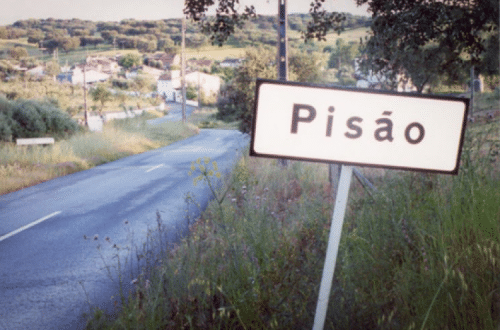
The reservoir, a long-standing demand of the region, will cover an area of 10,000 hectares, submerging the village of Pisão, which currently has around 70 residents and 110 houses.
Lusa contacted the intermunicipal community about this matter, but the entity said it would respond “soon” in a statement.
The government has shown its determination to move forwards with this project, indeed, when it was part of the PRR, minister Carvalho said she had secured the understanding that even legal appeals would have no effect. But now that the project is not part of the PRR, this legal trump card does not apply.
Source material: LUSA