The districts of Faro, Porto, and Braga are the most affected by this type of fraudulent crime.
The National Republican Guard, as part of its preventative measures to help stop various types of scams, warns about the security procedures that must be followed to avoid these incidents. This includes scams related to property rentals during this seasonal period, especially concerning holiday homes.
Regarding fraud crimes associated with holiday home rentals within the Guard’s area of responsibility in 2023, 2024, and 2025*, the following data has been recorded:
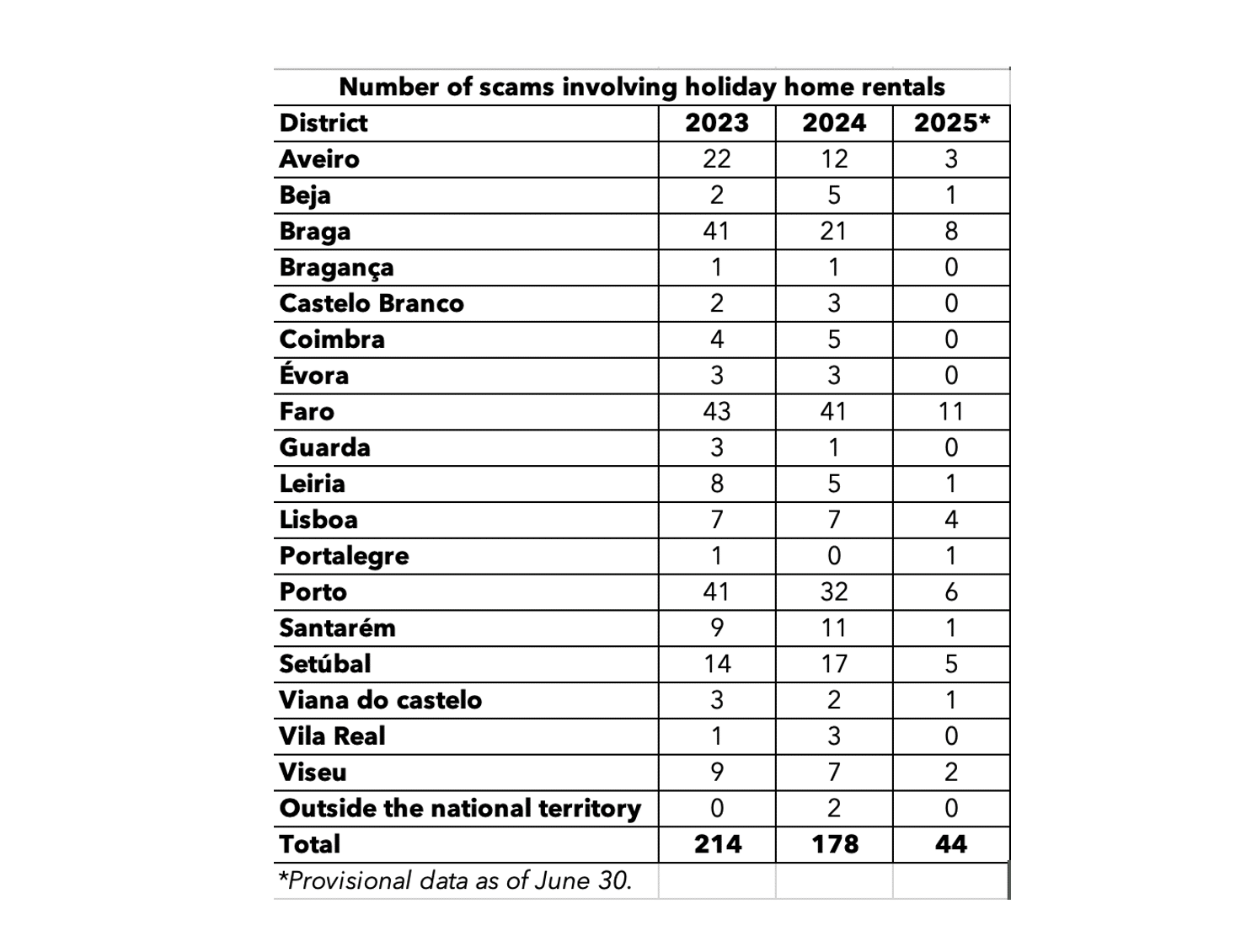
An analysis of incidents recorded in the GNR’s area of responsibility indicates that, during the period in question, the districts of Faro (95), Porto (79), and Braga (70) were the most affected. However, this phenomenon occurs throughout the country.
A 16.8% decrease in holiday home rental fraud crimes was also observed when comparing 2023 and 2024. This underscores not only the effectiveness of the preventive and awareness-raising measures carried out by the GNR, especially among the most vulnerable groups, but also the Guard’s ongoing dedication to combating crime and detecting these suspicious and illegal activities.
In this context, the Guard arrested 60 people for this type of crime in 2023, 29 in 2024, and 12 so far this year (provisional data as of June 30). For the same type of offence, 140 suspects were also identified in 2023, 138 in 2024, and 33 in the first half of 2025.
Regarding the practice of this type of crime, there is no specific modus operandi, as multiple methods are used to achieve the same goal. Typically, suspects post rental adverts at attractive prices on prominent and well-known websites. Some of these adverts may feature photographs of genuine properties, even though the context and rental details are false.
Victims often search for properties to rent during holidays, appreciating the quick and straightforward process of online searches. When they locate the desired property, usually at a lower price than the competition, they contact the advertiser and are asked to pay a certain amount, commonly called a “deposit,” to secure the property they want.
The victim only realises they’ve been scammed months later, in one of the following circumstances:
- When they attempt to contact the suspect, they find that the contact information is no longer valid.
- When they want to collect the house key;
- When they realise that the address provided doesn’t exist.
Aware of this type of occurrence, the National Republican Guard reinforces its advice to citizens buying or renting property to be especially vigilant and follow these precautions:
- Be cautious of offers with prices significantly below market value or that appear too good compared to similar properties in the same area.
- Compare similar listings and, whenever possible, request a visit to the property. If the owner expresses reservations about visiting, be cautious;
- Visit the property in person, as the images shared may not reflect reality.
- Search for the property on various platforms, bearing in mind that it may be advertised in different places at different prices.
- Be cautious of requests for a down payment from several interested parties, as it could be a scam.
- Look for other listings with identical photos or related scam reports.
- Request additional images, especially of the property’s interior.
- Request identification of the advertiser or owner, along with their contact details, and verify that they are still reachable.
- Verify through an ATM that the bank account holder’s name matches the owner or advertiser.
- If you receive a message stating that the payment wasn’t received, check with your bank before making another payment.