Meetings held yesterday with the various parties in parliament have taken the government a few steps closer to defining the PTRR (Portugal Transformation, Recovery and Resilience) – the three phase roadmap for rebuilding the country following the battering by storms which have caused an estimated €6 billion in damages.
Prime minister Luís Montenegro has said that the PTRR programme will be financed by national funds (ie the state budget) – and that this means “funding may have to come from contracting public debt” – implying “negative budget balances, negative public debt ratios”.
That this admission came on the day the finance minister was admitted to hospital with what is often described as a ‘mini-stroke’ was unfortunate – but today Joaquim Miranda Sarmento is said to be close to being discharged from hospital, after his overnight stay in observation.
The big questions overshadowing the ambitious PTRR is ‘how much is it going to cost?’ and ‘how is the country going to afford it?’
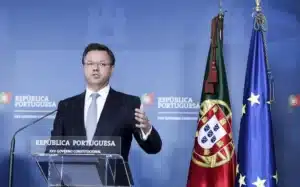
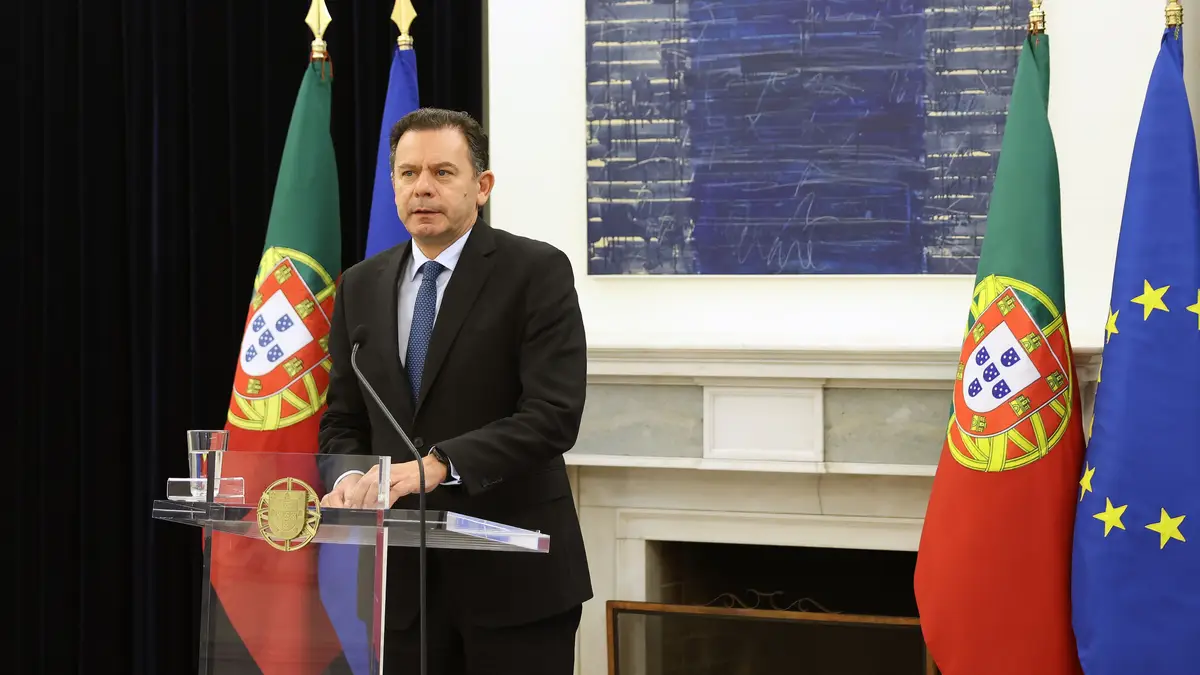
Neither question received an answer yesterday when the prime minister gave a statement to the press following his meetings with parties in opposition.
He told journalists: “We will have national funding for this programme – which will come from the state budget – funding that may come from contracting public debt. It will not jeopardise the trajectory of balanced public accounts, but that does not mean that there cannot be negative budget balances, negative public debt ratios, (…) I’m not saying that there will be, but I’m not ruling out that possibility.”
The PM thanked all the parties for their “effort to reach agreement” and acknowledged “the positive and constructive contribution they made to the discussion that will culminate in the final version of the PTRR,” which is expected to be approved in early April – stressing this “does not mean adherence to the government’s policies, it does not mean that the government’s priorities and the government’s programme naturally coincide with those of the political parties, but I think that democracy will send a strong signal of vitality if we have the capacity, in exceptional situations, for the parties to reach a convergence of positions on strategic objectives.”
The next steps are for the executive to “analyse all the contributions” and prepare the PTRR for presentation. “We will hold the necessary meetings in the future, the government’s door is open, it is open right away in parliament,” he said. Local authorities, social partners, regional governments and academia are also being approached for their opinions, while a platform “for interaction with the government is available, accessible to all citizens who also want to contribute their ideas.”
Regarding any possible European financing, Mr Montenegro said that “immediate support will be available”, namely through the European Union Solidarity Fund – but that it will only amount to “a few dozen millions of euros”.
In addition to opening new lines of financing with the European Investment Bank, the prime minister said that the government is also working with the European Commission “on a reprogramming of the PRR” (the EU Recovery and Resilience Plan for post-pandemic economic recovery). The aim, he explained, is to “release some financial resources from projects that, due to the storms, will not be able to be implemented” in time for the end of this programme, which ends in 2026.
“Since it is physically impossible to complete the work on time, the money allocated to these projects will be made available and we will mobilise it for short-term measures for this year, 2026, in order to finance all the aid that is already being implemented today and that will continue to be promoted in the near future, and possibly reinforced in accordance with some decisions we have in mind in the government,” he added.
The PM’s press statement did not allow for journalists’ questions.
Source material: LUSA