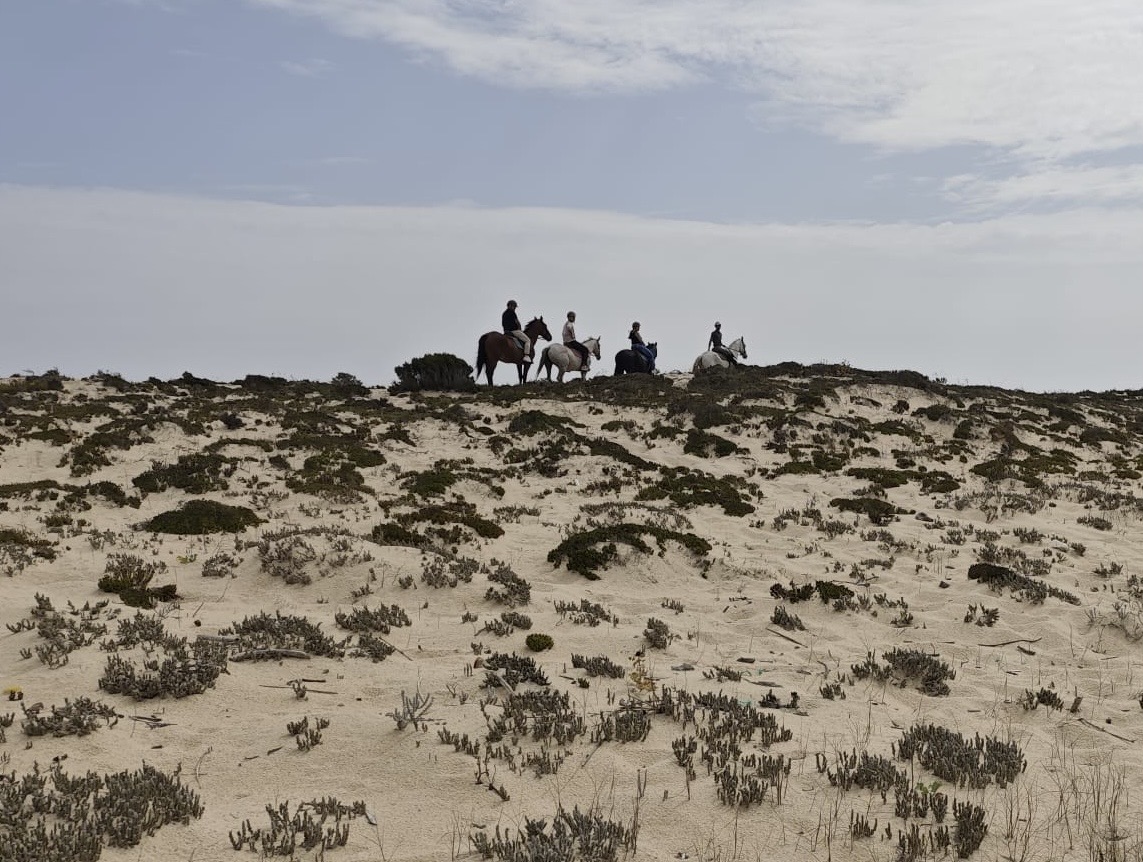
Horseback rides along the dunes of the Alentejo coast are posing an increasingly serious threat to the region’s fragile coastal systems, according to Brigada do Mar, a Portuguese environmental NGO.
During routine beach clean-up operations along more than 60 kilometres of coastline between Tróia and Sines, the organisation has witnessed the consequences of the growing practice which is leading to mounting concerns.
“It is fundamental to use the coast more conscientiously and responsibly,” says Simão Acciaioli, head of Brigada do Mar. “Horses, when walking on dune systems, destroy roots, compact the soil, and make it harder for the dunes to recover. This also increases erosion and threatens the nesting of local birds.”
As the NGO points out, the dune systems are critical for biodiversity and act as a natural barrier against coastal erosion, protecting beaches and other coastal ecosystems. “Damage to this habitat could have irreversible consequences, both for local wildlife and the stability of the coastline,” the organisation states.
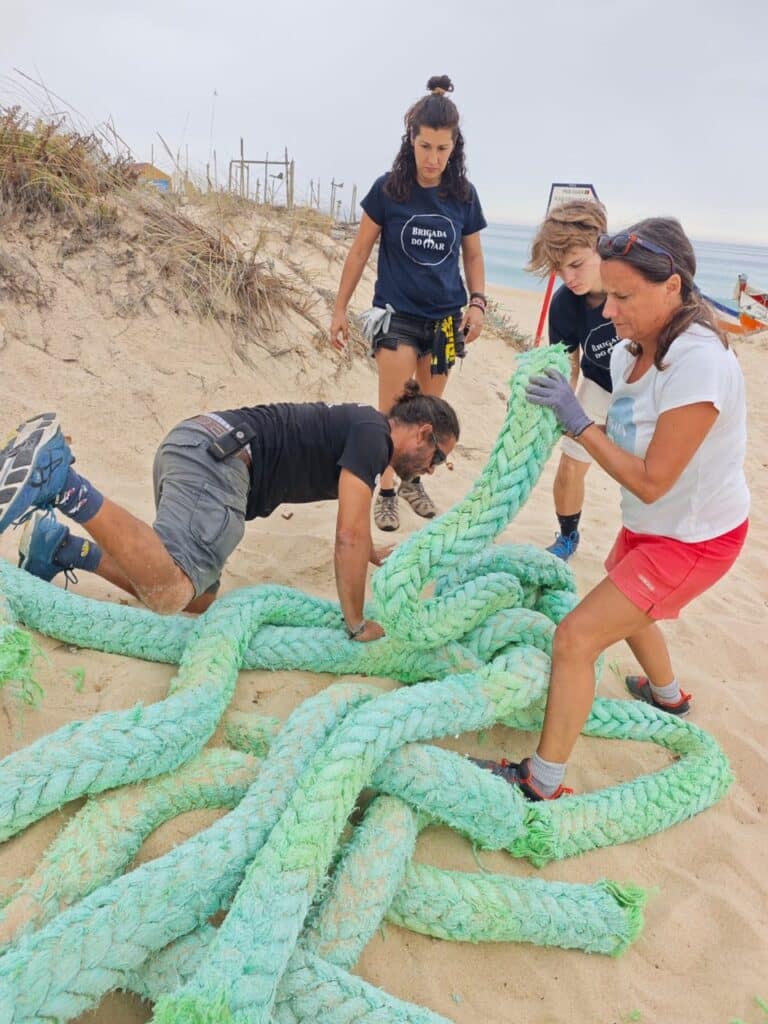

Founded in 2009, Brigada do Mar has involved over 11,000 volunteers throughout its history, cleaned more than 1,700 km of coastline, and collected over 1,000 tonnes of waste in more than 500 days of environmental action, under its motto: “Indignation with action.”
During a recent clean-up, Brigada do Mar volunteers removed around 2,500 kilograms of litter, continuing their 15-year mission to restore Portugal’s coastal areas. The event was supported by TransforMAR, a program launched by Lidl Portugal as part of its corporate social responsibility efforts. Since 2016, TransforMAR has removed over 253 tonnes of plastic and metal waste from Portuguese beaches and seas, with Brigada do Mar participating regularly since 2020.