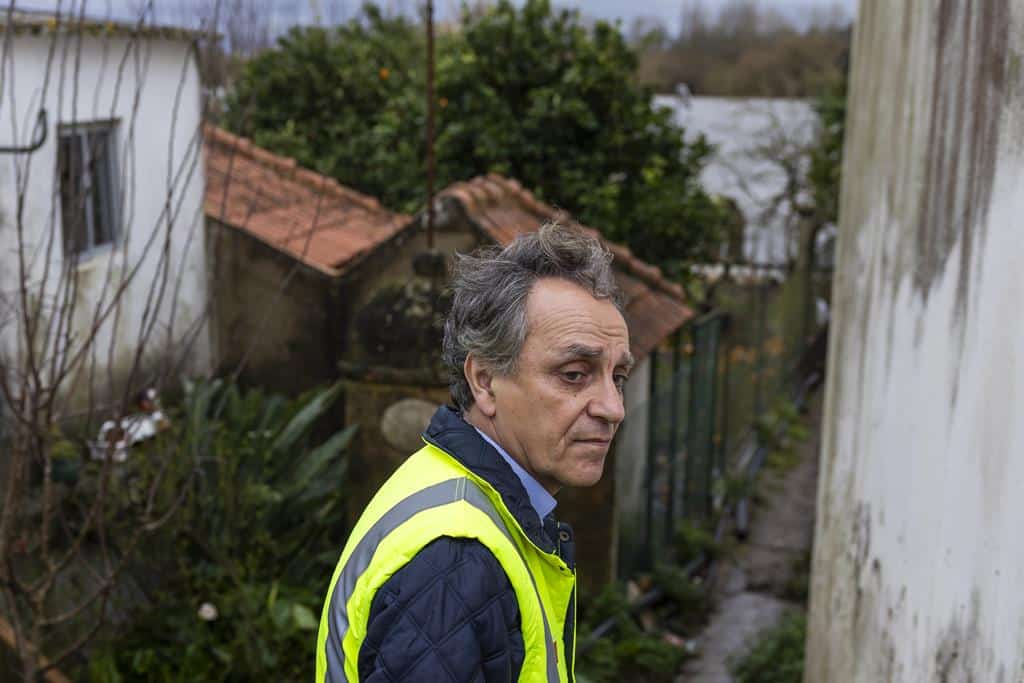
President of Portuguese Environment Agency APA, Pimenta Machado, has identified primary challenges Portugal must confront in the environmental sector by 2030 – and one of them is how we deal with household rubbish.
He was speaking at the presentation of the “Environmental Vision 2030: Challenges and Opportunities” – a book-form supplement to the 2025 state Environment Report – which includes 24 opinion pieces by many experts on topics such as air and climate, soil and water, the sea, energy, transport and waste.
At the presentation, held at the Portuguese Institute of the Sea and the Atmosphere IPMA yesterday, the APA president highlighted several positive developments in Portugal, adding that, in the last quarter, Portugal ranked as the 3rd European country with the highest integration of renewable energy in electricity production.
Speaking to Lusa, he addressed the big challenge of waste management – saying that the last rubbish tip was closed in the year 2000 and that infrastructure for waste collection and treatment has been established, but that over the last seven years, the country has made little progress in selective waste collection (recycling).
The APA president expressed regret that over 50% of waste is still being sent to landfill sites, all of which are reportedly reaching capacity.
People only have five years to change their lifestyles, warns Pimento Machado – because creating new landfills is no longer a viable option.
“We have to produce less waste; we have to sort more at home,” he stressed, highlighting the importance of sorting bio-waste, which accounts for between 38% and 40% of all household waste.
“What we do with bio-waste is crucial to improving our indicators and meet European targets”.
Beyond environmental risks like storms, another significant challenge is the coastline, where a large part of the population lives, and where 20% is subject to erosion, posing a threat of land loss.
“We have lost 1,400 hectares to the sea, which we will never get back,” said Pimenta Machado, adding that the 2026 storms caused the sea to advance around 20 to 30 metres in various locations.
APA is developing an urgent action plan for the upcoming beach season, alongside long-term strategies to adapt the coastline, prevent construction in high-risk areas and protect beaches through sand replenishment.
Regarding air quality, Pimenta Machado recalled that a new European directive will come into force in 2030, halving the permissible levels of particulates and sulphur dioxide. This means that Portugal has four years to prepare for these stricter standards.
The book “Environment Vision 2030: Challenges and Opportunities” was presented during a series of debates throughout the day on topics ranging from climate change to the circular economy, transport, the marine environment, and water.
source: LUSA