The mayor of Sernancelhe – just one of multiple municipalities scarred by summer wildfires – has told Lusa today that the damage amounts to “many millions” of euros, and that is before environmental, flora, and fauna damage is quantified.
Carlos Santos said that damages accounted for are “still preliminary”, but the most recent update indicates that “75% of the municipality” has been burnt, “more than 17,000 hectares” of cork oak groves, pine forests and fruit trees, such as olive groves and orchards, as well as vineyards.
Also in the agricultural sector, “more than 300 beehives were burnt”, as well as animals killed (mainly sheep, goats) and some missing (mainly dogs).
In the business sector, “a whole poultry farm, a carpenter’s shop, a slaughterhouse, a car dealership and part of a window frames and aluminium company all burned down”, he said.
Regarding the total value of damages, the mayor recognised that “it’s difficult” to calculate, not least because “25 agricultural warehouses burned down” and areas of cultivation that don’t have their value accounted for in the same way as businesses.
“Apart from the issue of the trees, and not to mention the total ecological loss, or what we will have in our municipality for many, many years to come, in terms of the ecological part and nature, even in terms of the species, fauna and flora that we have,” he said.
As for what can be accounted for, he said that “it’s difficult to put a figure on it, but it’s certainly many, many, many millions” of euros.
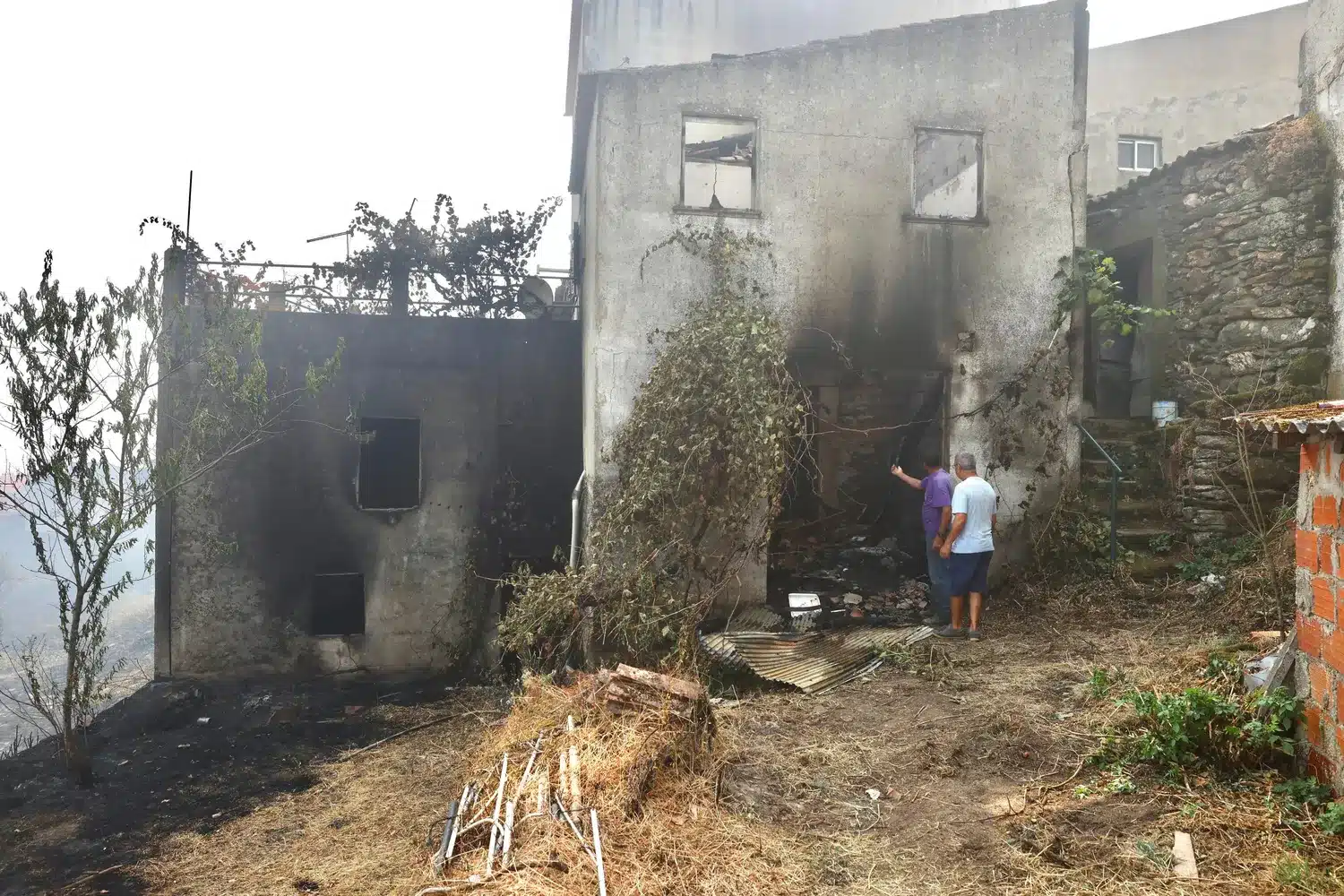
“I can’t tell you,” he admitted, albeit at least seven permanent homes have been destroyed (each one eligible for government rebuilding subsidies of up to €250,000), along with 39 vacant properties, a number of which belong to Portuguese émigrés.
The mayor added that, in future, there will have to be rules surrounding ‘vacant homes’, as being left as these have been to burn (because their owners are absent) puts the safety of neighbours’ property at risk.
Carlos Santos also pointed out that there are other environmental concerns, like preserving the reservoir of the Vilar Dam, which supplies three municipalities: Sernancelhe, Moimenta da Beira and Tabuaço, all in the district of Viseu.
“There is water contamination that we are now working on,” he said and, after a meeting yesterday with the authorities responsible, today it is time to “start to create retention basins and filters so that the ash from the respective slopes and water lines doesn’t contaminate” the dam.
The fire that reached Sernancelhe originated from two separate fires – one that broke out in Sátão (Viseu district) on August 13, and the other that started in Trancoso (Guarda district) on August 9, which merged on August 15, affecting a total of 11 municipalities in the two districts.
Sátão, Sernancelhe, Moimenta da Beira, Penedono and São João da Pesqueira (Viseu district); and Aguiar da Beira, Trancoso, Fornos de Algodres, Mêda, Celorico da Beira and Vila Nova de Foz Côa (Guarda district) were the municipalities affected.
The fire was put out at 22:00 on August 17.
According to provisional official figures, by August 23, around 250,000 hectares had burned in the country, and four people have lost their lives. Today, the wildfire situation appears ‘calm’: there is only one active blaze in the countryside near Vinhais, Bragança, albeit roughly 40 municipalities remain at ‘maximum fire risk’.
Source material: LUSA