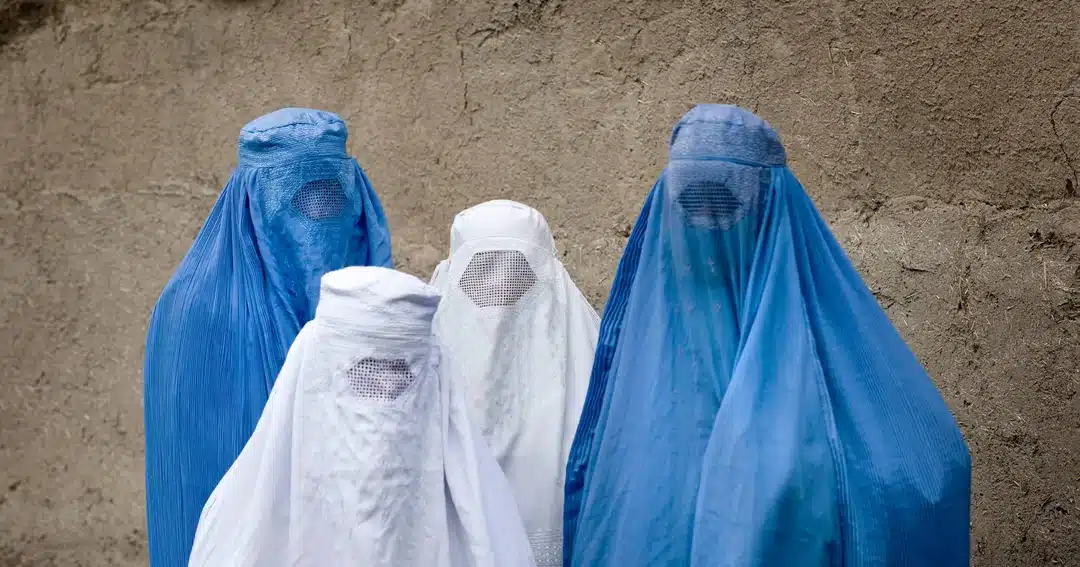
Parliament has today approved, in general terms, a ban on the wearing of ‘clothing designed to conceal the face in public spaces’ in Portugal, such as the burqa/ niqab and full-face balaclavas.
It is a decision that will now go on to be “improved in detail” in the speciality phase of debate, and which saw PSD, CDS, Initiative Liberal and CHEGA all vote in favour.
The proposal was put by CHEGA, whose leader André Ventur, has since written over social media: “Today is a historic day for our democracy and for the safeguarding of our values, our identity and women’s rights”, albeit the text is much more wide-ranging.
In parliament, Ventura said he did not accept that women should be forced to “walk the streets as if they were animals or merchandise”.
“Those same people who go to Gaza and walk alongside terrorists who say in the morning that there is genocide, at lunchtime beat their wives and at night force them to walk down the street as if they were animals or merchandise, we do not accept that,” he said, in a clear taunt of the Left which largely voted against the proposal, suggesting the proposal incited discrimination.
PAN and JPP were the only parties of the left who did not vote against. Both abstained.
According to CHEGA’s proposal, penalties for offenders would range from €200 to €2,000 in cases of negligence and €400 to €4,000 in cases of intent.
CHEGA used example of other European countries – namely Denmark, France and Belgium – which have already brought in similar bans, specifically aimed at full-face hiding of Muslim women’s faces. Germany already has bans on the use of Islamic face coverings in schools in certain states, and Spain’s Catalonia has also brought in a ban.
According to CHEGA’s text, the ban ‘does not apply when such appearance is duly justified for health reasons or for professional, artistic, entertainment or advertising purposes’.
Exceptions are also made for use inside aeroplanes, diplomatic and consular premises, places of worship and other sacred places.
The bill also proposes that it should be prohibited to “force someone to hide their face for reasons of gender or religion”.
Source material: SIC Notícias/ Público