Portugal’s Secretary of State for Tourism highlighted the importance of Ombria, in Loulé – an investment that he says improves the quality of tourism in the Algarve
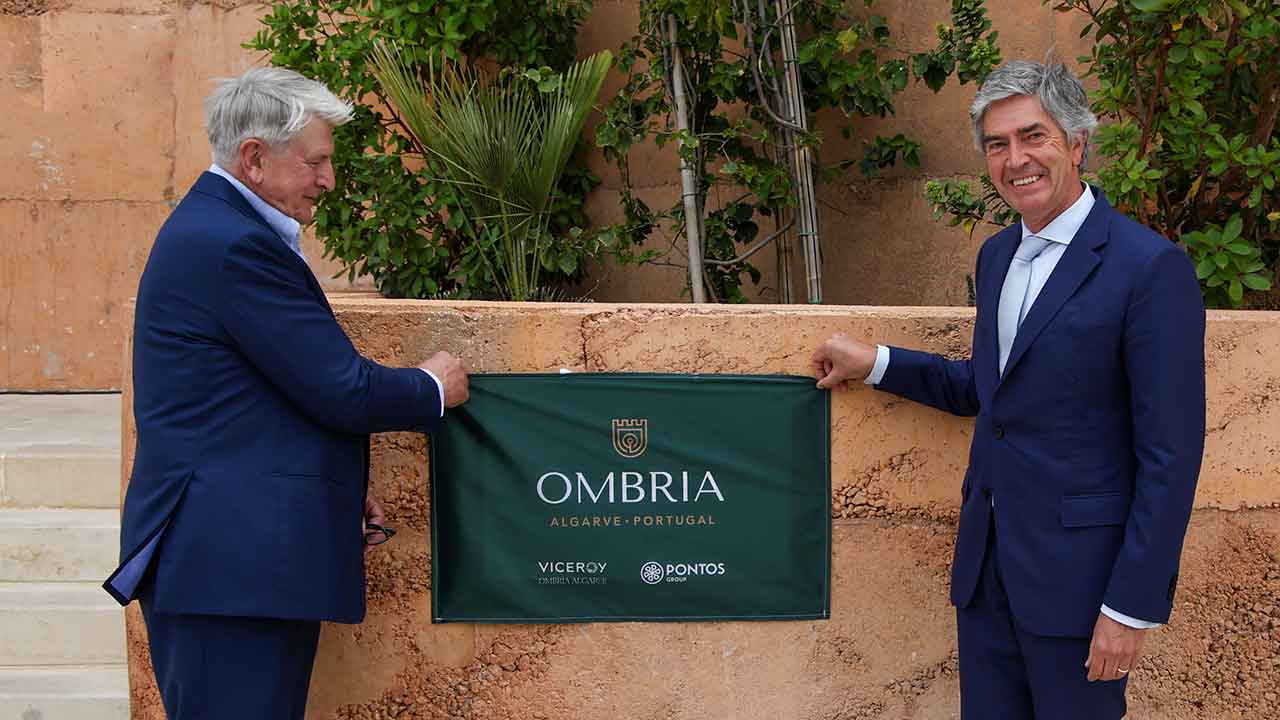
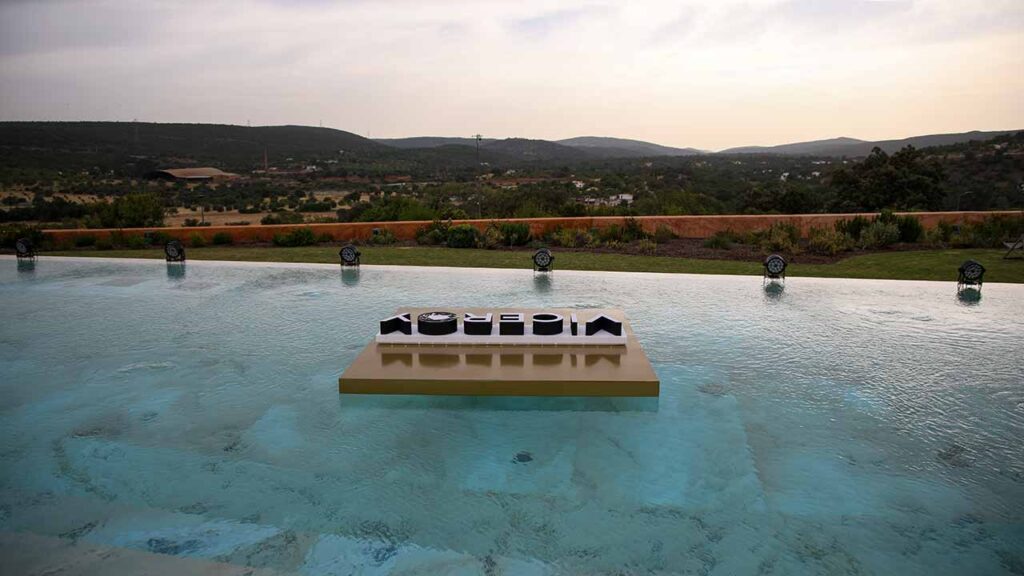
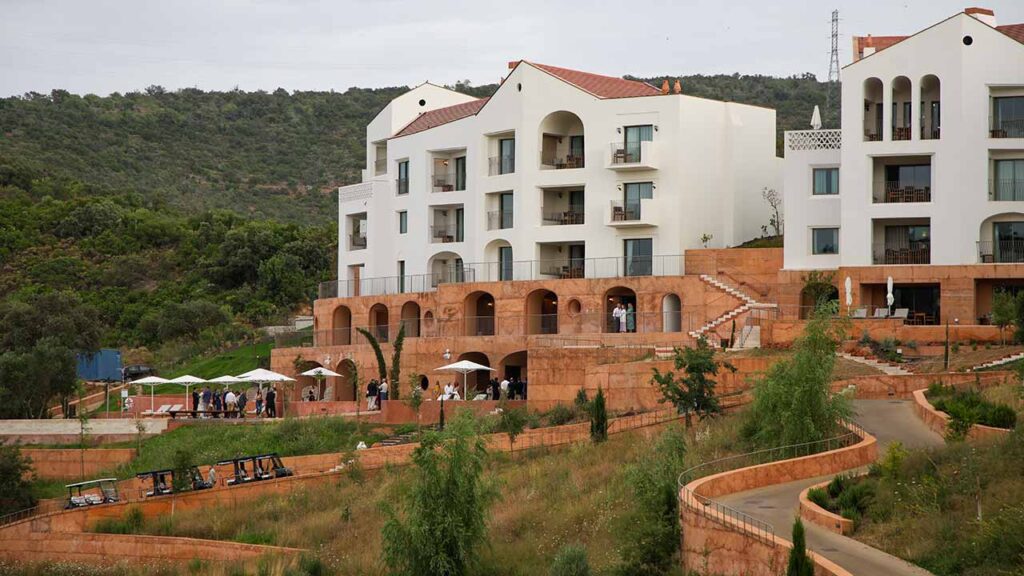
The official opening of Ombria Algarve and Viceroy at Ombria Algarve hotel was celebrated in Tôr, Loulé on Wednesday (June 18), marking the end of a 20-year journey to see the resort finally open its doors.
Ilpo Kokkila, Chairman of the Pontos Group and the project’s mentor, was overjoyed.
“What an adventure we’ve had over the last two decades. It was a long journey, and it took two generations to get here. There were difficult moments. Our dedication and level of cooperation were put to the test. All the joint effort highlights the importance of this moment. Today is the day we finally raise our glasses to Ombria,” the Finnish businessman said.
From the start, Ombria has been marketed as a resort that wanted to blend in with the surrounding landscape and integrate with the local community.
“It’s an extraordinary place for people to spend time, recharge, and enjoy life. Like the surrounding nature, we want Ombria to grow, renew, and continually redefine what it means to offer one of the most appealing residential and holiday environments in Portugal and southern Europe,” Kokkila said.
Patrick Freeman, CEO of Ombria, thanked the previous and current Ombria teams for their dedication to the project and praised Portugal as the ideal home for Ombria. “I can’t imagine a better place in the world for Ombria to exist – or for my family to live,” he declared.
Freeman also said that the goal is to make Ombria an authentic, year-round luxury destination. “I believe it’s a space to introduce Portugal to the world: its people, its food, culture, and history. We hope to be a stage for all of that.”
He added: “We also have a strong commitment to nature and the environment. We will continue to grow, but in a conscious, thoughtful way, in harmony with the community and the space where we operate.”
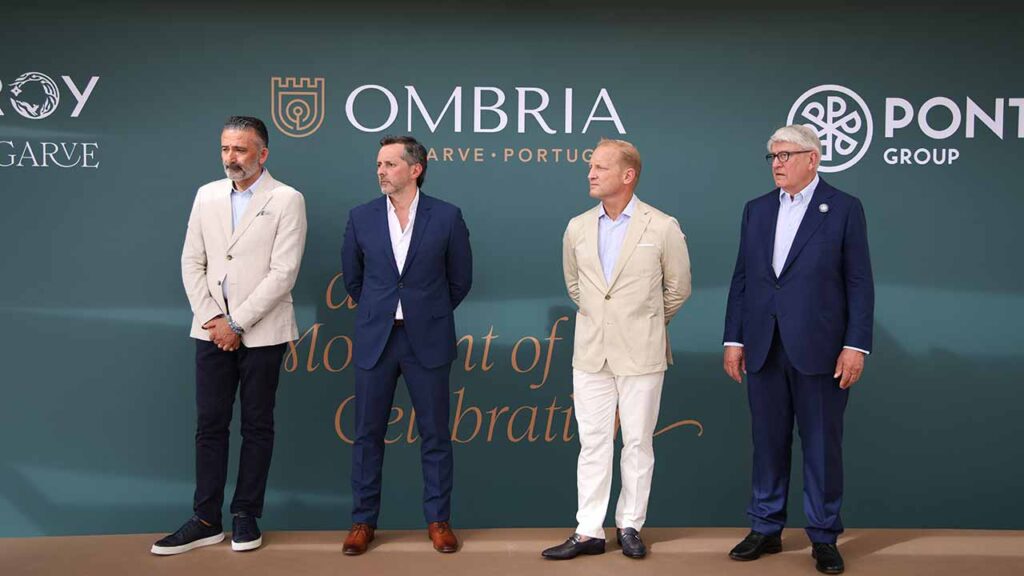
Highgate, the owner of the Viceroy hotel chain, was also in attendance, represented by its CEO Arash Azarbarzin. “Highgate believes deeply in Portugal. We have 18 hotels, from Lisbon to the Algarve, including Sesimbra. We’ve invested heavily because we believe in what this country has to offer,” he said.
As for Ombria, “my goal is not just to have a great resort, but to turn this space into a global benchmark. I don’t want to just be the best hotel in the Algarve. I want to start by being the best resort in Portugal, and then grow in Europe and around the world. Give us six months, and we’ll be at the top.”
Viceroy at Ombria Algarve will be the brand’s first hotel in southern Europe. “It reflects our commitment to expanding the brand consciously, focusing on regions rich in culture, beauty, and potential. And it reveals a Portugal that few people know,” said Daniel Ozzán, General Manager of Viceroy Hotels and Resorts.
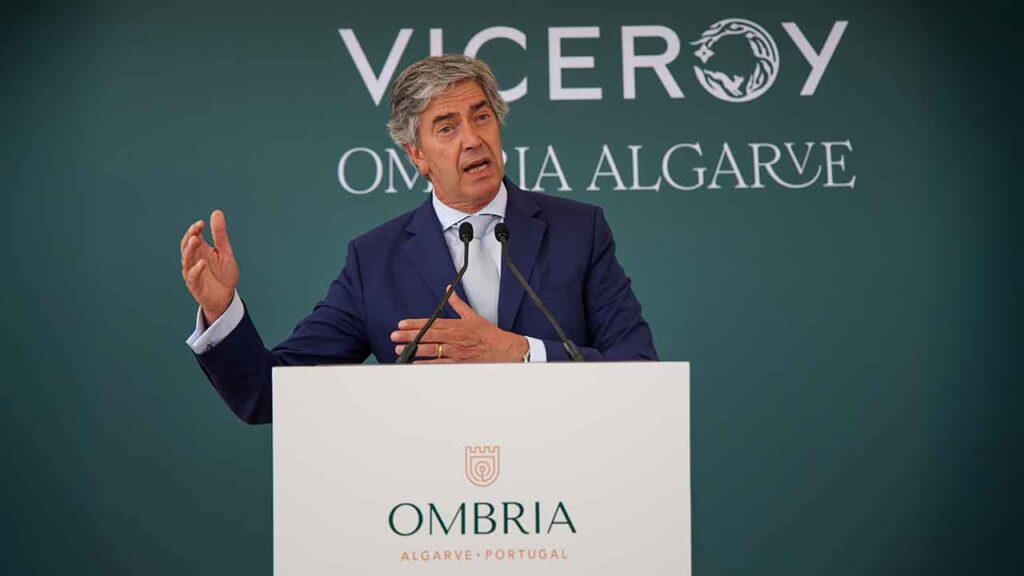
Representing the Portuguese government, Secretary of State for Tourism Pedro Machado said the Ombria project aligns with some of the priorities that the government has set for this term. Enhancing the tourist experience is one of them, he said, a goal which depends on collaboration between business owners, municipalities, and public agencies.
The government official pointed out that Ombria “took years to complete the licensing process, which means we still have a bureaucratic web that needs to be addressed and overcome so we can better attract investment.”
In addition to “war on bureaucracy” announced by Prime Minister Luís Montenegro, there’s also a need to “accelerate licensing processes,” the secretary of state said.
Another problem that “we are urgently required to overcome” involves “the barriers affecting the normal and desirable operation” of tourism, especially “regarding the reception of international tourists, particularly those coming from outside the Schengen Area.” In other words, the long queues at border control at national airports.
Turning attention to the Algarve, Machado said that the region is Portugal’s “most mature destination” and represents a “competitive advantage for Portugal,” which is now “one of the safest destinations in the world, and therefore privileged for attracting international investment.”
Machado, who led the Central Portugal regional tourism entity from 2013 to 2023, also acknowledged the work of the Algarve Tourism Association (ATA) “in consolidating the destination’s experience and growth.”
“We want to grow better, and that’s why we are working on diversifying source markets,” through “the opening of new routes” and reinforcing existing ones. He also revealed that “emerging markets” such as Argentina and Mexico (a country with 130 million people) are being studied.
“We are looking at a very strong market that allows us, in some way, to balance what may become necessary adjustments” in more traditional markets, “such as the German market.”
Machado also said he wants to place Portugal among the top 10 countries in the global competitiveness index. To do that, he said, “Portuguese people need to understand the economic and social benefits of having good tourism” in the country.
“To this perception, we need to add the economic, cultural, and also the satisfaction component of those who live here. When we generate jobs and wealth, that wealth must and should be well distributed, so that the communities hosting tourists can truly feel the benefits of having such a strong tourism industry.”
Machado, who now also oversees Trade and Services, noted that these sectors account for nearly 62% of the national Gross Domestic Product (GDP).
“In consumption of services, goods, and tourism activity, we’re talking about more than half of the country’s GDP. It’s a huge responsibility, but also a great challenge, one that’s impossible to achieve without all of you,” he concluded.